
&imwidth=800&imheight=600&format=webp&quality=medium "Iran-US deal: How much did the war cost America and the world?")
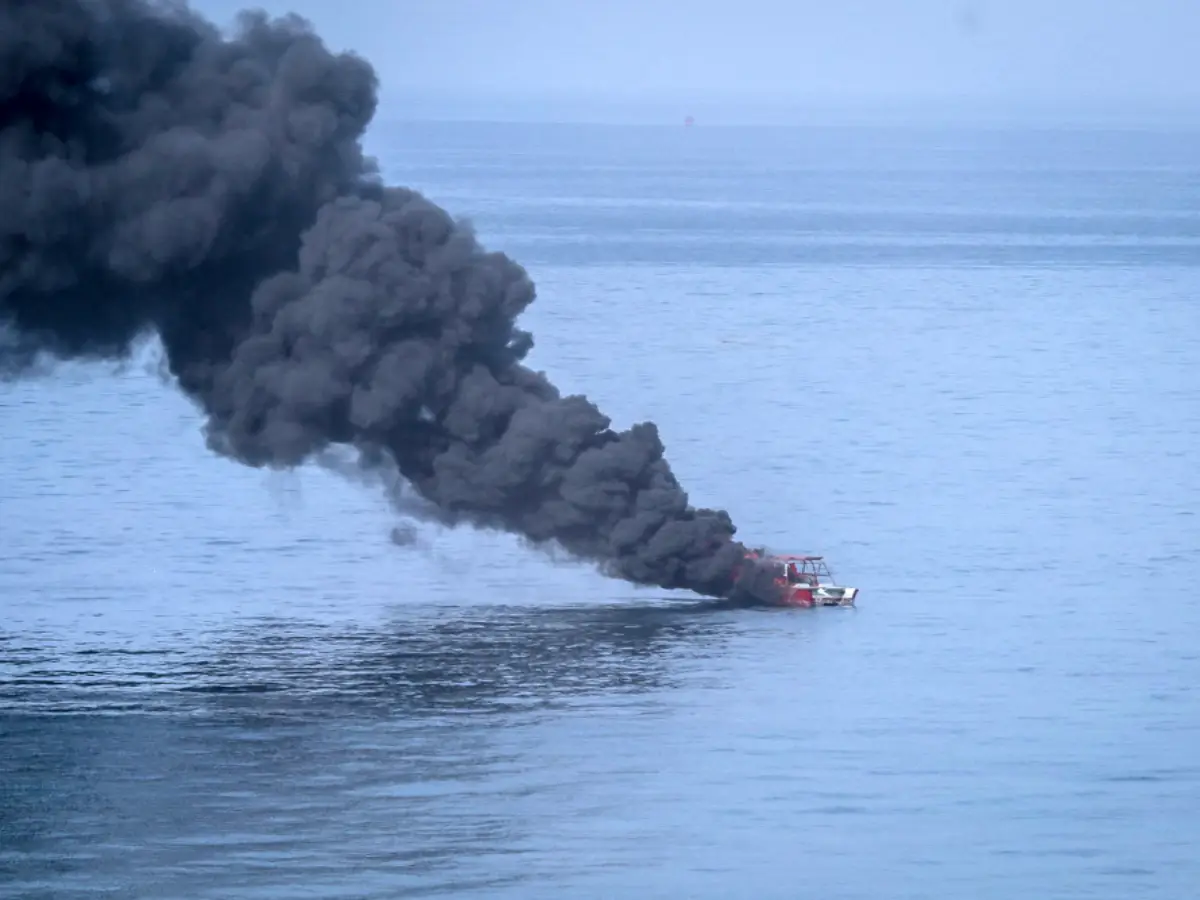
The US-Iran war is officially over after the countries signed a 14-point agreement, known as a Memorandum of Understanding. As part of it, the ceasefire stands extended, and the pivotal Strait of Hormuz will be reopened. It states that Iran will never have a nuclear weapon. Iran also benefits greatly financially, as it will be given $300 billion for "reconstruction and economic development" of the country. Sanctions on Iran selling its oil to the world will be lifted, and it could also potentially gain access to billions in frozen assets. "The United States of America and the Islamic Republic of Iran commit to negotiating and achieving the final deal in a maximum of 60 days, extendable with mutual consent," the MoU states.
How many people died in the US-Iran war?
According to official figures, 13 US service members lost their lives in the months-long operation. More than 3,300 Iranians died, according to state media. In Lebanon, 3,826 were killed, while nearly 60 died in Israel and many more across Gulf states, according to data from those countries.

How much did the Iran war cost the US?
According to Moody's Analytics, the war has cost US consumers and taxpayers about $132 billion so far, with the economic repercussions set to be felt for a long time to come. According to Pentagon comptroller Jules Hurst, operational costs of the Iran war stood at $29 billion on May 12, $4 billion higher than the figure presented by the Trump administration in April. It is also expected to ask for supplemental appropriation to cover the war costs.
Oil prices
Trending Stories
)
Oxford United's new clothing line featured 'United 93' phase
)
Pentagon revives mandatory testosterone testing for male troops aged 30 and above
)
Mark Carney mimics Trump in hilarious moment over C$70 billion clean-energy investment; room erupts in laughter
)
Iran rebuilding nuclear facilities? New satellite images show Tehran may be rapidly restoring bombed Parchin base
)
It's a girl! Deepika Padukone and Ranveer Singh welcome their second child
)
FACT CHECK: Why did PM Modi ask Xi ‘is it okay’ at BRICS Summit? New video reveals...
)
Putin: European leaders using war rhetoric to save falling ratings
)
China may have gained access to US's classified F-35 jets; parts meant for repairs diverted to Hong Kong, sparking Pentagon inquiry
)
Trump announces ‘AI Force’ as debate grows over AI risks and regulation
)
Arvind Kejriwal, family members, Delhi CM Rekha Gupta get SIR notices
)
Cochin shipyard starts building Indian Navy's next-gen missile vessels
)
Russia extends ban on Western food imports for two more years in extended sanctions countermeasure
)
Brigitte Bardot’s private collection set for Paris auction; key items and prices revealed
)
Why Ranveer Singh’s Dhurandhar missed India’s Oscar entry; FFI jury member reveals what happened
)
How did an Australian river with 500 crocodiles pass the Olympic test? Here's how
)
‘Will go to any extent’: Pakistan vows to defend Saudi Arabia amid Houthi attacks
&im=FitAndFill=(700,400))
Ananya Panday to Sharvari: 5 actresses serving major princess vibes
66 years of the Indus Waters Treaty: How India and Pakistan settled a bitter river dispute
)
The Verdict | When precision fails: US commits war crime in Minab school strike, UN finds
)
Trump signs Russia sanctions bill into law, targets Moscow’s energy sector
Russia attacks Ukraine with 174 drones, kills 8; 2 vessels hit in Black Sea
)
Pak: A series of counter terrorism operations in Khyber Pakhtunkhwa
)
Flying cars in UAE: Ras Al Khaimah signs deal with Chinese company to test new transport
)
Reacher star Alan Ritchson opens up about alleged blackmail, suicide attempt during difficult period
)
Africa is splitting, and a lot sooner than estimated, giving way to a new ocean
)
Ajit Agarkar’s future as chief selector to be decided at right time, says BCCI secretary
)
Trump bans CNN, MS NOW and Politico from White House over ‘FAKE NEWS’
)
Trump 2.0: Dark days ahead for America’s ‘imperial presidency’
)
New brain discovery could aid neurological disease studies
&im=FitAndFill=(700,400))
How many F-35s does Britain, Japan and Israel have?
)
Tirupati Laddu ghee adulterated with chemicals, says ED, supplier arrested
)
IIT Bombay student dies by suicide, was caught seeking AI help during exams
)
Trump extends H-1B visa's $100,000 fee until September 2027: What it means for Indians?
)
Russia holds first parliamentary elections since the beginning of the Ukraine war
&im=FitAndFill=(700,400))
Meet top 5 Indian batters with fastest T20I centuries
)
)
The biggest fallout of the war has been in the form of the rise in oil prices. The closure of the Strait of Hormuz led to a major fuel crisis across the world. America waged a war on Iran, and its people paid the price. The American Automobile Association (AAA) said that the gas prices stood at just under $3 a gallon when the war began. They went as high as $4.56 a gallon after crude oil got blocked at the Strait.
Americans use 360 million to 380 million gallons of gas every day. This means that after the price rise, they were shelling out more than half a billion dollars extra each day. This number has dropped slightly, and the wartime surcharge means that Americans are still paying more than $360 million a day in higher gasoline costs. Diesel prices went from $3.76 a gallon to a peak of $5.69 in early April. This set off a chain reaction where the people were paying more for everything.
Besides oil, fertiliser is another essential commodity that passes through the Strait of Hormuz. The blockade led to a 47 per cent rise in prices, according to a survey by the American Farm Bureau Federation. Wartime uncertainty also impacted mortgage rates, which saw a spike.
Impact of Iran War on global economy
The war's global impact is equally disturbing. The World Bank cut its 2026 global economic growth forecast to 2.5 per cent, the lowest since COVID-19. Inflation has hit many countries, while economic growth has slowed down. In India, cooking gas shortages impacted households and businesses. Commercial LPG prices rose sharply. Gas prices have risen significantly in the past few weeks. The GDP of Middle Eastern countries are estimated to expand by just 1.3 per cent this year, down from 4.5 per cent in 2025, the World Bank said. The body has no new forecast for Iran, because of "exceptionally high uncertainty."

