
&imwidth=800&imheight=600&format=webp&quality=medium "What’s happening in Nepal? How did a local clash turn into communal violence? WION Decodes")
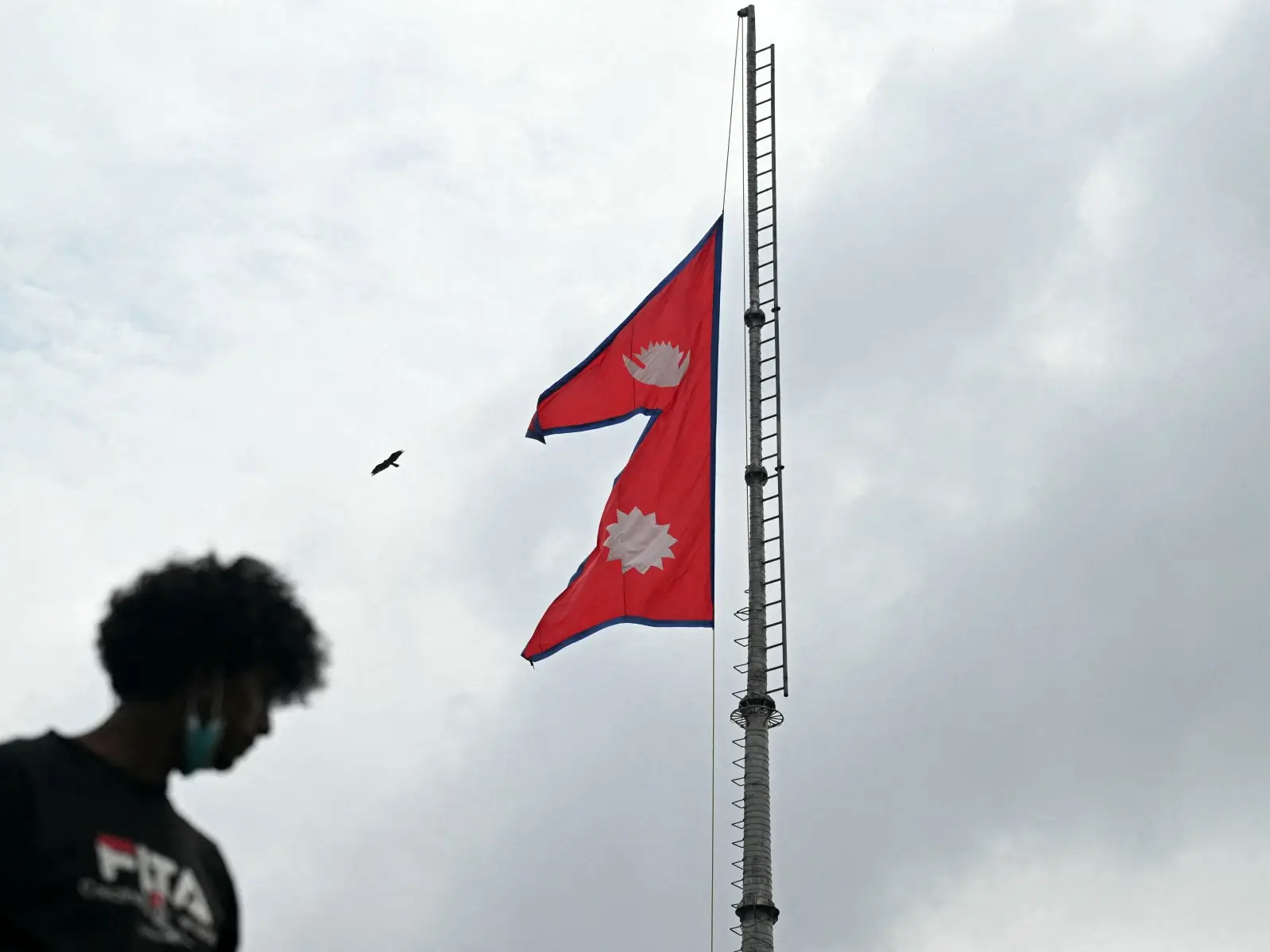
Nepal’s southern plains have witnessed one of the country’s most serious episodes of communal unrest in recent weeks, with violence between Hindu and Muslim groups leaving at least three people dead and forcing authorities to impose curfews across multiple districts. The clashes, which began in Sunsari district on July 26, have spread across parts of the Terai region, prompting a nationwide appeal for calm from Prime Minister Balendra Shah after days of criticism over his delayed response.
What actually happened?
The violence began on the night of July 26 in Kaptangunj of Dewangunj Rural Municipality in Sunsari district, located in Koshi Province. According to authorities, a dispute broke out between Hindu and Muslim groups over religious celebrations. The confrontation quickly escalated into violence, forcing police to intervene. What started as a localised clash soon triggered unrest in neighbouring areas, leading the government to deploy security forces and impose curfews. Officials said the violence has since claimed three lives, with the latest death reported on Thursday.

Also read: Why Gen Z protestors, who helped make Balen Shah Nepal PM, now want him to resign | WION Decodes
How did the unrest spread?
Authorities first imposed a curfew in Dewangunj Rural Municipality, where the violence erupted. As tensions spread, restrictions were extended to several other districts, including Sarlahi, Dhanusha, Siraha and Saptari. The unrest has largely remained concentrated in Nepal’s southeastern plains, a region bordering India that has a sizeable Madheshi population and a higher proportion of Muslims than the national average.
Trending Stories
)
India ‘deeply concerned’ as Houthi strikes hit Saudi civilian & energy sites
)
Three labourers killed as DU student loses control of his car, rams into them on Dwarka Expressway
)
Pentagon revives mandatory testosterone testing for male troops aged 30 and above
)
FACT CHECK: Why did PM Modi ask Xi ‘is it okay’ at BRICS Summit? New video reveals...
)
India seeks to build a full semiconductor supply chain
)
North Korea's last nuclear test in 2017 set off 1,399 earthquakes over 8 years, each stronger than previous
&im=FitAndFill=(700,400))
From Abhishek Sharma to Sahil Chauhan, 5 batters with fastest T20I hundreds
)
Indian activist-lawyer Prashant Bhushan's post brings focus on ‘conflict of interest’ appointments of ex-govt officials at Reliance, Adani groups
)
Former India player Diana Edulji wants Smriti Mandhana to replace Harman as skipper at the earliest
&im=FitAndFill=(700,400))
Meet top 5 batters in the latest ICC T20I Rankings
)
UNGA 2026 theme explained: What does ‘Restoring trust, managing transformation: A United Nations that delivers for all’ mean?
)
Godfather of AI Geoffrey Hinton gives US lawmakers a one-year warning on AI
)
US F-16 fighter jet crashes in Michigan during training mission, pilot ejects safely
)
Xi-Trump summit may boost military links
)
Shivakumar attends 79th Kalyana Karnataka Utsav in Kalaburagi
)
A first in 100 years: New cat species discovered in Bolivia is incredibly tiny
)
Trump signs Russia sanctions law: India faces fresh 100% tariff threat over Russian oil
)
Hong Kong extends newborn cash support scheme by three years
)
How did an Australian river with 500 crocodiles pass the Olympic test? Here's how
)
‘Will go to any extent’: Pakistan vows to defend Saudi Arabia amid Houthi attacks
)
'He will always be ahead': India coach Gambhir says Sooryavanshi won't walk into team ahead of Samson
)
The Verdict | When precision fails: US commits war crime in Minab school strike, UN finds
&im=FitAndFill=(700,400))
New Friday OTT releases (September 18, 2026): Lust Stories 3, You+Me, Best of the Best- 8 new titles coming on Netflix, Prime Video and more
&im=FitAndFill=(700,400))
Which country has the most F-35s outside America?
)
Africa is splitting, and a lot sooner than estimated, giving way to a new ocean
)
'Gangsta' crab shoves knife blade at man and his dog in Florida - Watch
)
Trump bans CNN, MS NOW and Politico from White House over ‘FAKE NEWS’
)
Trump 2.0: Dark days ahead for America’s ‘imperial presidency’
)
Laura Wolvaardt sets new world record for most WT20I runs in a year
)
Drone strikes cooling tower at Russia's Kursk Nuclear Plant, IAEA confirms
)
Who is Khalilur Rahman? All you need to know about 81st UN General Assembly President
&im=FitAndFill=(700,400))
Meet top 5 bowlers in latest ICC T20I rankings
)
Cristiano Ronaldo returns to Portugal squad for Nations League under new coach
&im=FitAndFill=(700,400))
Meet top 5 Indian batters with fastest T20I centuries
)
Ukraine plans record $109 bn defence spending, nearly two thirds of budget amid Russia war
Although Muslims account for around 5 per cent of Nepal’s overall population, they are concentrated across Madhesh Province and parts of Koshi Province. The affected districts have historically been home to both Hindu and Muslim communities, which have largely coexisted peacefully.
What was the root cause of violence?
Authorities have said the immediate trigger was a dispute over religious celebrations between members of the Hindu and Muslim communities in Kaptangunj. While officials have not publicly identified a deeper underlying cause, the incident rapidly escalated beyond the initial confrontation, fuelling tensions across nearby districts and leading to wider law and order concerns.
The government has also urged people not to circulate rumours, misinformation or hate speech, warning that such content could worsen the situation.
What has the government said?
After facing criticism for remaining silent for several days, Prime Minister Balendra Shah addressed the nation on Thursday (July 31), saying the government was treating the violence in Sunsari and other affected districts with the “utmost seriousness”.
“I appeal to all citizens, political parties, civil society, religious leaders, and the media to exercise restraint and help preserve peace, social harmony, and national unity,” Shah said. He urged people not to spread rumours, misinformation or hate speech and asked them to rely only on official information.
The Prime Minister also warned that the government would take strict action against anyone attempting to disrupt peace, security and social harmony. He added that Nepal’s Constitution guarantees every citizen the right to practise their religion and said the government remained fully committed to protecting that right.

