Bankim Chandra’s descendant Sumitro Chatterjee seeks Sonia Gandhi’s apology over Vande Mataram row

&imwidth=600&imheight=450&format=webp&quality=medium "Bankim Chandra’s descendant Sumitro Chatterjee seeks Sonia Gandhi’s apology over Vande Mataram row")
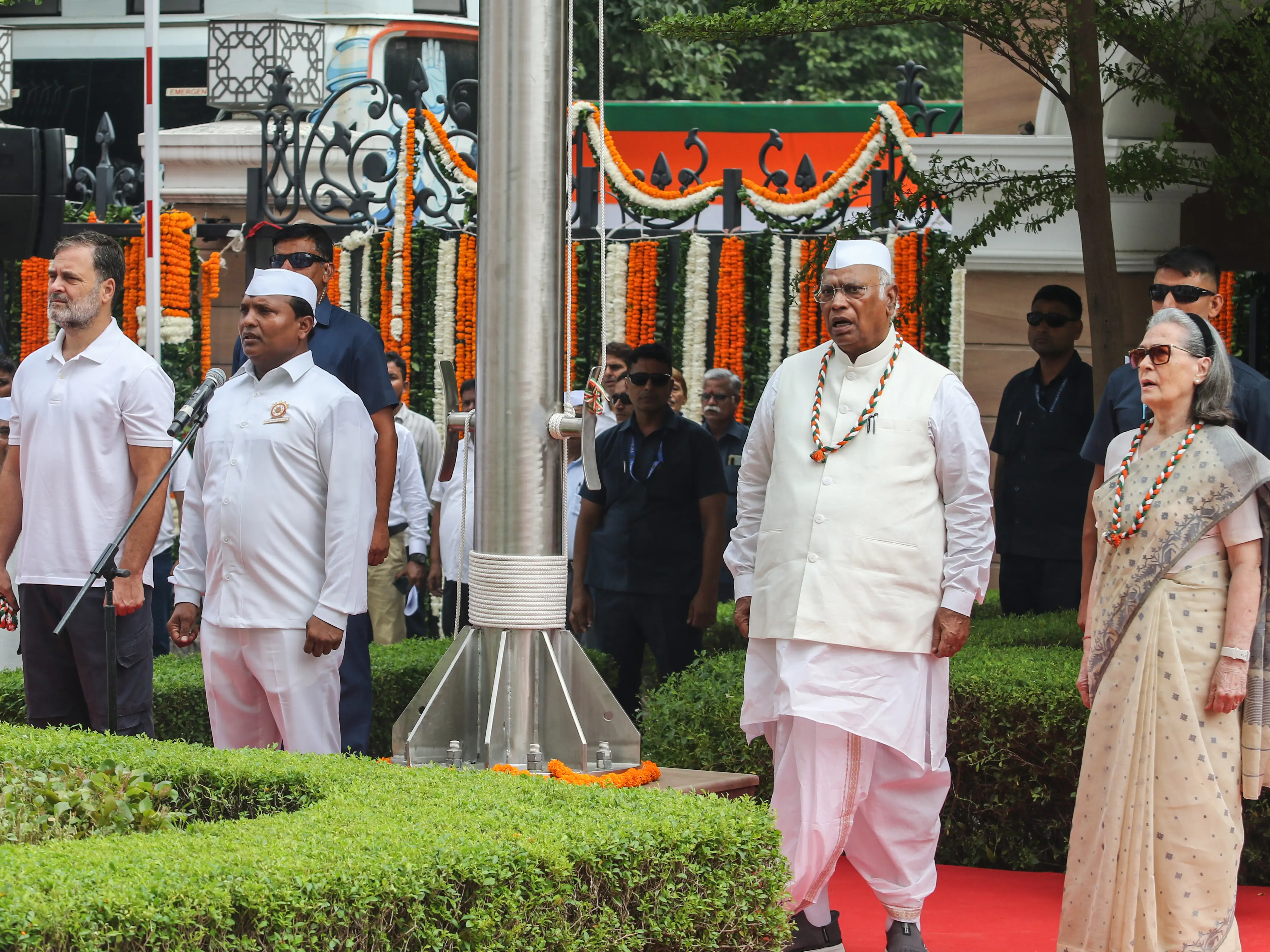
ICC Parliamentary Party Chairperson Sonia Gandhi, AICC President Mallikarjun Kharge, Lok Sabha LoP Rahul Gandhi during flag unfurling on occasion of the 80th Independence Day celebrations at Indira Bhawan, in New Delhi on Saturday Photograph: (ANI)
BJP MLA and Bankim Chandra Chattopadhyay’s descendant Sumitro Chatterjee has demanded an unconditional apology from Sonia Gandhi over an alleged Vande Mataram disruption.
BJP MLA Sumitro Chatterjee, a direct descendant of author Bankim Chandra Chattopadhyay, has written to Congress Parliamentary Party chairperson Sonia Gandhi, demanding an unconditional public apology over an alleged disruption to the national song Vande Mataram. The controversy follows an incident in the All India Congress Committee headquarters during Independence Day celebrations on August 15, 2026.
The BJP MLA from Naihati in West Bengal alleged that there was “discomfort” and repeated attempts to disrupt the singing of the full version of Vande Mataram. He termed the incident a “shameless repetition of a historical mistake”. He drew a parallel to 1937 when the Congress Party supposedly "bowed" to Mohammad Ali Jinnah's objections and truncated the song. He claimed that he felt "deep pain, emptiness and anger" over the leadership's discomfort with the full rendition of the song. He said that the song does not belong to any political party but rather belonged to every Indian and was synonymous with the country's freedom struggle.
"Her actions were truly shameful. It is an insult to the country, an insult to all of India and to the Bengali community. My entire family was hurt," said Chatterjee.
The Congress party has strongly rejected the BJP's interpretation of the event, and called it a deliberate attempt to divert the political narrative.
"There is no question of any controversy over this… There was no attempt to stop anyone. There was no attempt to stop. The Congress president had been standing for a long time; that is why Sonia Gandhi ji was saying that a chair should be brought and placed for him,” said Congress leader Jairam Ramesh.
Trending Stories
)
)
)
)
)
)
)
)
)
)
)
)
)
)
)
)
)
)
)
)
)
)
)
)
)
)
)
)
)
)
)
)
)
)
&im=FitAndFill=(700,400))
)
)
)
)
There is no general legal obligation to sing the six stanzas of the Vande Mataram. However, an MHA protocol mandates that all six stanzas of the official version must be sung at specified official functions, public gatherings, and schools. The recently passed Prevention of Insults to National Honour (Amendment) Act, 2026 extends statutory protection under Section 3 of the 1971 Act to Vande Mataram. It criminalises intentionally preventing the singing of the national song or causing disturbance to an assembly engaged in such singing. It does not specifically define the conduct that attracts criminal liability under Section 3, and expressions such as "intentionally prevents", "causes disturbance" and "assembly engaged in such singing" have no statutory definitions, leaving the content of the offence to judicial interpretation.