Which Asian nations have already struck a deal with Iran amid Trump's Hormuz ultimatum?

&imwidth=600&imheight=450&format=webp&quality=medium "Which Asian nations have already struck a deal with Iran amid Trump's Hormuz ultimatum?")
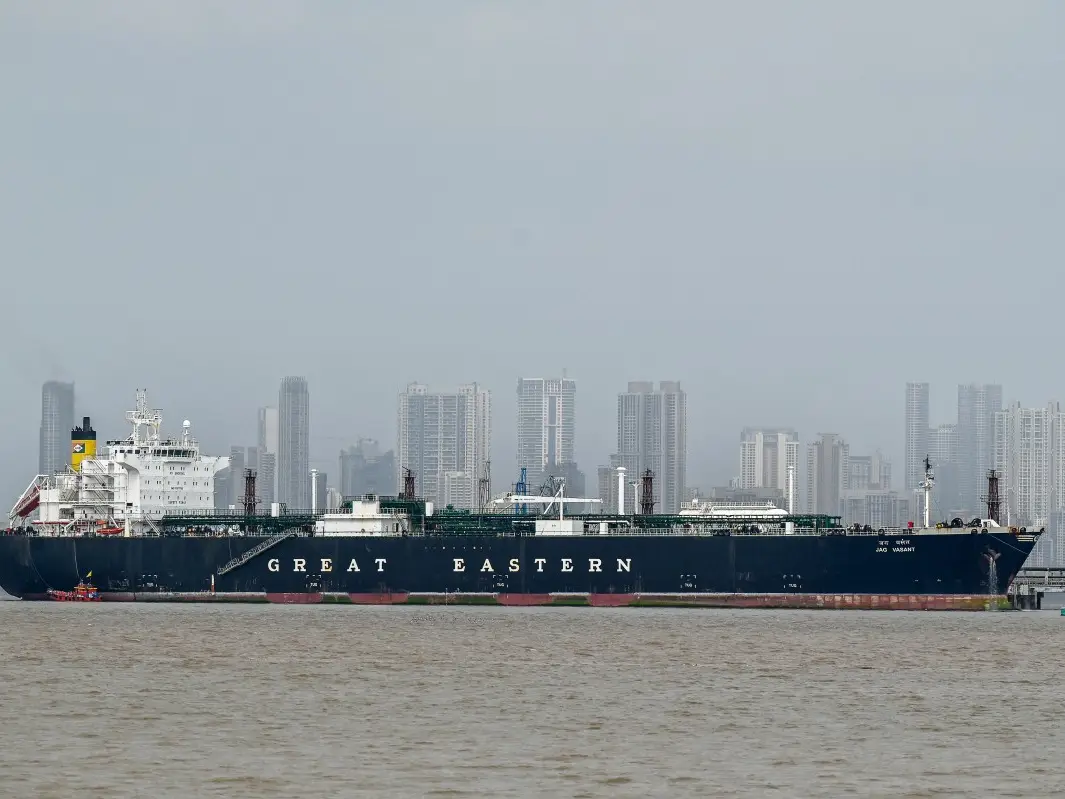
Jag Vasant, an Indian-flagged tanker carrying liquefied petroleum gas (LPG) that transited through the Strait of Hormuz amid the Middle East war, remains docked at an offloading terminal along the coast in Mumbai on April 1, 2026. Photograph: (AFP)
Several Asian countries, including India, China, the Philippines and Pakistan, have already secured tanker access as tensions escalate over the Strait of Hormuz as Trump's third deadline to open the vital naval route approaches.
As US President Donald Trump has threatened to destroy the power plants and bridges in Iran at 8:00 PM EST on Tuesday if Iran does not unconditionally open the Strait of Hormuz. Trump has described the deadline as “final” and “highly unlikely” to grant a further extension. This is the third time US President Donald Trump has shared a major ultimatum against Iran; he retracted on his previous two deadlines. Iran, on the other hand, mocked the US President, saying that they have "lost the key" and then suggesting that they have found the key, but it's open only for friends. As of early April, several Asian countries have struck up some form of agreement with Iran to ensure the safe passage of their tankers. These agreements have been framed as a "diplomatic breakthrough" by these Asian countries.
Which Asian nations have struck a deal with Iran?
The East Asian country Philippines, which imports roughly 98 per cent of crude oil from West Asia, declared an energy emergency on March 25, 2026. The Philippines, which is a traditional US allies have, after high-level talks with the Iranian official, secured a “non-hostile” status for its vessels. There is no Toll fee imposed on the Philippine vessels that are using the Strait of Hormuz.
India, which had a history of strategic non-alignment, was considered a “friendly nation” by the Iranian officials, and Indian External Affairs Minister S Jaishankar has stated that India has secured passage as a result of focused diplomacy and direct engagement. However, the terms of the agreement remain opaque, and there were reports that Iran may charge a fee for passage through the Strait of Hormuz. "Our Indian friends are in safe hands, no worries," the Iranian Embassy in India posted on X last week.
China, one of the largest buyers of Iranian oil, confirmed last week that its vessels have crossed the Hormuz. Though it didn't mention the nature of the agreement with the Iranians, "Following coordination with relevant parties, three Chinese vessels recently transited the Strait of Hormuz. We express our gratitude to the relevant parties for the assistance provided," said a Foreign Ministry official of China. Vessel tracking data shows a large number of US-sanctioned Iranian vessels reached Chinese shores.
Trending Stories
)
)
)
)
)
)
)
)
)
)
)
)
)
)
)
)
)
)
&im=FitAndFill=(700,400))
)
)
)
&im=FitAndFill=(700,400))
)
&im=FitAndFill=(700,400))
&im=FitAndFill=(700,400))
)
Iran has also agreed to pass 20 Pakistan-flagged tankers through the Strait of Hormuz in late March; the daily limit is up to two vessels. Ishaq Dar, Pakistan’s foreign minister, announced the decision, hailing Iran as “a harbinger of peace”. Reports from various outlets suggest that a $2million fee for each crossing was settled in Chinese yuan.
Malaysian Prime Minister Anwar Ibrahim also expressed gratitude for the “early clearance” of its vessels. The details of the agreement have not been disclosed, but Malaysia has been exempted from the $2million toll fee. The same is the case for Turkey, which is playing the role of “negotiator” as well. Turkey said its Ocean Thunder tanker, carrying crude oil from Iraq to Malaysia, safely passed through the strait on Sunday. Japan is also working to negotiate safe passage for its vessels; it has already secured passage for three individual vessels since the conflict began.