'Macron resign': Massive protest in France amid political instability, protesters clash with police - What's happening

&imwidth=600&imheight=450&format=webp&quality=medium "'Macron resign': Massive protest in France amid political instability, protesters clash with police - What's happening")
France protest Photograph: (AFP)
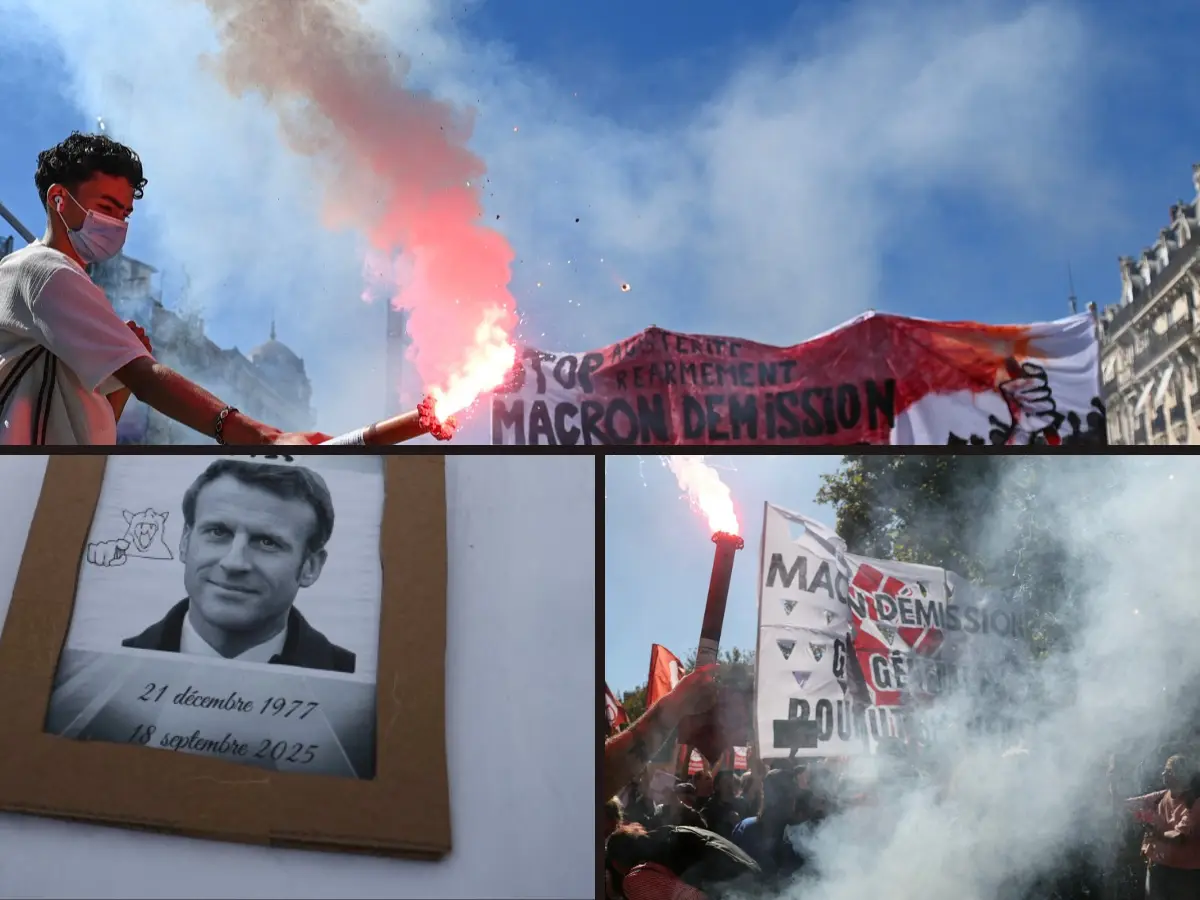
France saw nationwide protests and strikes on Sep 18 against Macron’s austerity policies. Public transport, schools, and pharmacies were disrupted. Over 76,000 protested by noon, with clashes in Paris, Lyon, and Marseille. Anger grows over cost-cutting and tax burdens.
A nationwide protests was organised in France on Thursday (Sep 18) to oppose President Emmanuel Macron's austerity policies amid political instability in the country. Over 80,000 police and gendarmes have been mobilised across France, supported by drones, armoured vehicles, and water cannons. The interior ministry projected that 600,000 to 900,000 people would join the nationwide protests. By Thursday noon, around 76,500 had participated, with Interior Minister Bruno Retailleau noting the demonstrations were "less intense than anticipated," AFP reported.
Why are the protesters angry
Protesters disrupted public transport and schools were closed down as they took to the streets. Clashes were also reported with the police. Police in Paris and Marseille used tear gas to disperse protesters. In Lyon, a France TV journalist and a police officer were injured during clashes. In Lille, protesters blocked bus depots. "The aim is to show the government that we're here, that we're fed up with being taxed like crazy," a protester was quoted by AFP.
Why people are angry at Macron?
Trending Stories
)
)
)
)
)
)
)
)
)
)
)
)
)
)
)
)
&im=FitAndFill=(700,400))
)
)
)
)
)
)
)
)
)
)
)
)
)
&im=FitAndFill=(700,400))
)
)
)
)
)
)
)
)
)
)
&im=FitAndFill=(700,400))
Public anger toward President Emmanuel Macron has been building since early 2023, when his government pushed through a deeply unpopular pension reform—raising the retirement age—without a parliamentary vote. This sparked months of protests and unrest. Now, with only 18 months left in office and facing record-low approval ratings, Macron is seen by many as the root cause of the country’s political and social turmoil. Critics like Jean-Luc Mélenchon have openly blamed him for the current chaos, saying his actions have directly led to the unrest.
A draft 44-billion-euro ($52-billion) cost-saving budget by the French government has been a major reason that former Prime Minister Francois Bayrou faced massive outrage. Now, the new PM Sebastien Lecornu is also facing the same heat. More so as Lecornu is former defence minister and close Macron ally. Authorities fear further escalation, with concerns that violent groups could hijack protests—prompting police to urge central Paris businesses to close during demonstrations. An earlier protest on September 10 fell short of its goal to "block everything," but the latest unrest suggests Macron’s policies continue to inflame tensions nationwide.