No, humans did not really change Moon's temperatures during Covid lockdown: Study

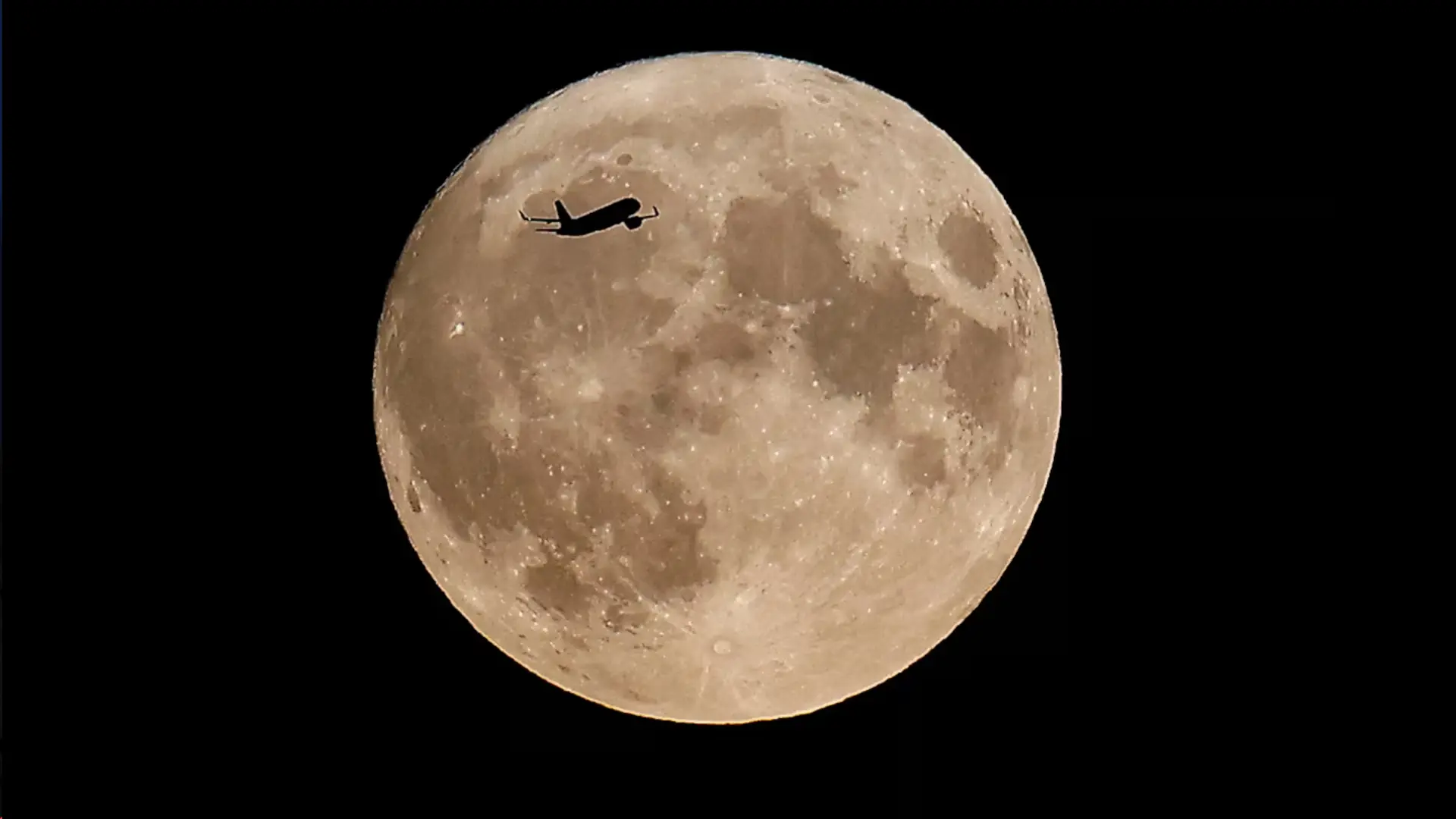
Science | Trending | Data from NASA's Lunar Reconnaissance Orbiter suggests natural fluctuations in Moon's temperatures rather than human-induced changes during the Covid pandemic
In 2024, scientists came up with a strange theory that the Moon got substantially cooler during the coronavirus (COVID-19) pandemic and the lockdown was the reason for it. The hypothesis forced normal people to think about the time when Earth was gripped by the pandemic in early 2020 and nations imposed lockdowns. But now, scientists have said that the two aspects - the pandemic and Moon's temperature - were not related.
Last year, scientists from the Physical Research Laboratory in India's Ahmedabad observed that lunar nighttime surface temperatures dipped substantially across six observation sites on the near side of the Moon between April and May 2020.
Their findings were published in the journal Monthly Notices of the Royal Astronomical Society: Letters.
However, researchers from the Missouri University of Science and Technology (Missouri S&T) and the University of West Indies (UWI) found issues with the hypothesis when they analysed the data closely.
In the latest study, published in the same journal, researchers noted that just like in 2020, there was also a dip in lunar temperatures in 2018. There was a steady decline in 2019. The collective timestamp doesn't align with the period of the Covid pandemic and its lockdowns.
Trending Stories
)
)
)
)
)
)
)
)
)
)
)
)
)
)
)
)
)
)
)
)
)
)
)
)
)
)
)
)
)
)
)
)
)
)
&im=FitAndFill=(700,400))
)
)
)
)
As quoted by Science Alert, civil engineer William Schonberg from Missouri S&T said, "The idea that our activity, or lack of activity, on Earth would have a significant influence on the temperatures of the Moon – which is almost 240,000 miles from us – didn't seem likely, but we decided to keep an open mind and conduct additional research."
The study noted that the temperature readings gathered by NASA's Lunar Reconnaissance Orbiter suggest cyclical fluctuations instead of one significant dip.
In the latest article, the researchers said several factors are responsible for any change in Moon's temperature and also weighed in on a 2021 study which found that emissions reduction during the pandemic could only have affected the lower parts of Earth's atmosphere.
"We're not disputing that the temperatures did go down at different times during the time frame studied, but it seems to be a bit of a stretch to state with any certainty that human activity was the primary cause of this," Schonberg added.
In the conclusion of the new study, the researchers said that be it Covid or any other period, human activity is unlikely to have an impact on the temperatures on the Moon.
"During the Moon's nighttime, there is a small possibility that heat and radiation from Earth might have a very small effect on the lunar surface temperatures," Schonberg said.
"But this influence would probably be so minimal that it would be difficult to measure or even notice," he added.
(With inputs from agencies)