What Smit Machchhar, aviation tragedies teach us about crisis management | Explained

&imwidth=600&imheight=450&format=webp&quality=medium "What Smit Machchhar, aviation tragedies teach us about crisis management | Explained")
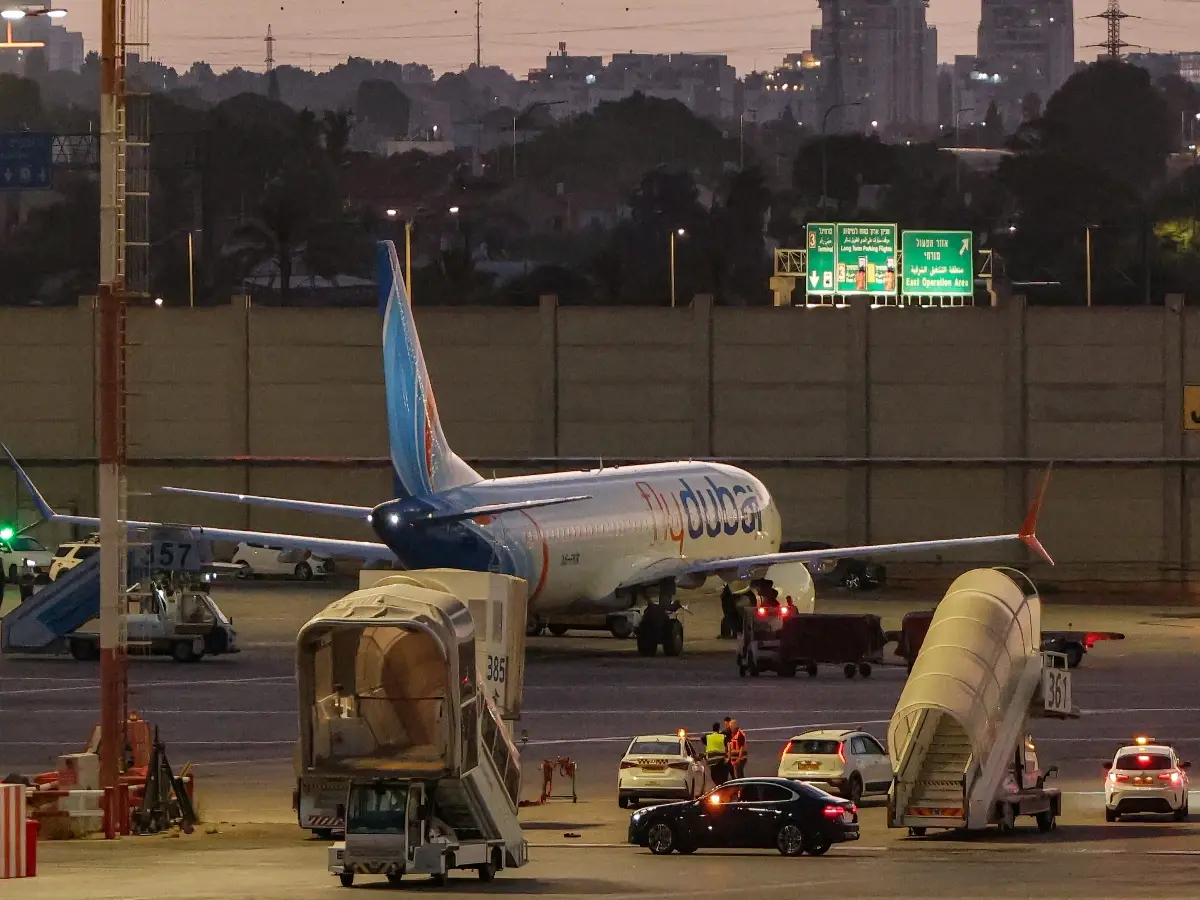
flydubai plane at an airport Photograph: (AFP)
Machchhar's action is particularly striking because he was not operating in comfortable circumstances. He was seriously injured, under attack and confronted with the possibility of hundreds of lives being lost.
There are moments in life when there is no time to think about what should be done. There is only time to do what one has been trained to do. That is what makes the flydubai FZ1073 incident involving Indian Captain Smit Machchhar so powerful.
On September 30, the Dubai-Tel Aviv flight carrying 174 passengers descended rapidly after an alleged confrontation in the cockpit in which Machchhar was seriously injured. Despite his injuries, the Indian captain managed to unlock the cockpit door, enabling passengers and other pilots on board to intervene. The aircraft was eventually brought under control and diverted safely to Tabuk, Saudi Arabia. The aircraft reportedly descended nearly 14,000 feet in less than 30 seconds.
The story is still subject to investigation, including the motive behind the confrontation. But one fact is already clear: when a situation moved far beyond normal procedures, human courage and trained responses mattered enormously.
Machchhar's action is particularly striking because he was not operating in comfortable circumstances. He was seriously injured, under attack and confronted with the possibility of hundreds of lives being lost. Yet, instead of surrendering to panic, he took an action that allowed others to enter the cockpit and help regain control.
That is where the incident becomes a lesson for global civilisation.
A Hero Recognised Across Borders
Trending Stories
)
)
)
)
)
)
)
)
)
)
)
)
)
)
)
)
)
)
)
)
)
)
)
)
)
)
)
)
)
)
)
)
)
)
&im=FitAndFill=(700,400))
)
)
)
)
The extraordinary response to Machchhar's actions has crossed national boundaries.
Prime Minister Narendra Modi called Captain Machchhar a “HERO”, saying that despite being seriously injured, he showed “immense courage” and an “unwavering resolve to protect the lives of others”. Modi said his valour helped save hundreds of lives and avert a great tragedy, adding that India was proud of him and praying for his recovery.
President Droupadi Murmu similarly praised his “heroic courage and incredible presence of mind”. She said that even after being seriously injured in a moment of grave peril, Machchhar remained determined to protect others, and that his bravery and quick response helped prevent a major tragedy. She concluded: “I salute his indomitable spirit.”
US President Donald Trump also described Machchhar as a hero while discussing the incident. Trump said that despite being in very bad shape, the pilot's decision to open the cockpit door was heroic and enabled others to intervene.
Israeli Prime Minister Benjamin Netanyahu called Machchhar a “true hero”, noting that the captain fought back, resisted the attack and opened the cockpit door, enabling passengers and crew to overpower the attacker and preventing what Netanyahu described as a catastrophic mid-air disaster.
The significance of these tributes lies not merely in the word “hero”. Four leaders from different countries and institutions recognised the same qualities: courage under extreme pressure, presence of mind and an instinct to protect human life.
Modern civilisation often celebrates technology. We speak about artificial intelligence, automation, autonomous vehicles and increasingly sophisticated aircraft. But when systems fail or circumstances become unpredictable, technology still depends upon the quality of human judgement.
A trained mind does not necessarily eliminate fear. It learns how to function despite fear.
Aviation has repeatedly demonstrated this.
Hudson River: When an Airliner Became a Boat
On January 15, 2009, US Airways Flight 1549 lost almost all thrust in both engines after hitting birds shortly after take-off from New York. Captain Chesley “Sully” Sullenberger and First Officer Jeffrey Skiles landed the Airbus A320 on the Hudson River. All 155 people aboard survived, although several people suffered serious injuries. The US National Transportation Safety Board documented the complete loss of thrust and subsequent ditching.
The event became a lasting example of how training, judgement and teamwork can compress years of aviation experience into a few critical minutes.
Gimli Glider: Flying Without Fuel
Then there was Air Canada Flight 143 — the famous Gimli Glider — in 1983.
The Boeing 767 ran out of fuel at 41,000 feet. Captain Robert Pearson's experience with gliding became crucial. With the engines gone and limited systems available, the crew used extraordinary airmanship to bring the aircraft down safely at a former air force base.
There were no deaths or serious injuries.
British Airways 9: Four Engines Go Silent
In 1982, British Airways Flight 9 flew through volcanic ash from Mount Galunggung.
All four engines of the Boeing 747 failed at cruising altitude. Captain Eric Moody calmly managed the aircraft as a glider until the engines could be restarted. The aircraft subsequently landed safely in Jakarta, with everyone aboard surviving.
The episode demonstrated the value of calm decision-making when an apparently impossible situation develops thousands of feet above the ground.
Air Transat 236: The Atlantic Glide
In 2001, Air Transat Flight 236 lost both engines over the Atlantic after exhausting its fuel.
Captain Robert Piché and First Officer Dirk DeJager glided the Airbus A330 toward the Azores and landed at Lajes. All 291 passengers and 13 crew survived.
It was another reminder that when propulsion disappears, training and airmanship become the aircraft's most important remaining assets.
Qantas 32: 50 Minutes of Relentless Decision-Making
In 2010, Qantas Flight 32 suffered an uncontained engine failure shortly after take-off, causing extensive damage and multiple system failures on an Airbus A380 carrying 469 people.
The crew spent about 50 minutes assessing the aircraft, managing cascading problems and preparing for the landing. The aircraft eventually landed safely at Singapore, with no reported injuries among passengers or crew.
These five episodes are different in their causes, aircraft and circumstances. Yet they share one common thread: the crisis was bigger than any individual pilot, but the response depended upon individuals who refused to lose control of themselves.
That is the real lesson of Smit Machchhar.
Heroism is often portrayed as a sudden burst of extraordinary bravery. Aviation suggests something more profound. Heroism can be the outcome of thousands of hours of ordinary discipline — training repeatedly performed until the correct response becomes instinctive.
A pilot does not train only to fly when everything is normal. Training exists for the abnormal: fire, engine failure, loss of control, medical emergencies, communication breakdowns and situations that may never have been imagined.
The same principle applies far beyond the cockpit.
A doctor in an emergency room, a firefighter entering a burning building, a soldier under attack, a rescue worker during a disaster or an ordinary citizen helping another person in danger may face the same psychological battle: fear versus responsibility.
The trained mind does not always choose courage because courage feels easy. It chooses action because responsibility has become stronger than fear.
Captain Machchhar's story therefore belongs not merely to India or to aviation. It belongs to a larger human narrative — a reminder that civilisation survives not only because of its machines, but because people are prepared to protect other human beings when machines and circumstances fail.
The most powerful lesson from the flydubai cockpit may therefore be simple: Train the mind before the crisis arrives. Because when the moment comes, there may be no time left to learn how to be brave.