Supreme Court agrees to hear petition challenging CEC Gyanesh Kumar's functioning, SIR exercise

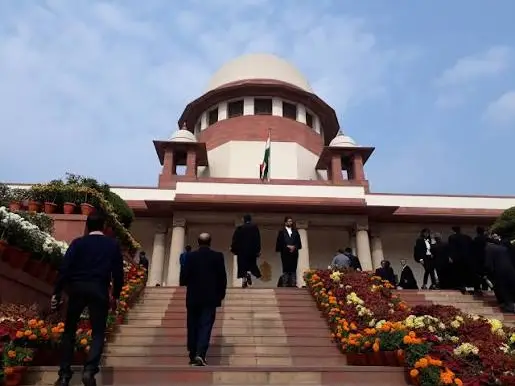&imwidth=600&imheight=450&format=webp&quality=medium "Supreme Court agrees to hear petition challenging CEC Gyanesh Kumar's functioning, SIR exercise")
The Supreme Court agrees to hear plea against CEC. Photograph: (Wikimedia Commons)
The petition followed days after The Indian Express reported that Election Commissioners Vivek Joshi and Sukhbir Singh Sandhu had raised objections at least 14 times over the past 10 months over the decision of the SIR of electoral rolls.
The Supreme Court on Tuesday (September 29) agreed to hear a petition next week questioning the functioning of Gyanesh Kumar, the Chief Election Commissioner and seeking to have the nationwide Special Intensive Revision (SIR) of electoral rolls declared illegal. The petition followed days after The Indian Express reported that Election Commissioners Vivek Joshi and Sukhbir Singh Sandhu had raised objections at least 14 times over the past 10 months over the decision of the SIR of electoral rolls. Both commissioners accused that some of the decisions related to SIR were taken without their knowledge or recommendation.
However, the Election Commission stated that Sandhu and Joshi sent letters to the Cabinet Secretary related to an officer on deputation and had nothing to do with policy or IT division matters. Senior Advocate Vikas Singh, representing petitioner Rakesh Kumar Singh, asked a three-judge bench headed by Chief Justice of India Surya Kant to take up the matter on an early date.
“The purpose of having a multi-member Commission was that, and the statute says so, that it has to be a decision unanimously or by majority. Now, the way the Election Commission has functioned, there is serious doubt about whether the decision of the Election Commission also was there for this entire exercise of SIR,” Singh said.
“Because if the Commission has not taken a unanimous decision, then this… And what Your Lordship also has decided (is) on the basis that it is a Commission’s decision. So it is a serious issue. I am only requesting an early date for listing,” he also said, adding that the CJI later directed it be listed next week.
What Article 324(1) of the Constitution says
Trending Stories
)
)
)
)
)
)
)
)
)
)
)
)
)
)
)
)
)
)
)
)
)
)
)
)
)
)
)
)
)
)
)
)
)
)
&im=FitAndFill=(700,400))
)
)
)
)
The petition pointed to the reported differences between CEC Kumar and fellow Commissioners Sandhu and Joshi, along with the objections they had raised. It argued that Article 324(1) of the Constitution does not place the superintendence, direction and control of elections in the hands of an individual Chief Election Commissioner, but in a Commission as a whole.
Singh noted that under Article 324(2), the Election Commission consists of the Chief Election Commissioner along with as many other Election Commissioners as the President may decide to appoint from time to time. He further pointed out that Article 324(3) states that once other Election Commissioners are appointed, the Chief Election Commissioner serves as the Commission's Chairman.

