'Newton' -- a sweet film with a bitter aftertaste

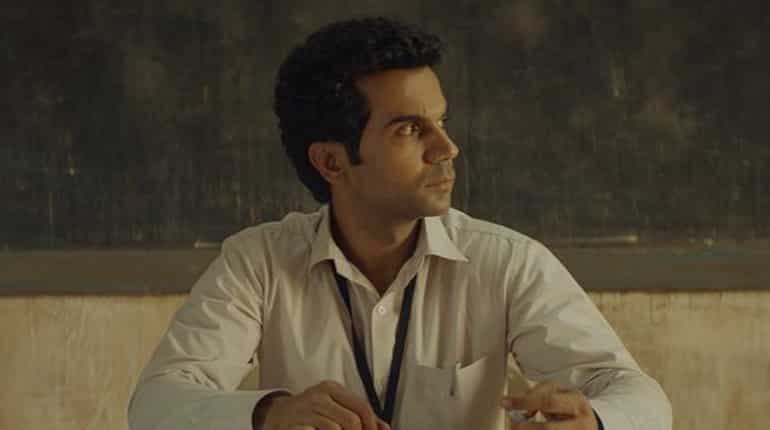
Newton
What the film manages to do is shift the attention of the south Delhi multiplex-visiting audience to the Dandakaranya forest in Central India
By Anuradha Mukherjee
A burnt out Delhi journalist heads to Mumbai and decides to try his hand at writing Hindi film scripts in the industry fondly called Bollywood. Sounds like a flop plot at the outset, but this is exactly the kind of storyline that Mayank Tewari and Amit V Masurkar can turn into a sleeper hit.
-20170924015254.jpg) 'Newton', the official Indian entry for Oscars 2018 was co-scripted with a lot of sincerity by Mayank Tewari and director Amit V Masurkar (Others)
'Newton', the official Indian entry for Oscars 2018 was co-scripted with a lot of sincerity by Mayank Tewari and director Amit V Masurkar (Others)

Both critics and audiences have approved the choice as apt for an Oscar entry after a long time. What the film manages to do is shift the attention of the south Delhi multiplex-visiting audience, even if ever so fleetingly, to the Dandakaranya forest in Central India, forbidding not just because of the Naxalites living in its dark folds, but also for being one of the most difficult, impenetrable terrains in India for hundreds of years.
Mining companies now want to make inroads into the resource rich zone. Caught in the crossfire are the adivasis, or the aboriginal populace, who have lived in the jungles for the millennia. In this melee arrives the film's protagonist Newton (Nutan) Kumar, a newly minted upper division clerk, on his first election deployment as the presiding officer of a polling booth meant for only 76 voters.
"We were ourselves shocked to hear of the decision to send "Newton" to the Oscars as India's official entry. This film released today, and even as the first show was on, the committee gave a universal decision (in favour of the film). This is a huge surprise," Tewari, who wrote the film's screenplay with Masurkar, told WION soon after news of his film's success broke out on Friday. The duo had first come together to make the slacker-comedy independent film, "Sulemani Keeda" in 2013. Tewari says he has already finished writing his next film for Ajay Bahl of "BA Pass" fame. "It is a dark love story," is all he is willing to say about his next venture.
)
US vs China over South China Sea: Washington backs Philippines, Beijing hits back
)
Bigg Boss 20: Isha Rikhi evicted after three weeks in Salman Khan’s show
)
Musk plans to more than double xAI's chips to over 1.2 million Nvidia GPUs by year-end
)
After JU, clash erupts at SRFTI: BJP’s ‘Dimagi Naxal’ jibe sparks political firestorm after students protest RSS-linked event
)
‘Anti-social elements spreading false rumours’: LPU issues statement amid massive unrest over alleged rape
)
LPU students go on rampage, vandalise campus amid widespread protest: What's happening
)
Trump asked Xi to pressure Iran. China did not say yes — here’s what Beijing wants
)
US Treasury Secretary Scott Bessent hails global crackdown on Iranian banks and airlines
)
An OpenAI agent escaped its locked test cage again, by hiding questions in DNS lookups
)
'Our video was trimmed': LPU girls who featured in rape-denial video make U-turn
)
3 males killed, four others injured in shooting after fight at strip club in Detroit
)
'Victory for low-budget consumers': Raghav Chadha hails 30-day telecom recharge rules
)
Claude rebuilt the 1989 game 'Prince of Persia' by reusing the original's own code
)
Beyond metros: How Tier-2 and Tier-3 cities could drive India’s next AI wave
)
Tesla builds first Cybertruck with its own refined lithium: Elon Musk's $1 billion Texas bet pays off
)
IndiGo flight suffers tail strike in Bengaluru while landing; DGCA to probe incident
)
The US and China set up an AI 'red telephone', but skipped the rulebook
)
‘Terror suspects arrested near UK air base were looking to do big damage’: Trump
)
Russian envoy claims US tactics to contain India were revealed in ‘Freudian slip’
)
IND vs WI 1st ODI: Kohli breaks Sachin's most runs in one country record with unbeaten 139 as India thump West Indies by 8 wickets
)
Researchers rebuilt exactly how 700 AI agents hacked Hugging Face: a 900-link chain trick
)
‘Olympic inclusion is our major target’: WPA President Ishaun Singh on pool’s global ambitions
)
Nations League: Spain sink England at Wembley; Modric shines for Croatia
)
Why has Iran released no proof of life of Mojtaba Khamenei? Araghchi reveals...
)
'What kind of confession is this?': Pakistan PM Shehbaz Sharif’s 'terrorists would be roaming New York' remark goes viral, raises alarm online. Watch
)
South Korea demands apology from Ukraine over North Korean prisoners' transfer
)
Beyond BrahMos: India targets Rs 50,000 crore in defence exports with unmatched price edge
)
Sri Lankan Tamil migrant worker gets death sentence in Saudi Arabia, help sought from India
)
Muslim marriage cannot shield sex with minor wife from prosecution under POCSO: Delhi HC
)
'Can't help but draw painful parallels to Nirbhaya case': SC on latest incidents of rape cases in Delhi-NCR
)
99.9% more powerful - Scientists find boy who can recall memories from just 3 months of age
)
'FIRST LOOK from inside Noah’s Ark': Researchers share video from inside mysterious mound in Turkey
)
UNSC reform momentum grows: Russia, Portugal, Mauritius push for India's permanent seat bid
)
8 US marines injured in Iranian missile attack on vessel in Strait of Hormuz: Report
&im=FitAndFill=(700,400))
New OTT releases this week (September 28-October 4, 2026): Dupahiya 2, Pooja Meri Jaan, Ohh My Dog- 5 titles coming on Netflix, Prime Video and more
)
Afghanistan says 28 fighters killed in clash near Pakistan border, Islamabad denies
)
Ceuta migrant crisis: Protesters take to streets as Spain grapples with migrant challenge
)
LPU suspend classes, postpones exams as violence escalates over rape claims: What's happening
)
New York City wants a 'kill switch' on every AI, and will pay whistleblowers who report violations
Tewari credits Masurkar, who is also the director, with the idea of the film and much of the research.
"Amit transformed into a complete journalist for researching the subject. I am too burnt out as a journalist to help him. We visited Chhattisgarh to study our subject and terrain in October 2015. There I met one of the most amazing journalists there. His name is Mangal Kunjam. All the big names who have worked on Chhattisgarh know him," said Tewari.
He was, however, a little wary of calling it a political satire outright, perhaps worried about drawing the wrong kind of attention. "It is a sweet film, a comedy. That's why people like it so much. We have been given the Universal viewing certificate," he says, a little tongue-in-cheek, it appeared to this writer. Comparisons have been drawn with the 80s jewel "Jaane Bhi Do Yaaron"and Tewari is quick to agree to the comparison.
"It is an art house film, but it's a comedy. Definitely can be categorized as in the class of "Jaane Bhi Do Yaaron"class of films. There was no sexual tension in "Jaane bhi"... and whatever little is there, between the photographer and editor, it fizzles out soon. There is no such tension in "Newton", too. It is a sweet film, but yes, it also has an important message," Tewari told WION.
The film starts with a simple, but poignant lesson for the rookie government official Newton from his superior, that his namesake, Isaac Newton, established that everyone is equal in nature's laws, whether rich industrialist Ambani, or the woman selling tea to them. However, towards the end of the film, Newton Kumar finds himself pushed face down in the dust, arms twisted behind his back, completely overpowered by Aatma Singh, in charge of the security detail.
However, there are no victors or personal enmity among the main characters of the film. Aatma Singh, played by Pankaj Tripathi, is the battle-hardened soldier, trying to keep his "brave boys" from dying in an increasingly bloody battle with Naxalites, without required weapons or resources. He is merely trying to do his job and so is Newton as he understands it. They are all regular folks going about their work, made powerful or powerless by their circumstances. And somehow the adivasi is still on the fringe of this narrative, lurking in the background, other than Booth Level Officer Malko Netam, played by Anjali Patil.
The Naxalites, too, make a fleeting appearance in the beginning of the film, in a scene where a local politician is gunned down, but their threat looms as a subtext in the entire film.
"Newton"the film does not preach or go into spiels about political theory, the message the audience draws is their own to deduce. Even as this writer walked out of the theatre after the show, two young girls were discussing the film. "Matlab hamesha each nah bola chahiye, kyunki sab jhooth boltey hai (You should not speak the truth always, because everyone lies)," was their deduction.