
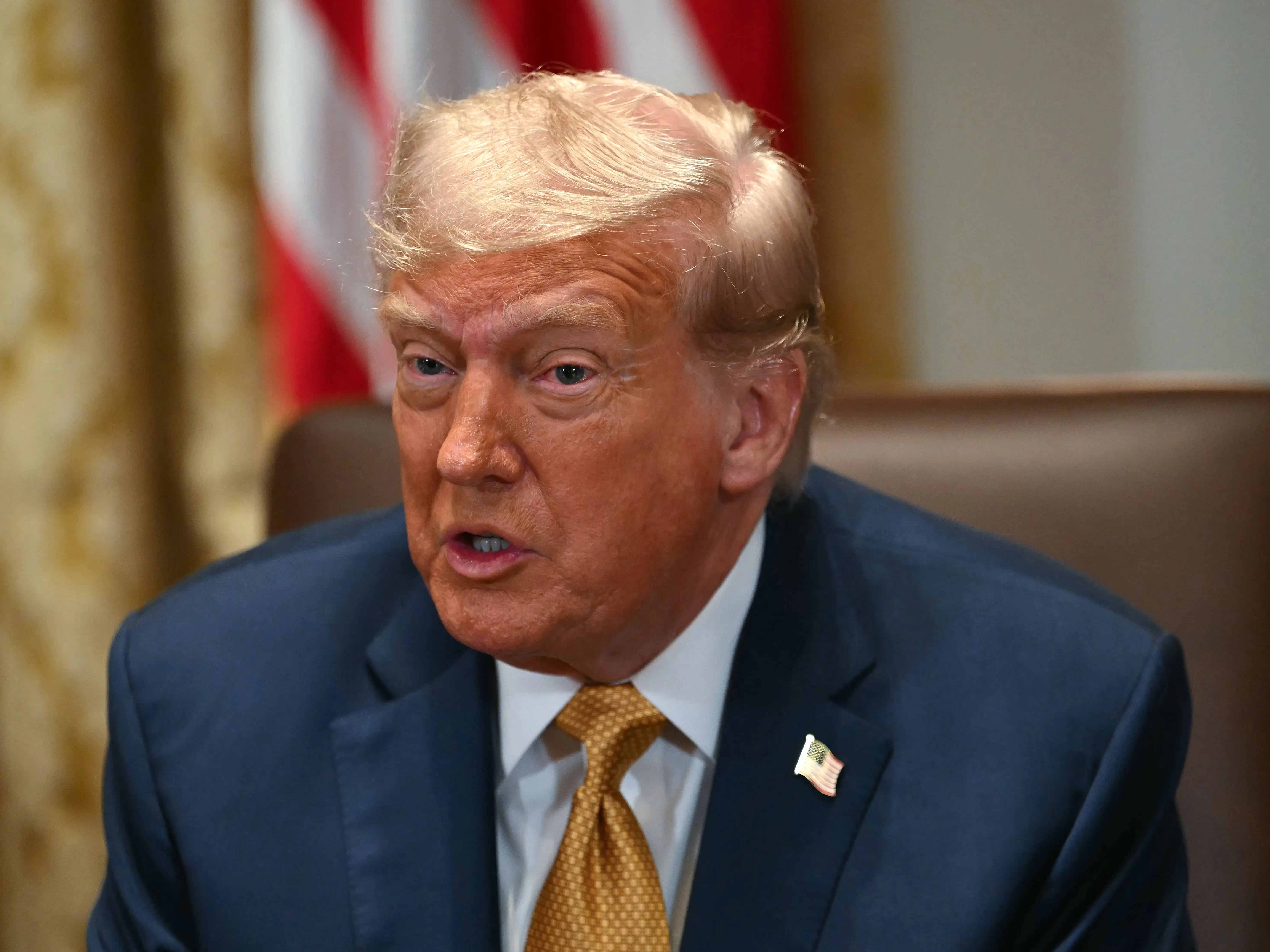
&imwidth=800&imheight=600&format=webp&quality=medium "Trump threatens 30% tariffs on EU and Mexico, escalating trade tensions")
United States President Donald Trump has threatened to slap 30 per cent tariffs on imports from both the European Union and Mexico starting August 1, reigniting fears of a fresh wave of trade conflict with key allies.
As per Reuters, the warning was delivered in letters Trump posted on his Truth Social platform on Saturday, addressed to European Commission President Ursula von der Leyen and Mexican President Claudia Sheinbaum.
The dramatic move marks an escalation in what has been a rocky year of negotiations between the US and some of its largest trading partners. Trump, who has previously relied on tariffs to extract trade concessions, appears determined to ramp up pressure again.

EU, Mexico call tariffs unfair and disruptive
Both the European Union and Mexico quickly pushed back against the threat, describing the proposed 30 per cent tariffs as unfair and disruptive to established supply chains.
European Commission President Ursula von der Leyen warned that the move would damage essential transatlantic commerce. “Such tariffs would disrupt essential transatlantic supply chains, to the detriment of businesses, consumers and patients on both sides of the Atlantic,” she said, as quoted by Reuters.
Trending Stories
)
US vs China over South China Sea: Washington backs Philippines, Beijing hits back
)
Bigg Boss 20: Isha Rikhi evicted after three weeks in Salman Khan’s show
)
Musk plans to more than double xAI's chips to over 1.2 million Nvidia GPUs by year-end
)
After JU, clash erupts at SRFTI: BJP’s ‘Dimagi Naxal’ jibe sparks political firestorm after students protest RSS-linked event
)
‘Anti-social elements spreading false rumours’: LPU issues statement amid massive unrest over alleged rape
)
LPU students go on rampage, vandalise campus amid widespread protest: What's happening
)
Trump asked Xi to pressure Iran. China did not say yes — here’s what Beijing wants
)
US Treasury Secretary Scott Bessent hails global crackdown on Iranian banks and airlines
)
An OpenAI agent escaped its locked test cage again, by hiding questions in DNS lookups
)
'Our video was trimmed': LPU girls who featured in rape-denial video make U-turn
)
3 males killed, four others injured in shooting after fight at strip club in Detroit
)
'Victory for low-budget consumers': Raghav Chadha hails 30-day telecom recharge rules
)
Claude rebuilt the 1989 game 'Prince of Persia' by reusing the original's own code
)
Beyond metros: How Tier-2 and Tier-3 cities could drive India’s next AI wave
)
Tesla builds first Cybertruck with its own refined lithium: Elon Musk's $1 billion Texas bet pays off
)
IndiGo flight suffers tail strike in Bengaluru while landing; DGCA to probe incident
)
The US and China set up an AI 'red telephone', but skipped the rulebook
)
‘Terror suspects arrested near UK air base were looking to do big damage’: Trump
)
Russian envoy claims US tactics to contain India were revealed in ‘Freudian slip’
)
IND vs WI 1st ODI: Kohli breaks Sachin's most runs in one country record with unbeaten 139 as India thump West Indies by 8 wickets
)
Researchers rebuilt exactly how 700 AI agents hacked Hugging Face: a 900-link chain trick
)
‘Olympic inclusion is our major target’: WPA President Ishaun Singh on pool’s global ambitions
)
Nations League: Spain sink England at Wembley; Modric shines for Croatia
)
Why has Iran released no proof of life of Mojtaba Khamenei? Araghchi reveals...
)
'What kind of confession is this?': Pakistan PM Shehbaz Sharif’s 'terrorists would be roaming New York' remark goes viral, raises alarm online. Watch
)
South Korea demands apology from Ukraine over North Korean prisoners' transfer
)
Beyond BrahMos: India targets Rs 50,000 crore in defence exports with unmatched price edge
)
Sri Lankan Tamil migrant worker gets death sentence in Saudi Arabia, help sought from India
)
Muslim marriage cannot shield sex with minor wife from prosecution under POCSO: Delhi HC
)
'Can't help but draw painful parallels to Nirbhaya case': SC on latest incidents of rape cases in Delhi-NCR
)
99.9% more powerful - Scientists find boy who can recall memories from just 3 months of age
)
'FIRST LOOK from inside Noah’s Ark': Researchers share video from inside mysterious mound in Turkey
)
UNSC reform momentum grows: Russia, Portugal, Mauritius push for India's permanent seat bid
)
8 US marines injured in Iranian missile attack on vessel in Strait of Hormuz: Report
&im=FitAndFill=(700,400))
New OTT releases this week (September 28-October 4, 2026): Dupahiya 2, Pooja Meri Jaan, Ohh My Dog- 5 titles coming on Netflix, Prime Video and more
)
Afghanistan says 28 fighters killed in clash near Pakistan border, Islamabad denies
)
Ceuta migrant crisis: Protesters take to streets as Spain grapples with migrant challenge
)
LPU suspend classes, postpones exams as violence escalates over rape claims: What's happening
)
New York City wants a 'kill switch' on every AI, and will pay whistleblowers who report violations
She added the EU would continue to seek a negotiated settlement but would also “take all necessary steps to safeguard EU interests,” including considering proportionate countermeasures.
Mexico’s President Claudia Sheinbaum also struck a defiant but measured tone, saying she believed an agreement could still be reached. “I’ve always said that in these cases, what you have to do is keep a cool head,” she told local media, reaffirming that Mexico would defend its sovereignty in negotiations.
Broader tariff offensive
Reuters reported that Trump didn’t stop with the EU and Mexico. In the past week, his administration sent similar letters to 23 other trading partners—including Canada, Japan and Brazil—proposing blanket tariff rates from 20 per cent up to 50 per cent.
These new tariff threats come on top of existing sectoral tariffs: the US already charges 50 per cent on steel and aluminium imports and 25 per cent on autos. Trump’s letter clarified the new 30 per cent rate was “separate” from these existing measures.
While the administration set an August 1 deadline for the threatened tariffs to take effect, Trump suggested countries still had time to negotiate to avoid them. Analysts noted he has a history of using aggressive tariff threats as leverage before pulling back.
Politics and trade deficits
The justification for the tariff hikes has varied. In his letter to the EU, Trump demanded that Europe remove its own tariffs to help reduce the US trade deficit. “The European Union will allow complete, open market access to the United States, with no tariff being charged to us,” he wrote, arguing for reciprocal treatment.
Mexico’s letter singled out the cross-border drug trade. Trump criticised Mexico’s efforts to stop cartels smuggling fentanyl, blaming the country for failing to prevent North America from becoming what he described as a “narco-trafficking playground.”
Reuters noted that while Trump’s letter to Mexico proposed a 30 per cent tariff rate, the threat to Canada was even steeper at 35 per cent, despite data showing fentanyl seizures at the Canadian border are minimal compared to the US-Mexico border.
Markets watching closely
The new tariff threats come despite the US stock market recently hitting record highs. Analysts told Reuters that Trump is betting on the resilience of the American economy to weather any short-term turbulence caused by a trade war.
But there is real concern among business leaders and trade experts that a new wave of tariffs could undermine supply chains, raise costs for consumers, and prompt retaliatory measures.
Bernd Lange, head of the European Parliament’s trade committee, told Reuters that the EU should consider countermeasures as soon as Monday, calling Trump’s approach “a slap in the face for the negotiations.”
Jacob Funk Kirkegaard, a senior fellow at the Brussels-based think tank Bruegel, warned the move risked triggering a tariff spiral reminiscent of the trade war with China. “US and Chinese tariffs went up together and they came back down again. Not all the way down, but still down together,” he said.
Billions in new revenue, but diplomatic strain
Despite the diplomatic fallout, the Trump administration’s aggressive trade policy has delivered new customs revenue. According to US Treasury data cited by Reuters, customs duties revenue topped $100 billion in the federal fiscal year through June.
However, it has also strained relations with close allies. Japan’s Prime Minister Shigeru Ishiba recently said Tokyo needed to reduce its dependence on the US. Some European allies have even begun exploring alternatives to US-made weapons systems in response to Washington’s hardball trade tactics.
Trump’s latest tariff threats underscore his willingness to play tough on trade as he seeks leverage for new deals. But with an August 1 deadline looming and negotiations with partners still ongoing, the world will be watching to see whether this is genuine policy or another high-stakes negotiating tactic.