Why Japan PM Sanae Takaichi's India visit is strategically significant | WION Decodes

&imwidth=600&imheight=450&format=webp&quality=medium "Why Japan PM Sanae Takaichi's India visit is strategically significant | WION Decodes")
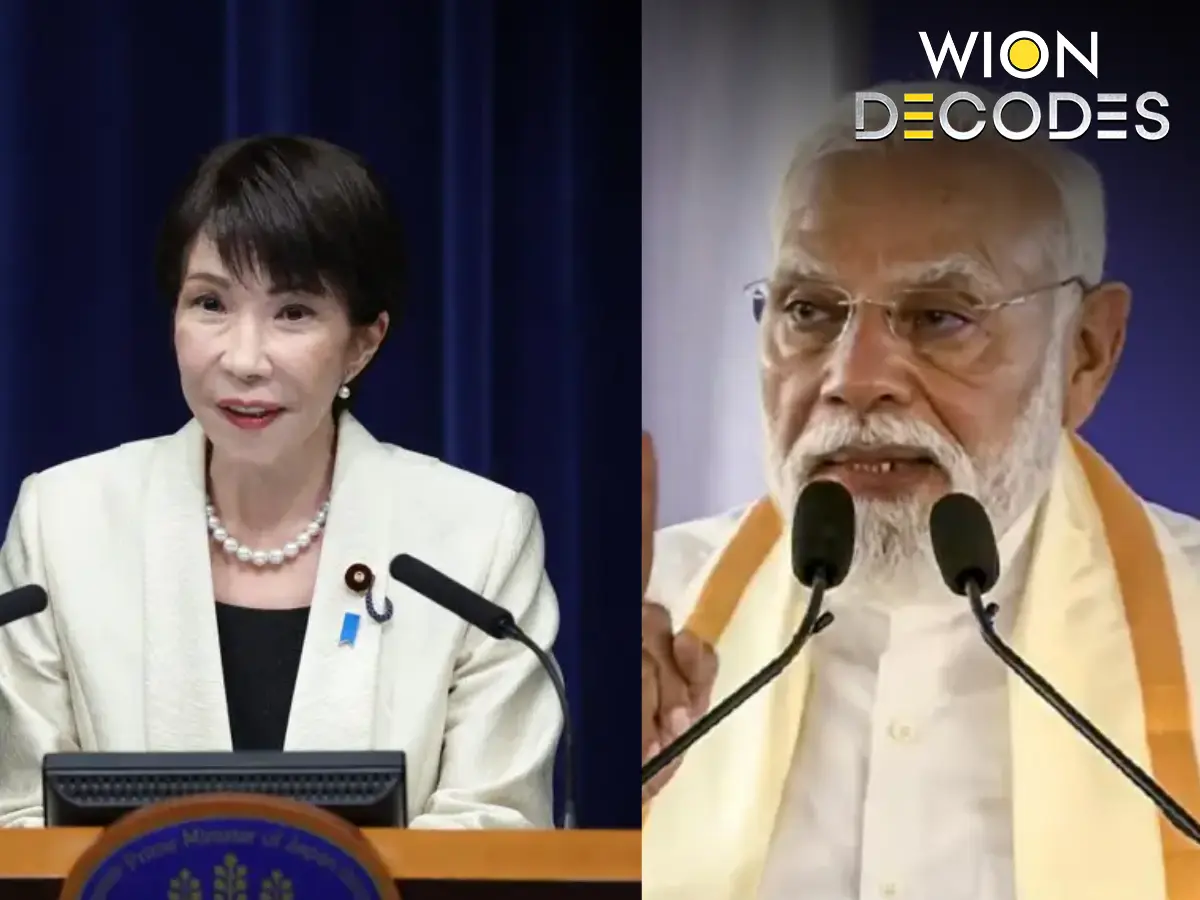
Japanese PM Sanae Takaichi and Prime Minister Narendra Modi Photograph: (AFP, ANI)
Japanese PM Sanae Takaichi's first visit to India for the 16th India-Japan Annual Summit is set to deepen cooperation in defence, trade, semiconductors, clean energy and emerging technologies. Here's why the summit is crucial
Japanese Prime Minister Sanae Takaichi is scheduled to visit India from July 1 to 3 for the 16th India-Japan Annual Summit, marking her first official trip to New Delhi since assuming office. The Ministry of External Affairs (MEA) said that India and Japan share a Special Strategic and Global Partnership rooted in a long history of cultural ties, bilateral trade, and shared economic security initiatives. The upcoming visit will cover trade, technology, infrastructure and defence cooperation, against the backdrop of an increasingly assertive China and shifting geopolitical equations in the Indo-Pacific.
What we know about India-Japan relations
Over the past decade, India and Japan have transformed their relationship into what both governments describe as a "Special Strategic and Global Partnership." The relations have been defined via various agreements signed in different sectors like defence, advanced technology, supply chains, clean energy and regional security. The two countries also signed a civil nuclear cooperation agreement in 2015. The India-Japan Act East Forum was launched in 2016 to boost connectivity projects in India's Northeast and the 15th Annual Summit in 2024 further expanded cooperation through a Joint Vision Roadmap focused on clean energy, emerging technologies and space collaboration. India’s Act East Policy and Indo-Pacific Oceans Initiative (IPOI) align seamlessly with Japan’s Free and Open Indo-Pacific (FOIP) framework. Alongside the US and Australia, both nations actively collaborate in the Quad. With Japan and China relations being a tensed one in the recent times, collaboration with India becomes an important one.
What to expect from Japan PM's visit?
As Takaichi makes her first visit to India and prepares to meet Indian Prime Minister Narendra Modi, economic security is expected to be one of the central themes of the discussions. With global supply chains being affected due to the war between Iran and the US, both countries will look to strengthen cooperation in semiconductors, critical minerals and advanced manufacturing. Trade and investment are also likely to feature in the discussion as Japan remains one of India's largest development partners and investors, with both governments seeking faster implementation of infrastructure projects and greater Japanese participation in India's manufacturing sector. The collaboration in artificial intelligence, clean energy, and defence cooperation are also expected to be high on the agenda.
Trending Stories
)
)
)
)
)
)
)
)
)
)
)
)
)
)
)
)
)
)
)
)
)
)
)
)
)
)
)
)
)
)
)
)
)
)
&im=FitAndFill=(700,400))
)
)
)
)
Japan's growing role in India and China angle
Japan has become one of India's most important partners in infrastructure development. The flagship Mumbai-Ahmedabad High-Speed Rail project, based on Japan's Shinkansen technology, remains the most visible symbol of this partnership. The project is being financed largely through ultra-concessional loans from the Japan International Cooperation Agency (JICA). Beyond the bullet train, Japanese Official Development Assistance (ODA) has supported industrial corridors, metro rail systems, connectivity projects in the Northeast and other strategic infrastructure initiatives. India continues to be the largest recipient of Japanese ODA, reflecting Tokyo's long-term commitment to India's economic growth. Recent JICA loans worth over ₹11,000 crore for multiple projects further underline this partnership. The two countries are also working together on semiconductor supply chains, quality infrastructure, sustainable development and capacity building. Although neither country frames the relationship as an alliance against China, Beijing's growing economic and military influence has become an important driver of closer India-Japan cooperation.

