Flydubai hijack scare: How Israel’s aviation security system responds to threats

&imwidth=600&imheight=450&format=webp&quality=medium "Flydubai hijack scare: How Israel’s aviation security system responds to threats")
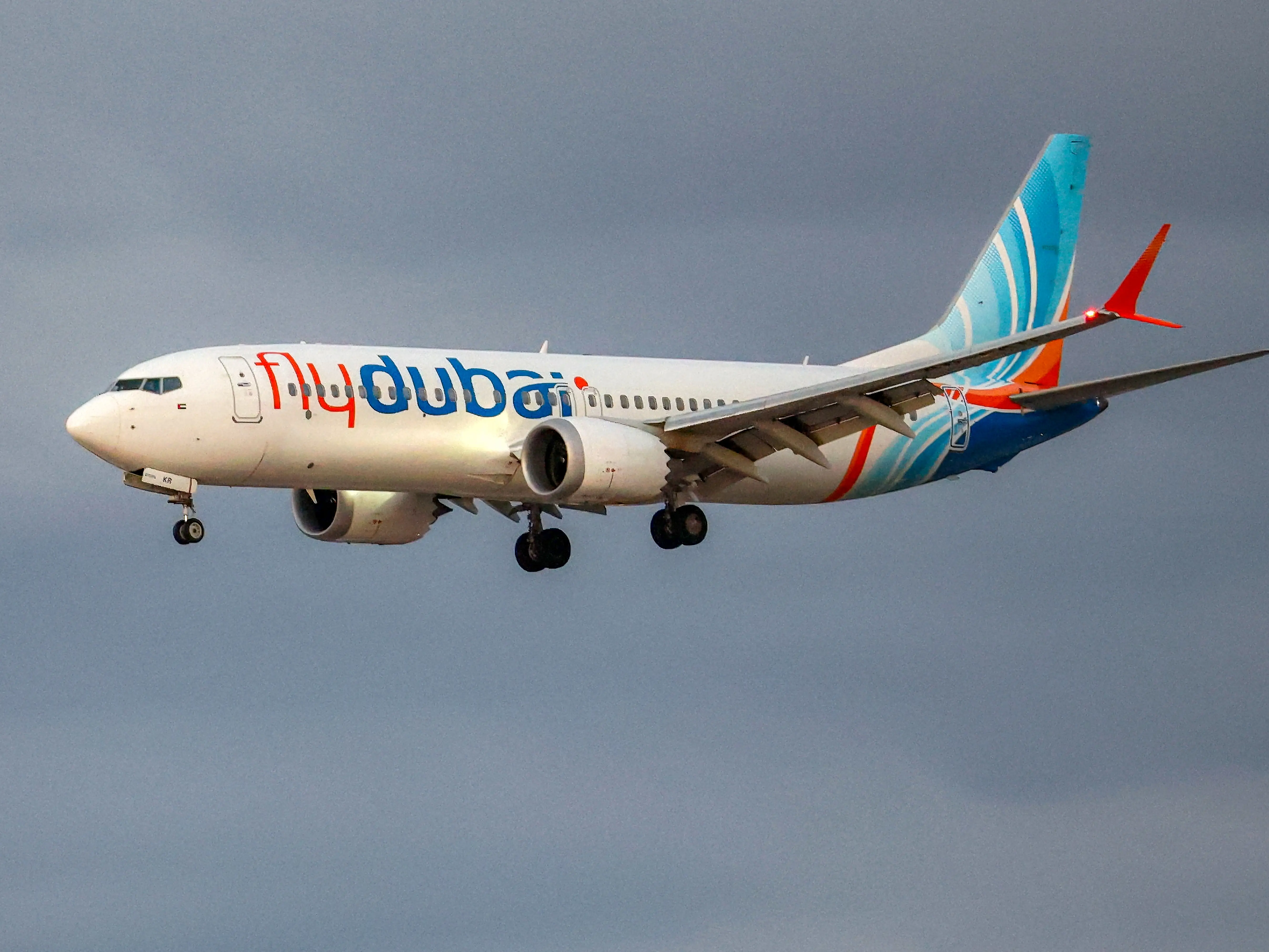
A flydubai Boeing 737 MAX 8 aircraft prepares for landing at Israel's Ben Gurion Airport in Lod on September 30, 2026. Photograph: (AFP)
Flydubai’s hijack scare activated Israel’s aviation security procedures. From distress signals and fighter jets to visual communication and top-level decision-making, here’s how the system responds to such threats.
The attempted hijacking of a Flydubai flight travelling from Dubai to Israel on Wednesday (Sep 30) triggered a security response designed to deal with one of the most serious scenarios in aviation: a suspicious civilian aircraft approaching Israeli airspace. The incident began after one of the pilots attacked his co-pilot mid-air and attempted to hijack the aircraft with the intention of crashing it. This prompted the activation of a distress signal while the plane was still outside Israeli airspace. The alert was enough to set Israel’s aviation and security procedures in motion.
Two checkpoints before Israeli airspace
Aircraft approaching Israel pass through two designated points at set distances from the country’s borders. These points act as stages for identification, clearance and monitoring before an aircraft can proceed towards its destination.
At the designated points, pilots are required to identify their aircraft to Israeli air traffic control using an agreed code. This allows authorities to establish whether the aircraft has the required authorisation and permits to enter Israeli airspace.
The first checkpoint is positioned far enough from Israel to give the Israel Defence Forces time to respond if an aircraft fails to identify itself or if there are signs of an unusual incident. That can include scrambling fighter jets. However, the launch of fighter aircraft does not automatically mean an aircraft is considered a target. Communication failures, technical problems or other emergencies can also leave a passenger aircraft unable to establish contact with air traffic control.
Fighter jets can establish visual contact
Trending Stories
)
)
)
)
)
)
)
)
)
)
)
)
)
)
)
)
)
)
)
)
)
)
)
)
)
)
)
)
)
)
)
)
)
)
&im=FitAndFill=(700,400))
)
)
)
)
If radio communication fails, fighter pilots can attempt to communicate with the aircraft visually. One procedure involves passengers being asked to keep window shades open before a flight. If fighter jets are required to fly alongside a passenger aircraft, this can allow their pilots to observe what is happening inside the plane, including the cockpit. Visible signs of unusual activity can help fighter pilots assess the situation.
There are also established visual signals that pilots aboard passenger aircraft can use to communicate with military aircraft during an emergency. These procedures supplement radio communications and distress signals.
The system is designed to give authorities time to move through several stages – monitoring, identification, examination, verification and interception – before reaching the most extreme option.
What happens if a civilian aircraft becomes a threat?
The Flydubai aircraft activated its distress signal while it was still well outside Israeli airspace. Nevertheless, the alert automatically triggered the relevant aviation and security systems, allowing authorities to prepare a response.
A former senior Israel Air Force officer told The Jerusalem Post that personnel involved in such scenarios are extensively drilled.
“All the organisations, bodies, and officials involved are drilled for a scenario of this kind down to a matter of minutes, in order to carry out a precise process in response to an airborne terrorism scenario,” the former officer said.
In an extreme situation, Israel’s top leadership can become directly involved.
Prime Minister holds final authority
According to the former senior officer, the prime minister, defence minister, IDF chief of staff and Israel Air Force commander are brought onto a conference call within a very short time.
The available information is presented, and the prime minister has the final authority over whether a civilian aircraft should be shot down.
“The prime minister has to be on the line. He makes the decision…”
The former officer said the decision reflects the devastating consequences of either option.
“There is a difference between shooting down a passenger aircraft with 175 passengers and a civilian aircraft with 175 civilians crashing into the Azrieli Towers with a thousand people killed.”
For that reason, the response is structured as a sequence of checks rather than an immediate military action, giving authorities time to determine what is happening before the most consequential decision is considered.

