NASA admits capsule that took Sunita Williams to space avoided major tragedy: Lethality risk similar to Columbia

&imwidth=600&imheight=450&format=webp&quality=medium "NASA admits capsule that took Sunita Williams to space avoided major tragedy: Lethality risk similar to Columbia")
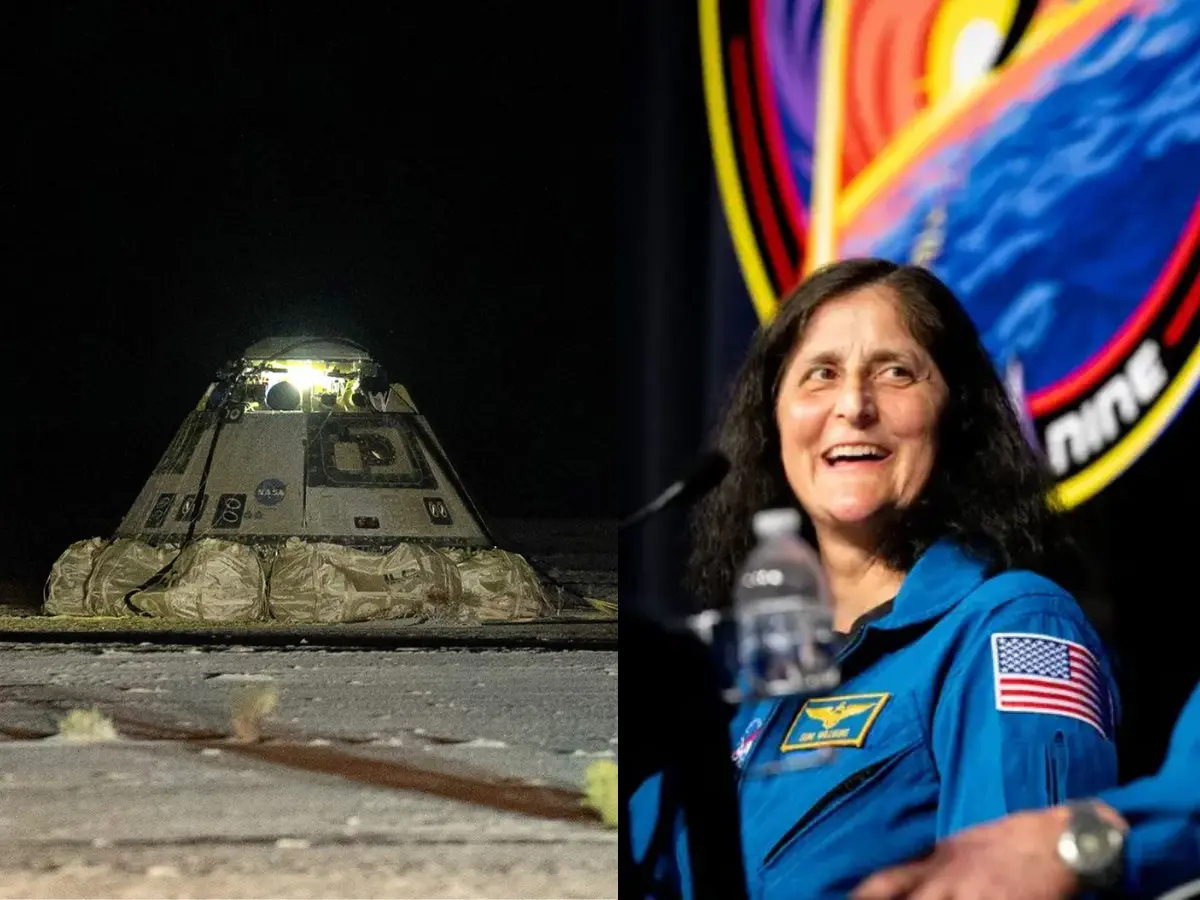
NASA Starliner took Sunita Williams to space in 2024, and the mission was pretty much botched. Photograph: (AFP)
NASA says Starliner suffered such great problems as it reached space in June 2024 that things could have gone terribly wrong. Boeing's failed spacecraft could have faced disastrous consequences because of the thruster problem if the right decisions had not been taken.
The Boeing Starliner mishap that kept two astronauts in space for nine months was more dangerous than NASA made it out to be at the time. The space agency has now placed the seriousness of the problem on the same level as the space shuttle Challenger and Columbia tragedies. While the former saw seven crew members die after the space shuttle broke apart 73 seconds into its flight, the latter disintegrated upon re-entering Earth's atmosphere, killing all seven astronauts on board. NASA has reclassified Starliner's Crew Flight Test (CFT) as a "Type A mishap", the worst one you can have. "This was a really challenging event in our recent history. We almost had a really terrible day," NASA Associate Administrator Amit Kshatriya said during a press conference on Thursday (February 19).
Astronauts Sunita Williams and Butch Wilmore went to the International Space Station on board Starliner on June 5, 2024. They were supposed to stay only for 10 days. But on their way to the ISS, the spacecraft suffered multiple thruster failures. NASA classifies issues into 5 categories - Type A, Type B, Type C, Type D, and "close calls", with the first one being the most lethal.
Also Read: 'We didn't know why...': NASA bent the rules for Starliner, docking was scarier than thought
NASA admits Starliner avoided major disaster
NASA Administrator Jared Isaacman admitted on Thursday that it was way scarier and could have led to disastrous consequences had certain decisions not been made. "Flight rules were appropriately challenged, control was recovered, and docking was achieved," he read from a letter. Isaacman added, "It is worth restating what should be obvious: At that moment, had different decisions been made, had thrusters not been recovered, or had docking been unsuccessful, the outcome of this mission could have been very, very different."
Also Read: What Sunita Williams said as Starliner began its return journey to Earth. ‘Bring her back...’
Trending Stories
&imwidth=280&imheight=210&format=webp&quality=medium)
&imwidth=280&imheight=210&format=webp&quality=medium)
&imwidth=280&imheight=210&format=webp&quality=medium)
&imwidth=280&imheight=210&format=webp&quality=medium)
&imwidth=280&imheight=210&format=webp&quality=medium)
&imwidth=280&imheight=210&format=webp&quality=medium)
&imwidth=280&imheight=210&format=webp&quality=medium)
&imwidth=280&imheight=210&format=webp&quality=medium)
&imwidth=280&imheight=210&format=webp&quality=medium)
&im=FitAndFill=(700,400)&imwidth=280&imheight=210&format=webp&quality=medium)
&imwidth=280&imheight=210&format=webp&quality=medium)
&imwidth=280&imheight=210&format=webp&quality=medium)
&imwidth=280&imheight=210&format=webp&quality=medium)
&imwidth=280&imheight=210&format=webp&quality=medium)
&imwidth=280&imheight=210&format=webp&quality=medium)
&imwidth=280&imheight=210&format=webp&quality=medium)
&imwidth=280&imheight=210&format=webp&quality=medium)
&imwidth=280&imheight=210&format=webp&quality=medium)
&im=FitAndFill=(700,400)&imwidth=280&imheight=210&format=webp&quality=medium)
&imwidth=280&imheight=210&format=webp&quality=medium)
&imwidth=280&imheight=210&format=webp&quality=medium)
&imwidth=280&imheight=210&format=webp&quality=medium)
&imwidth=280&imheight=210&format=webp&quality=medium)
&imwidth=280&imheight=210&format=webp&quality=medium)
&imwidth=280&imheight=210&format=webp&quality=medium)
&im=FitAndFill=(700,400)&imwidth=280&imheight=210&format=webp&quality=medium)

&im=FitAndFill=(700,400)&imwidth=280&imheight=210&format=webp&quality=medium)
&imwidth=280&imheight=210&format=webp&quality=medium)
&imwidth=280&imheight=210&format=webp&quality=medium)
&imwidth=280&imheight=210&format=webp&quality=medium)
&imwidth=280&imheight=210&format=webp&quality=medium)
&imwidth=280&imheight=210&format=webp&quality=medium)
&imwidth=280&imheight=210&format=webp&quality=medium)
&imwidth=280&imheight=210&format=webp&quality=medium)
Starliner suffered problems while undocking
While Williams and Wilmore remained on the ISS, NASA tried to fix the thruster problem from land. However, they failed to fix it and decided to bring Starliner back on September 6 without its crew. The capsule might have made a safe return, but this, too, did not go smoothly. Isaacman revealed that, as it undocked from the ISS, "an unexpected crew module propulsion failure" occurred. During re-entry into Earth's atmosphere, it lacked "fault tolerance" in its thrusters.
Why did NASA not admit Starliner's failure at the time?
If such serious problems occurred with the Starliner, why didn't NASA classify it as a Type A mishap at the time? This apparently has to do with getting Boeing's spacecraft certified to carry astronauts to space. Isaacman even admitted this. "Concern for the Starliner program's reputation influenced that decision," he said. Isaacman added that this "placed the mission, the crew and America's space program at risk in ways that were not fully understood at the time", and " that can never happen again".
Over a year later, NASA and Boeing are still trying to figure out what caused the problem with the thrusters. NASA has been trying to have an alternative to SpaceX to carry astronauts to space. But Boeing's failure to build a reliable vehicle after winning the contract in 2014 is problematic.