World’s oldest disease-causing species found: It’s 407mn-year-old fungus

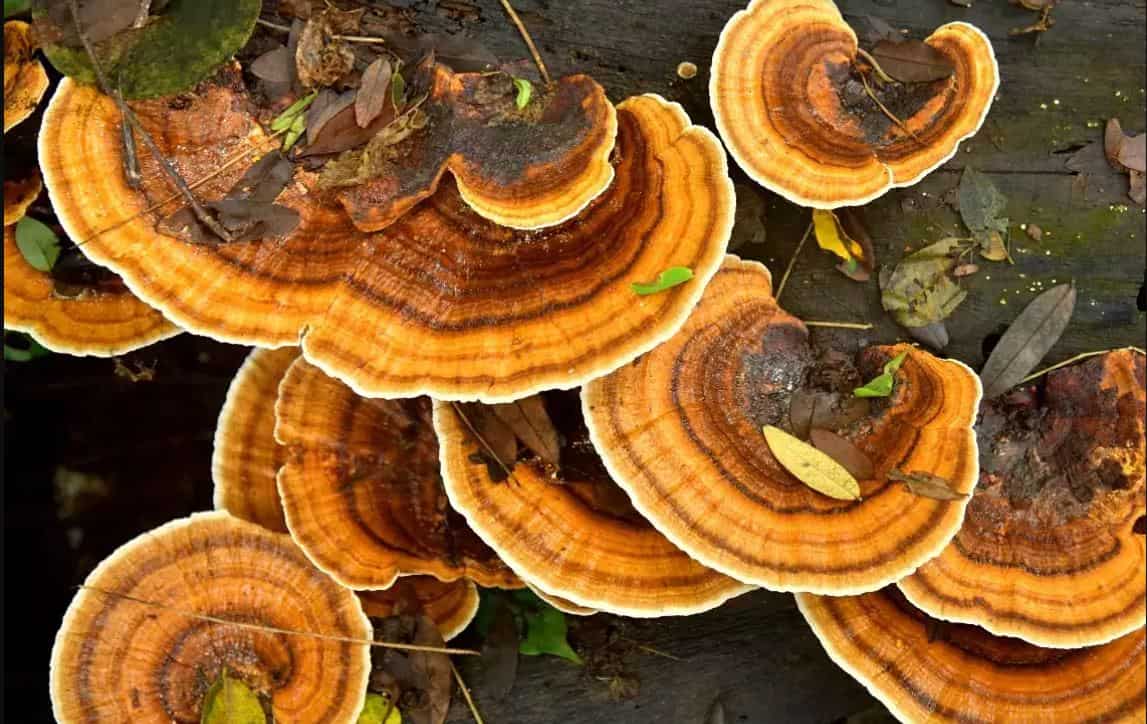
Representative image of fungus
The Natural History Museum of London recently unveiled fossil collections revealing what is being hailed as the oldest disease-causing fungus.
The 407-million-year-old fungus is named Potteromyces asteroxylicola, after Beatrix Potter, the renowned author of Tales of Peter Rabbit and a fungi enthusiast.
The findings, outlined in the paper call it "A fungal plant pathogen discovered in the Devonian Rhynie Chert". Published in Nature Communications, the study sheds light on Potter's pioneering drawings and fungal growth studies, positioning her as a significant figure in mycology.

Fossil samples came from Rhynie Chert
Potteromyces was discovered in fossil samples from the Rhynie Chert, a crucial geological site in Scotland. The site is known for its well-preserved Early Devonian communities of plants and animals, including fungi and bacteria.
Collaborating with mycologists at the Royal Botanic Gardens, Kew, the study proposes a historical precedent for disease-causing fungi like those affecting the UK's ash trees.
)
Three labourers killed as DU student loses control of his car, rams into them on Dwarka Expressway
)
Pentagon revives mandatory testosterone testing for male troops aged 30 and above
)
FACT CHECK: Why did PM Modi ask Xi ‘is it okay’ at BRICS Summit? New video reveals...
)
India seeks to build a full semiconductor supply chain
)
North Korea's last nuclear test in 2017 set off 1,399 earthquakes over 8 years, each stronger than previous
&im=FitAndFill=(700,400))
From Abhishek Sharma to Sahil Chauhan, 5 batters with fastest T20I hundreds
)
Indian activist-lawyer Prashant Bhushan's post brings focus on ‘conflict of interest’ appointments of ex-govt officials at Reliance, Adani groups
)
US And Denmark reach Greenland deal, Trump announces expanded military presence
)
Former India player Diana Edulji wants Smriti Mandhana to replace Harman as skipper at the earliest
)
China may have gained access to US's classified F-35 jets; parts meant for repairs diverted to Hong Kong, sparking Pentagon inquiry
&im=FitAndFill=(700,400))
Meet top 5 batters in the latest ICC T20I Rankings
)
Godfather of AI Geoffrey Hinton gives US lawmakers a one-year warning on AI
)
US F-16 fighter jet crashes in Michigan during training mission, pilot ejects safely
)
Shivakumar attends 79th Kalyana Karnataka Utsav in Kalaburagi
)
Trump signs Russia sanctions law: India faces fresh 100% tariff threat over Russian oil
)
Why Ranveer Singh’s Dhurandhar missed India’s Oscar entry; FFI jury member reveals what happened
)
Hong Kong extends newborn cash support scheme by three years
)
How did an Australian river with 500 crocodiles pass the Olympic test? Here's how
)
‘Will go to any extent’: Pakistan vows to defend Saudi Arabia amid Houthi attacks
)
'He will always be ahead': India coach Gambhir says Sooryavanshi won't walk into team ahead of Samson
)
The Verdict | When precision fails: US commits war crime in Minab school strike, UN finds
)
Trump signs Russia sanctions bill into law, targets Moscow’s energy sector
&im=FitAndFill=(700,400))
New Friday OTT releases (September 18, 2026): Lust Stories 3, You+Me, Best of the Best- 8 new titles coming on Netflix, Prime Video and more
)
Africa is splitting, and a lot sooner than estimated, giving way to a new ocean
)
'Gangsta' crab shoves knife blade at man and his dog in Florida - Watch
)
Trump bans CNN, MS NOW and Politico from White House over ‘FAKE NEWS’
)
Trump 2.0: Dark days ahead for America’s ‘imperial presidency’
)
Trump's Greenland dream comes true? POTUS announces 'Infinite Life' deal with Denmark, claims permanent US control
)
Laura Wolvaardt sets new world record for most WT20I runs in a year
)
Drone strikes cooling tower at Russia's Kursk Nuclear Plant, IAEA confirms
)
Who is Khalilur Rahman? All you need to know about 81st UN General Assembly President
&im=FitAndFill=(700,400))
Meet top 5 bowlers in latest ICC T20I rankings
)
Ukraine plans record $109 bn defence spending, nearly two thirds of budget amid Russia war
&im=FitAndFill=(700,400))
Meet top 5 Indian batters with fastest T20I centuries
Watch:Zombie Fungus: Fungal pandemic can turn humans into zombies?
Dr Christine Strullu-Derrien, lead author and Scientific Associate at the Natural History Museum, says, "Although other fungal parasites have been found in this area before, this is the first case of one causing disease in a plant. What's more, Potteromyces can provide a valuable point from which to date the evolution of different fungus groups, such as Ascomycota, the largest fungal phylum."
"Naming this important species after Beatrix Potter seems a fitting tribute to her remarkable work and commitment to piecing together the secrets of fungi," Christine added.
First Potteromyces specimen was discovered in 2015
Christine found the first Potteromyces specimen in 2015. Its reproductive structures, known as conidiophores, had an unusual shape and formation unlike anything seen before.
The confirmation of this new species came when a second specimen, showcasing the fungus's distinct nature, was found in the collections of the National Museums of Scotland on another slide from the Rhynie Chert.
"New technology available to us, such as confocal microscopy, has enabled us to unlock more secrets from fossils housed in museum collections, such as those within the Natural History Museum," said Christine.
"When I first started work on the Rhynie Chert, it was only meant to take two or three years. It's now been 12, and I still think there is a lot to discover from this fabulous site,"she further stated.
(With inputs from agencies)