50-year-mystery solved: Physicists find rare 'glueball' particle with no matter and pure force

&imwidth=600&imheight=450&format=webp&quality=medium "50-year-mystery solved: Physicists find rare 'glueball' particle with no matter and pure force")
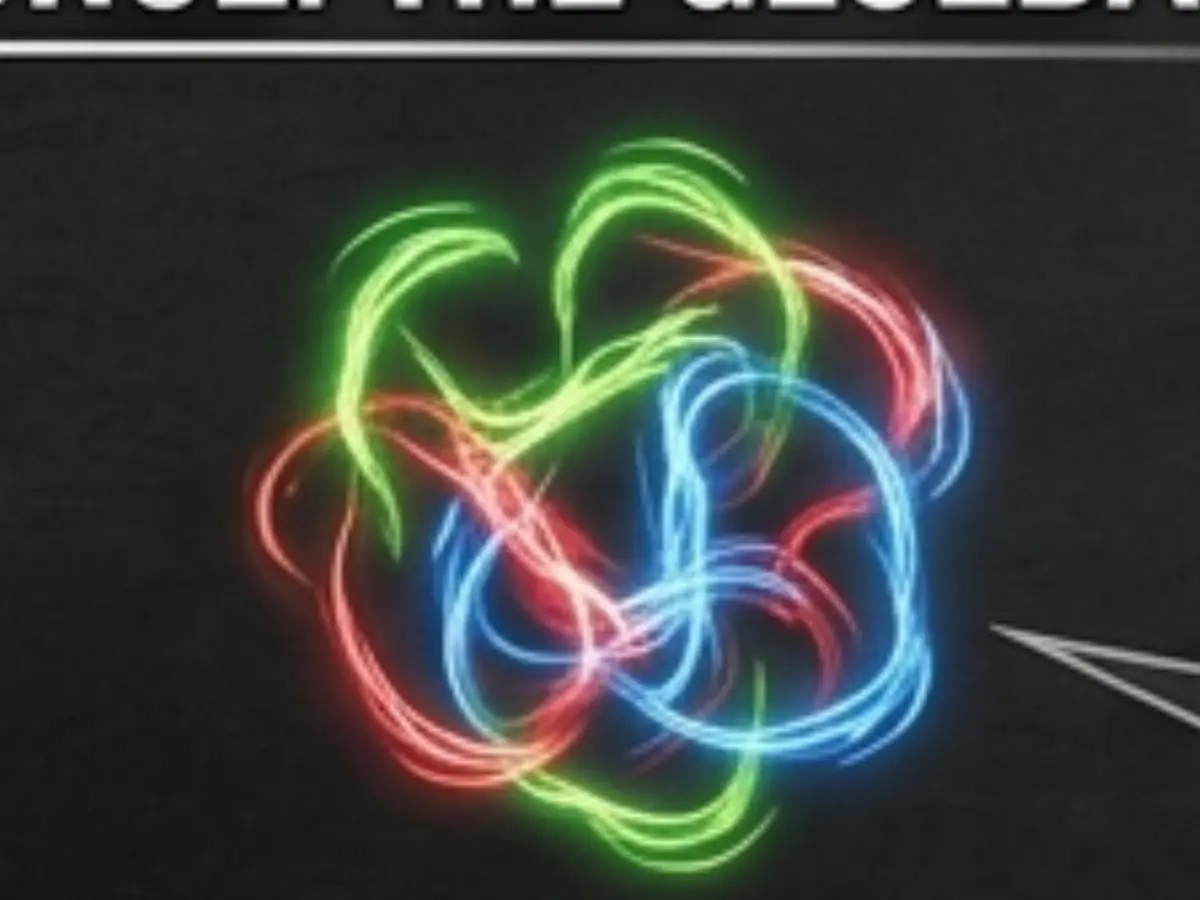
The glueball was found in X(2370) Photograph: (AI)
Scientists at the Beijing Electron Positron Collider II have found a particle that is made purely of force. The glueball was first hypothesised nearly 50 years ago, and physicists may have found the first strong evidence to show that it exists.
Physicists have evidence that a glueball, an exotic subatomic state that was first predicted nearly 50 years ago, could be real. It is composed entirely of force-carrier particles, rather than ordinary matter. The discovery was made by scientists at the Beijing Electron Positron Collider II (BEPCII). According to quantum chromodynamics, quarks and gluons interact to create the ordinary matter around us. Quarks are the fundamental building blocks that make up protons and neutrons, while gluons are the massless "glue" particles of the strong force and hold quarks together.
Decades ago, scientists hypothesised "glueballs", gluons that bind to each other without any quarks, effectively creating a particle made purely out of force. Physicists at BEPCII have found that a known particle called X(2370) is dominated by one of these elusive states. Researchers explained in a statement that a glueball is the only type of particle in nature composed entirely of force mediators.
Also Read: Beyond solid, liquid, gas: Scientists find new state of matter where two exotic materials meet
High-energy collisions
The international team of scientists analysed high-energy collisions that yielded theX(2370), first detected in 2011. They went through billions of particle decay events and measured the particle's mass, spin-parity, and decay pathways. BEPCII, a particle accelerator and collider that smashes electrons into their antimatter counterparts, called positrons, was used to study the complex physics.
Jin Shan, a particle physicist at Nanjing University and one of the research team's leaders, noted that the glueball they found is an "unprecedented form of matter." Shan told South China Morning Post that the discovery "not only enables the theory describing strong interactions to pass its most rigorous test, but also vastly expands the boundaries of our understanding of the physical world."
Trending Stories
)
)
)
)
)
)
)
)
)
)
)
)
)
)
)
)
)
)
)
)
)
)
)
)
)
)
)
)
)
)
)
)
)
)
&im=FitAndFill=(700,400))
)
)
)
)
The J/ψ (J/psi) meson, a subatomic particle caused by high-energy collisions, is formed when particles crash together at nearly the speed of light. It decays almost instantly, and this event provides "one of the best avenues to search for glueballs". A few years back, scientists analysed 10 billion meson decay events and measured the X(2370) particle's mass and spin parity and found complete agreement between their experimental values and predictions.
A single flavour nature
In the latest analysis, they have found "the most important characteristic of a glueball." They confirmed its "flavour-singlet" nature—meaning it decays without showing a preference for any specific type (flavour) of quark. The team said more particle smashing is needed to further confirm and constrain the properties of the exotic glueball.

