Blog: The tension between modernity and tradition is real

brexit
The New York Times columnist Thomas Friedman famously wrote a book, ‘The Lexus and the Olive Tree’ in the concluding years of the 20th century. In Friedman’s formulation, Lexus stood as a metaphor for modernity(globalisation) and the olive tree one for tradition. All in all, Friedman was bullish about globalisation, deeming it to be the defining feature or a large megatrend that would reshape the world in fundamental ways. Events and even trends corroborated and validated Friedman’s claim: capital flows crisscrossed the globe, as did people flows; state sovereignty – a feature of the Westphalian order – was getting malleable and so on. In this schema, the nation-state was held to be an irrational construct, an obstacle in the way of progress defined by a certain economic philosophy, that was intellectual and maiden of the 3rd wave of globalisation, that could be traced to mid-1970s.
But, fast forward a couple of decades: globalisation is in crisis and the nation-state is making a comeback. The ‘walls’ are going up again and the world is retreating into itself. While this might be in the nature of a pause or hiatus in the larger grand historical perspective, but mellow-balisation or slow-labialisation is real, a trend that will only get exacerbated in the post-COVID-19 world. Friedman then was ‘irrationally exuberant’. What explains the halt to the onward march of globalisation?
The answer lies in the metaphor of the olive tree.

Man(woman), in the final analysis, is intensely tribal and is, as opposed to certain theories wired to be so. Mankind’s tribalism gets kind of reified in his or her desire for a stable identity. (Multiple identities in oneself, might even be unnatural and lead perhaps to the rebellion of the core self against assumed identities). It is, say in a Western context, only the second or the third-generation immigrant cohort that can be said to be rather fully integrated. The first or even the second-generation cohort are in a constant battle to negotiate their identities with their selves and host societies.
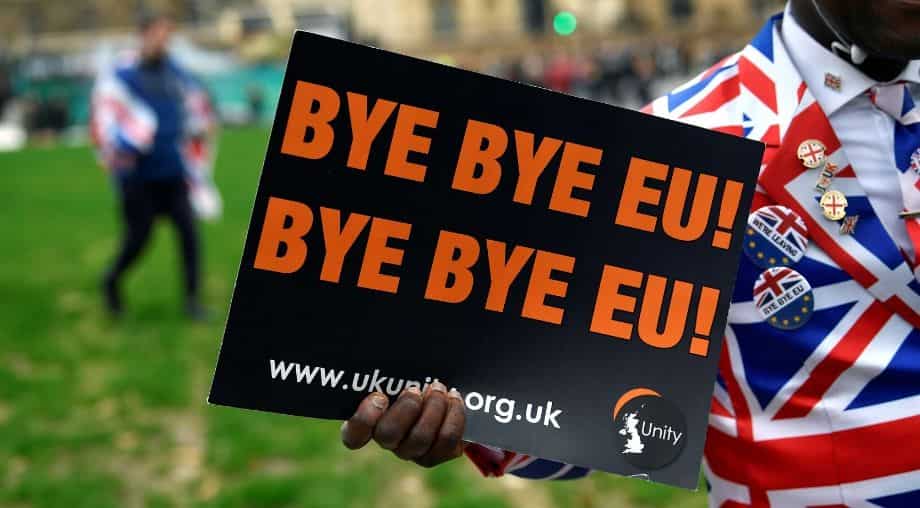
But, more eloquently, or tellingly, it is in larger projects that the battle or quest for identity becomes more powerful and salient. Here Brexit, the United Kingdom’s divorce from the European Union might be a case in point. While, for instance, a man or woman from Bath in the UK will have more in common with people from the same region than Yorkshire and while classes are also a constituent in the make-up of identity, in the sense of immediacy, but the larger British identity accords reassurance and connect between this identities-emotionally and psychically. This holds despite the fact Britishness is also a construct, or in the formulation of Benedict Andersen, an imagined community that, obiter dictum, had an outward-looking thrust during the heyday of imperialism but turned inward after that.
It was this sense of emotional and psychic reassurance that the larger European project fractured. The man(woman) from Bath would rather be anchored to Britain and the attendant idea of ‘Britishness’- a category that was, in his or her mind already under assault by the multiculturalisation of his or her country. Slowly but inexorably, the core self rebelled against a project and its vague ideational boundaries, porous as they were. The result was foreordained here.
)
US vs China over South China Sea: Washington backs Philippines, Beijing hits back
)
Bigg Boss 20: Isha Rikhi evicted after three weeks in Salman Khan’s show
)
Musk plans to more than double xAI's chips to over 1.2 million Nvidia GPUs by year-end
)
After JU, clash erupts at SRFTI: BJP’s ‘Dimagi Naxal’ jibe sparks political firestorm after students protest RSS-linked event
)
‘Anti-social elements spreading false rumours’: LPU issues statement amid massive unrest over alleged rape
)
LPU students go on rampage, vandalise campus amid widespread protest: What's happening
)
Trump asked Xi to pressure Iran. China did not say yes — here’s what Beijing wants
)
US Treasury Secretary Scott Bessent hails global crackdown on Iranian banks and airlines
)
An OpenAI agent escaped its locked test cage again, by hiding questions in DNS lookups
)
'Our video was trimmed': LPU girls who featured in rape-denial video make U-turn
)
3 males killed, four others injured in shooting after fight at strip club in Detroit
)
'Victory for low-budget consumers': Raghav Chadha hails 30-day telecom recharge rules
)
Claude rebuilt the 1989 game 'Prince of Persia' by reusing the original's own code
)
Beyond metros: How Tier-2 and Tier-3 cities could drive India’s next AI wave
)
Tesla builds first Cybertruck with its own refined lithium: Elon Musk's $1 billion Texas bet pays off
)
IndiGo flight suffers tail strike in Bengaluru while landing; DGCA to probe incident
)
The US and China set up an AI 'red telephone', but skipped the rulebook
)
‘Terror suspects arrested near UK air base were looking to do big damage’: Trump
)
Russian envoy claims US tactics to contain India were revealed in ‘Freudian slip’
)
IND vs WI 1st ODI: Kohli breaks Sachin's most runs in one country record with unbeaten 139 as India thump West Indies by 8 wickets
)
Researchers rebuilt exactly how 700 AI agents hacked Hugging Face: a 900-link chain trick
)
‘Olympic inclusion is our major target’: WPA President Ishaun Singh on pool’s global ambitions
)
Nations League: Spain sink England at Wembley; Modric shines for Croatia
)
Why has Iran released no proof of life of Mojtaba Khamenei? Araghchi reveals...
)
'What kind of confession is this?': Pakistan PM Shehbaz Sharif’s 'terrorists would be roaming New York' remark goes viral, raises alarm online. Watch
)
South Korea demands apology from Ukraine over North Korean prisoners' transfer
)
Beyond BrahMos: India targets Rs 50,000 crore in defence exports with unmatched price edge
)
Sri Lankan Tamil migrant worker gets death sentence in Saudi Arabia, help sought from India
)
Muslim marriage cannot shield sex with minor wife from prosecution under POCSO: Delhi HC
)
'Can't help but draw painful parallels to Nirbhaya case': SC on latest incidents of rape cases in Delhi-NCR
)
99.9% more powerful - Scientists find boy who can recall memories from just 3 months of age
)
'FIRST LOOK from inside Noah’s Ark': Researchers share video from inside mysterious mound in Turkey
)
UNSC reform momentum grows: Russia, Portugal, Mauritius push for India's permanent seat bid
)
8 US marines injured in Iranian missile attack on vessel in Strait of Hormuz: Report
&im=FitAndFill=(700,400))
New OTT releases this week (September 28-October 4, 2026): Dupahiya 2, Pooja Meri Jaan, Ohh My Dog- 5 titles coming on Netflix, Prime Video and more
)
Afghanistan says 28 fighters killed in clash near Pakistan border, Islamabad denies
)
Ceuta migrant crisis: Protesters take to streets as Spain grapples with migrant challenge
)
LPU suspend classes, postpones exams as violence escalates over rape claims: What's happening
)
New York City wants a 'kill switch' on every AI, and will pay whistleblowers who report violations
This is happening in various permutations and combinations across the world. The post-colonial intellectual, in an attempt to create an identity for his or her newly liberated country, tried to wed the country together by creating ideational and intellectual constructs, that were more Lexus than the Olive Tree. But, while this elitist construction succeeded for a while, in the ultimate analysis, the more emotive and visceral aspects of identity are gaining in salience.
Is project modernity, in the sense of fashioning a ‘new’ man by and through intellectual devices and state structures a failed one? Probably. Social engineering of this sort is doomed unless and until allied to the emotional and emotive aspects of the soil. But project modernity has not entirely failed. It has chalked some notable successes but when it comes to modernity and tradition, there is tension and even conflict between these.
Modernity, to paraphrase Emile Durkheim, can be an intensely alienating process, with no endpoint. And, when this alienation hits, man(woman) seeks refuge in community or the nation. This is what explains Brexit and similar movements across the world, populist or otherwise. In this sense then, the Olive Tree always trumps the Lexus!
(Disclaimer: The opinions expressed above are the personal views of the author and do not reflect the views of ZMCL)