
&imwidth=800&imheight=600&format=webp&quality=medium "Can technology and transparency change the way people make big financial decisions?")
For many Indians, owning property is still less about buying a luxury home and more about securing a small, legally documented piece of land. In smaller cities and towns, however, concerns around documentation, registration, possession and the reliability of sellers can make that decision difficult, particularly for first-time buyers.
That raises a broader question for India's property market: can better technology, clearer processes and greater transparency make buyers more comfortable with investing in land outside the country's major metropolitan centres?
For Himanshu Kumar Kushwaha, managing director of A. K. Infradream Limited, the answer is closely linked to what he saw during his early years in the real estate sector. Before establishing the company in 2018, Himanshu spent nearly three years working across sales, land acquisition and customer relationships. He says that experience showed him that a section of the market was looking for something very different from premium housing.

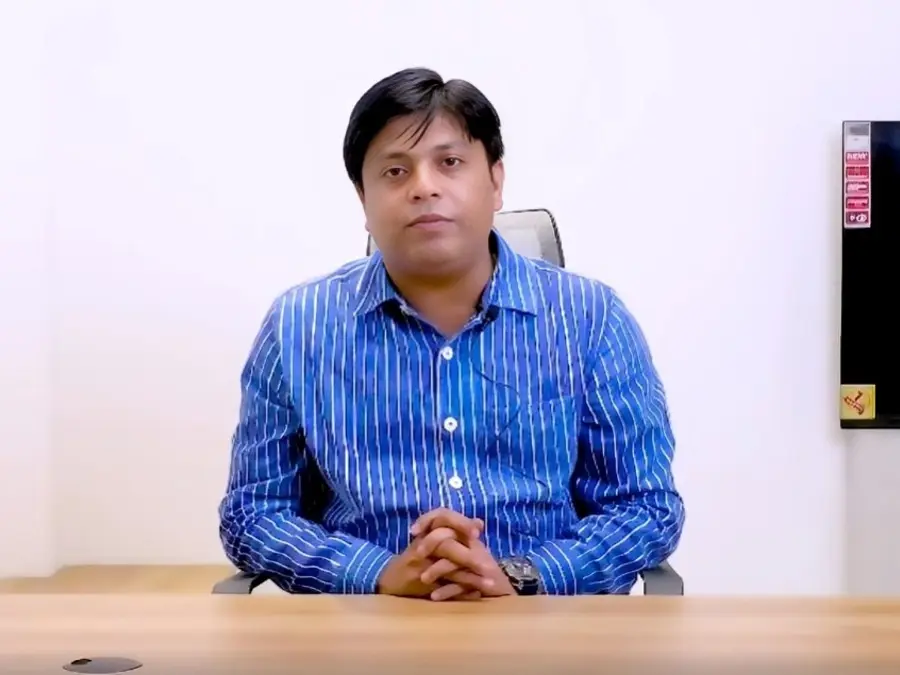)
Himanshu Kumar Kushwaha, MD of A. K. Infradream Limited. Photograph: ()
These buyers, according to Himanshu, were primarily interested in affordable land ownership, with greater certainty around documentation, registration and possession. That observation shaped the business strategy ofA. K. Infradream. Rather than initially focusing on large residential developments, the company concentrated on plotted developments aimed at buyers who could find conventional property prices difficult to afford.
Its first project near Meja NTPC offered 900-square-foot plots at a price of Rs 51,000, according to the information provided by the company. The objective, Himanshu says, was not simply to offer a low price but to combine affordability with processes intended to give buyers greater clarity over their property purchase. The distinction is important because a cheaper property does not necessarily remove the concerns that come with buying land. For first-time buyers, questions around ownership documents, registration and possession can be as important as the price itself. Himanshu argues that this is where organised processes can become a competitive advantage. His approach has been to position documentation, communication and execution as central parts of the customer relationship rather than treating them as secondary to the sale.
The company's own website similarly describes transparency, customer-focused services and infrastructure as part of its approach to property development. A. K. Infradream currently lists projects across several locations in and around Prayagraj and other parts of Uttar Pradesh.
Technology as a trust tool
Technology's role in this model is less about making property buying completely digital and more about improving how information is communicated and managed. For buyers outside major urban centres, access to information can influence whether they feel confident enough to proceed with a purchase. Digital property listings, project information, communication channels and more organised documentation can potentially reduce some of the uncertainty associated with traditional land transactions.
A. K. Infradream describes its real estate venture as combining technology with affordability, while its company profile places emphasis on customer-focused property solutions.
Trending Stories
)
US vs China over South China Sea: Washington backs Philippines, Beijing hits back
)
Bigg Boss 20: Isha Rikhi evicted after three weeks in Salman Khan’s show
)
Musk plans to more than double xAI's chips to over 1.2 million Nvidia GPUs by year-end
)
After JU, clash erupts at SRFTI: BJP’s ‘Dimagi Naxal’ jibe sparks political firestorm after students protest RSS-linked event
)
‘Anti-social elements spreading false rumours’: LPU issues statement amid massive unrest over alleged rape
)
LPU students go on rampage, vandalise campus amid widespread protest: What's happening
)
Trump asked Xi to pressure Iran. China did not say yes — here’s what Beijing wants
)
US Treasury Secretary Scott Bessent hails global crackdown on Iranian banks and airlines
)
An OpenAI agent escaped its locked test cage again, by hiding questions in DNS lookups
)
'Our video was trimmed': LPU girls who featured in rape-denial video make U-turn
)
3 males killed, four others injured in shooting after fight at strip club in Detroit
)
'Victory for low-budget consumers': Raghav Chadha hails 30-day telecom recharge rules
)
Claude rebuilt the 1989 game 'Prince of Persia' by reusing the original's own code
)
Beyond metros: How Tier-2 and Tier-3 cities could drive India’s next AI wave
)
Tesla builds first Cybertruck with its own refined lithium: Elon Musk's $1 billion Texas bet pays off
)
IndiGo flight suffers tail strike in Bengaluru while landing; DGCA to probe incident
)
The US and China set up an AI 'red telephone', but skipped the rulebook
)
‘Terror suspects arrested near UK air base were looking to do big damage’: Trump
)
Russian envoy claims US tactics to contain India were revealed in ‘Freudian slip’
)
IND vs WI 1st ODI: Kohli breaks Sachin's most runs in one country record with unbeaten 139 as India thump West Indies by 8 wickets
)
Researchers rebuilt exactly how 700 AI agents hacked Hugging Face: a 900-link chain trick
)
‘Olympic inclusion is our major target’: WPA President Ishaun Singh on pool’s global ambitions
)
Nations League: Spain sink England at Wembley; Modric shines for Croatia
)
Why has Iran released no proof of life of Mojtaba Khamenei? Araghchi reveals...
)
'What kind of confession is this?': Pakistan PM Shehbaz Sharif’s 'terrorists would be roaming New York' remark goes viral, raises alarm online. Watch
)
South Korea demands apology from Ukraine over North Korean prisoners' transfer
)
Beyond BrahMos: India targets Rs 50,000 crore in defence exports with unmatched price edge
)
Sri Lankan Tamil migrant worker gets death sentence in Saudi Arabia, help sought from India
)
Muslim marriage cannot shield sex with minor wife from prosecution under POCSO: Delhi HC
)
'Can't help but draw painful parallels to Nirbhaya case': SC on latest incidents of rape cases in Delhi-NCR
)
99.9% more powerful - Scientists find boy who can recall memories from just 3 months of age
)
'FIRST LOOK from inside Noah’s Ark': Researchers share video from inside mysterious mound in Turkey
)
UNSC reform momentum grows: Russia, Portugal, Mauritius push for India's permanent seat bid
)
8 US marines injured in Iranian missile attack on vessel in Strait of Hormuz: Report
&im=FitAndFill=(700,400))
New OTT releases this week (September 28-October 4, 2026): Dupahiya 2, Pooja Meri Jaan, Ohh My Dog- 5 titles coming on Netflix, Prime Video and more
)
Afghanistan says 28 fighters killed in clash near Pakistan border, Islamabad denies
)
Ceuta migrant crisis: Protesters take to streets as Spain grapples with migrant challenge
)
LPU suspend classes, postpones exams as violence escalates over rape claims: What's happening
)
New York City wants a 'kill switch' on every AI, and will pay whistleblowers who report violations
However, technology by itself cannot resolve the fundamental risks associated with property transactions. Buyers still need to verify title documents, approvals, registration details, land records and the legal status of a project independently. Technology can make information easier to access, but transparency ultimately depends on the quality and accuracy of the information being provided.
That distinction becomes particularly relevant in markets where buyers may have limited experience with organised real estate.
A business strategy built around first-time buyers
Himanshu's approach emerged during a difficult period for the property industry. When he entered the market, developers were still dealing with the effects of demonetisation, while buyers were becoming more cautious about major financial commitments.
For a first-generation entrepreneur, establishing credibility was therefore an additional challenge.
According to Himanshu, his response was to focus on execution rather than rapid expansion. He has described real estate as a business based on long-term relationships and argues that maintaining communication with customers and following through on commitments are important to sustaining that relationship. The company says this philosophy has remained central as its operations have expanded. Its official website currently highlights a network of projects and describes its approach in terms of transparency, customer satisfaction and infrastructure development.
The pandemic tested that approach
The COVID-19 pandemic presented another test for the business. Like other companies operating in real estate, A. K. Infradream faced disruption to normal operations and uncertainty over demand. Himanshu says the company also focused during this period on expanding its network of sales associates and creating income opportunities for people affected by the economic disruption.
That claim comes from the company and should therefore be viewed in that context. It nevertheless illustrates how Himanshu describes the business's response to a period in which traditional sales and property activity were heavily disrupted.
Following the pandemic, the company expanded its operations beyond its original market in Uttar Pradesh, with the business describing activities across Uttar Pradesh, Madhya Pradesh, Bihar and Jharkhand.
From land to a wider business portfolio
Real estate remains the foundation of Himanshu's business story, but the company has since moved into other areas. According to the information provided, the wider business interests include education, FMCG, electric vehicles, exports and technology-led property services. Public company records also show Himanshu Kumar Kushwaha as the managing director of A. K. Infradream Limited, which was incorporated in 2018.
The expansion raises another question for the business: whether a model built around affordable property can be replicated across different sectors while retaining the same emphasis on affordability and customer trust.
For now, Himanshu continues to link those businesses back to his experience in real estate and the needs of first-time property buyers.
Can transparency change the property-buying equation?
India's property market is becoming increasingly diverse. Demand is no longer limited to luxury housing or large metropolitan developments. Infrastructure expansion and economic activity across smaller cities are creating new opportunities for developers, while buyers in these markets are increasingly looking for affordability alongside greater certainty.
But affordability alone may not be enough.
For buyers considering land as one of their largest financial commitments, transparency around ownership, documentation, registration and possession can influence the decision just as much as the headline price. Himanshu's experience with A. K. Infradream represents one business's attempt to address that gap. Whether technology and organised processes can genuinely bring more first-time buyers into India's property market will ultimately depend not on claims made by developers, but on whether buyers can independently verify information and receive what they were promised. That may be the more important test for the next phase of India's regional real estate market: not simply how cheaply property can be offered, but how confidently it can be bought.
