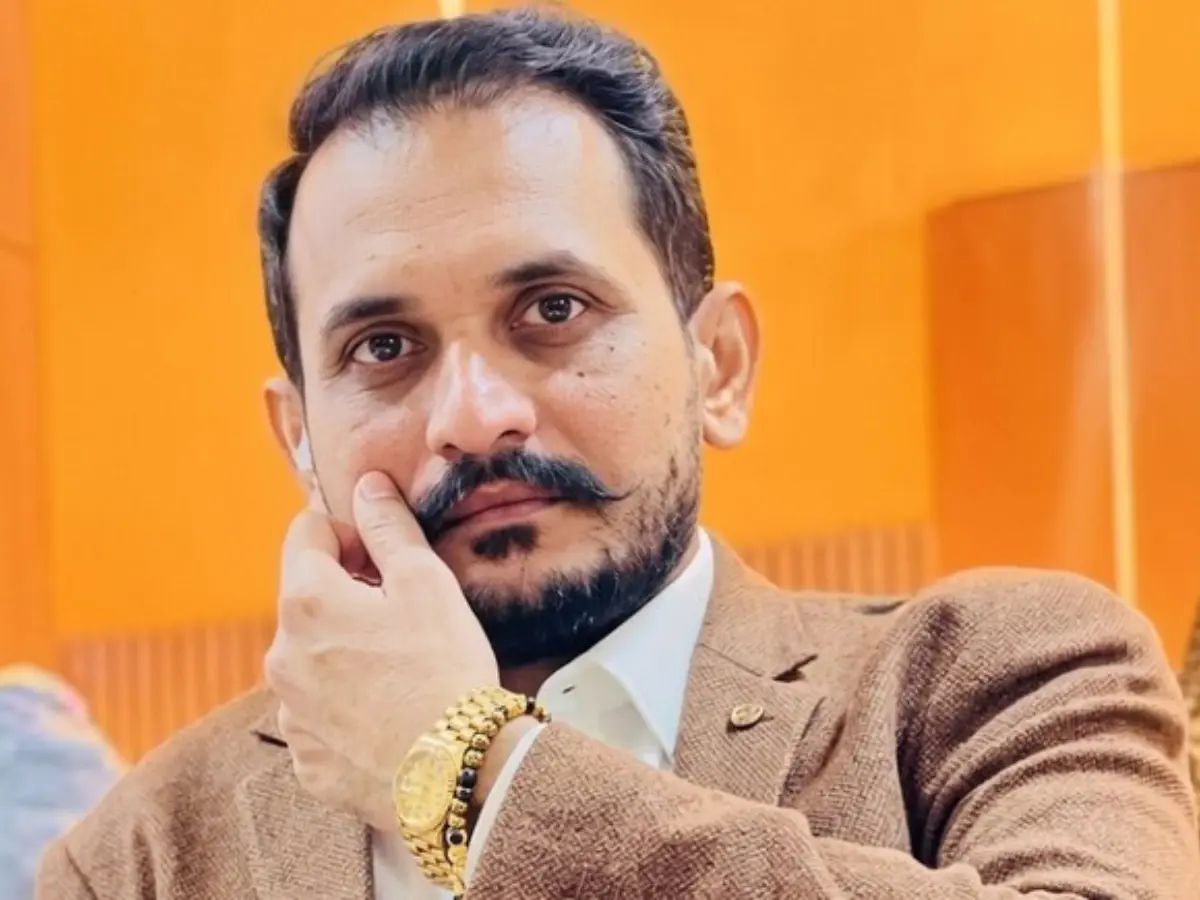
Who is Shehzad Bhatti? Pakistani influencer at the centre of India's cross-border terror investigation

&imwidth=600&imheight=450&format=webp&quality=medium "Who is Shehzad Bhatti? Pakistani influencer at the centre of India's cross-border terror investigation")
ehzad Bhatti? Pakistani influencer at the centre of India's cross-border terror investigation Photograph: (Others)
Shahzad Bhatti is under investigation by Indian agencies over alleged links to a cross-border crime and terror network and online radicalisation
For years, Shahzad Bhatti built a public persona as a social media influencer, businessman and self-styled defender of religion. Through videos published online under the ‘333’ banner, the Pakistani influencer developed a sizeable following by speaking about religious controversies, disputes involving influencers and India-Pakistan relations. Now, Bhatti, believed to be around 45, is at the centre of several investigations by Indian security agencies. Investigators allege that the man who repeatedly insists he is neither a gangster nor a mafia boss has become an important figure in an expanding cross-border crime and terror network.
On Saturday, the Delhi Police’s Special Cell arrested nine people across Uttar Pradesh, Madhya Pradesh, Jammu and Kashmir, Punjab and Gujarat over alleged links with Bhatti’s network. Investigators allege that the suspects were planning attacks targeting a historic temple in Delhi, a popular eatery on the Delhi-Sonipat highway and a military installation in Haryana. The arrests have once again brought Bhatti into the spotlight. He has long presented himself as a businessman, social media personality and nationalist voice who claims to speak on behalf of Islam and Pakistan.
Early criminal cases and move to the UAE
Bhatti, who is from Pakistan’s Punjab province, first attracted the attention of Pakistani police in 2013 when cases involving theft and robbery were registered against him. Several other cases were subsequently filed, including allegations of rape, which Bhatti has denied. His name has also been associated with Lahore’s criminal underworld, including figures such as Farrukh Khokhar. Bhatti, however, has publicly characterised such relationships as ‘friendships rather than organisational ties’.
Around 2015, Bhatti is believed to have relocated to the UAE. He has claimed to own a scrap-trading business as well as agricultural and dairy ventures. His present whereabouts are unclear, although investigators believe he travels between Pakistan and Gulf countries.
Social media rise and the Lawrence Bishnoi link
Trending Stories
)
)
)
)
)
)
)
)
)
)
)
)
)
)
)
)
)
)
)
)
)
)
)
)
)
)
)
)
)
)
)
)
)
)
&im=FitAndFill=(700,400))
)
)
)
)
Bhatti was among the social media personalities who benefited from the rapid expansion of TikTok in Pakistan after 2018. He gained an audience by posting content on religion, nationalism and online controversies. He is widely identified through his ‘333’ branding on social media. Bhatti has maintained that ‘333’ is not the name of a gang or organised group, but rather a ‘personal identifier’.
Over time, he cultivated an image as a self-styled defender of religious causes. He frequently commented on blasphemy controversies involving Pakistani influencers, including the April 2025 shooting outside the residence of influencer Rajab Butt. One of the most notable aspects of Bhatti’s public profile has been his claimed friendship with jailed Indian gangster Lawrence Bishnoi. Bhatti has said the relationship began after he sought assistance in dealing with alleged anti-Islamic content circulating on social media.
The alleged association received greater attention after investigators linked Bhatti to Zeeshan Akhtar, described as an alleged aide of Bishnoi and accused in the October 2024 murder of former Maharashtra minister Baba Siddique. Bhatti’s relationship with Bishnoi, however, appears to have deteriorated following Bishnoi’s anti-Pakistan statements after the Pahalgam terror attack last year.
Also Read: ISI-backed Shahzad Bhatti network busted ahead of I-Day, 253 detained across 14 states: Amit Shah
Jalandhar grenade attack brought Bhatti under scrutiny
Indian security agencies had already been monitoring Bhatti’s growing social media presence. Their focus intensified following a grenade attack in Punjab’s Jalandhar in March 2024. The attack, which took place near the residence of influencer Rozer Sandhu in Jalandhar district, was allegedly orchestrated by Bhatti, according to investigators.
In recent months, Indian agencies have alleged that Bhatti has links with Pakistan’s Inter-Services Intelligence (ISI) and has been attempting to expand his influence in India by radicalising unemployed youth. More than a dozen FIRs have reportedly been registered against Bhatti in Delhi, Uttar Pradesh, Punjab, Haryana, Rajasthan and Uttarakhand. The National Investigation Agency (NIA) has also registered cases in connection with some of the allegations.
Several of the cases invoke provisions relating to acts that allegedly threaten India’s sovereignty, unity and integrity.
The latest arrests by the Delhi Police Special Cell are not the first time alleged members of Bhatti’s network have come under investigation. In April, two young men from Madhya Pradesh were arrested for allegedly planning terror attacks across the Delhi-NCR region, with investigators linking them to Bhatti.
Maharashtra ATS investigates alleged online recruitment network
The Maharashtra Anti-Terrorism Squad is among the agencies examining Bhatti’s alleged network. On May 13, the Maharashtra ATS carried out raids at nearly 40 locations across the state and questioned 53 people who had allegedly interacted online with social media accounts connected to Bhatti’s network. Officials said no incriminating material was recovered during the operation and that no FIRs were registered. However, they claimed the exercise offered investigators an insight into what they described as the network’s online radicalisation model.
According to ATS officials, the network allegedly identifies young people who express frustration with authorities through social media posts. “They are promised solutions to their problems and given inducements,” an ATS source was quoted as saying. “The recruitment process is gradual, designed to test the willingness of potential recruits. First, they are given small tasks, and once they realise the person is motivated, they are put in a separate group to create law and order problems.”
Officials said the Maharashtra operation was intended to help authorities understand and monitor the alleged online outreach before it could develop into a broader security threat. “Hence, we keep an eye on suspect social media accounts to ensure they do not lure disgruntled youngsters. It is in that context that we conducted the raids across the state and questioned those in touch with social media accounts linked to Jatt,” the official added.
The investigations into Bhatti’s alleged network remain ongoing, with multiple Indian agencies examining its suspected links to organised crime, online radicalisation and cross-border activities. Bhatti has publicly rejected the portrayal of himself as a gangster or mafia figure, while investigators continue to examine the allegations against him and people allegedly connected to his network.

