India’s Project 75(I) submarine programme may finally launch with Germany's ThyssenKrupp. But why did it take decades?

&imwidth=600&imheight=450&format=webp&quality=medium "India’s Project 75(I) submarine programme may finally launch with Germany's ThyssenKrupp. But why did it take decades?")
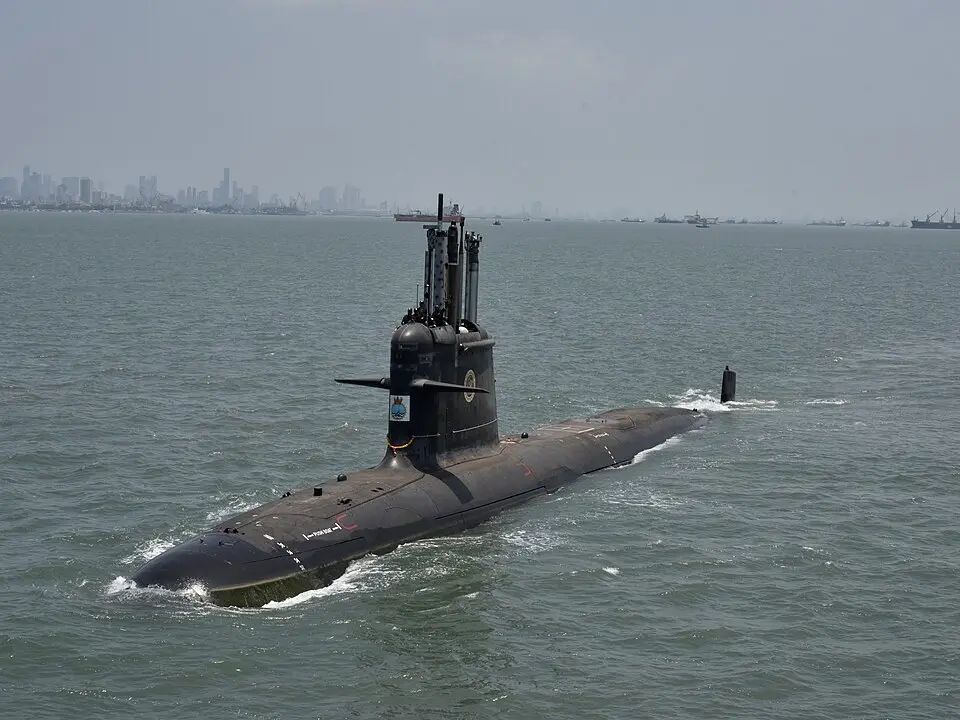
Project 75 (I) is all about India's ambitions for a bigger submarine fleet Photograph: (Others)
India’s Project 75(I) submarine programme is nearing a possible deal with Germany’s TKMS. Six AIP-equipped submarines could boost the Indian Navy while expanding India’s domestic submarine-building capacity. But why is it a long time coming?
India’s long-delayed Project 75(I) submarine programme could finally be moving closer to fruition, with Germany’s ThyssenKrupp Marine Systems (TKMS) emerging as the preferred partner. A proposal for six advanced diesel-electric submarines fitted with air-independent propulsion (AIP) is expected to go before the Cabinet Committee on Security (CCS) for final clearance in the coming days, Indian media reports claimed. No official word had been received at the time of writing, but the reports said that if the CCS approves the deal, TKMS and Mazagon Dock Shipbuilders Limited (MDL) would sign a contract worth roughly ₹70,000 crore.
Why the Project 75(I) submarine programme is important for India
Under the Project 75(I) programme, the submarines would be built primarily in India via a Strategic Partnership model. But Project 75(I) is more than just the delivery of six submarines. It seeks to deepen India’s ability to design, manufacture, maintain and upgrade sophisticated conventional submarines. Technology transfer from Germany is a central part of the arrangement.
Why did Project 75(I) take so long?
India wanted an AIP-equipped submarine based on a system that had already been proven at sea. That narrowed the field of choices. Requirements for technology transfer and indigenous production added another layer of complexity.
Trending Stories
)
)
)
)
)
)
)
)
)
)
)
)
)
)
)
)
)
)
)
)
)
)
)
)
)
)
)
)
)
)
)
)
)
)
&im=FitAndFill=(700,400))
)
)
)
)
Even though construction would take place in India, foreign manufacturers were expected to assume significant responsibility. This led to long-drawn negotiations over pricing, intellectual property, industrial workshare and liability. The bidder landscape also changed. France’s Naval Group, Spain’s Navantia in partnership with L&T, Russia, Japan, Sweden and other potential suppliers either withdrew, were eliminated or could not satisfy the programme’s evolving requirements.
Repeated procedural hurdles, changing qualitative requirements, lengthy commercial discussions and a cautious defence procurement system contributed to delaying a programme.
Why Germany is now the most likely partner for India’s Project 75(I) programme
The German firm TKMS has an established AIP technology base and a history of submarine cooperation with India. The Indian Navy has operated German-designed Type 209/Shishumar-class submarines since the 1980s, giving the relationship a substantial operational legacy.
The recent negotiations have focused on the technology-transfer aspect. Reports said German officials had expressed confidence that an agreement could be concluded soon.
TKMS has also been strengthening its industrial footprint in India. Its subsidiary ATLAS ELEKTRONIK has been involved in cooperation with Hyderabad-based VEM Technologies on heavyweight torpedoes.
Also read: What is India’s Project 75I? What makes it crucial to India’s naval strategy in the Indo-Pacific
Project 75(I) is not simply a foreign submarine purchase: Thrust on local production
MDL is expected to construct the submarines domestically while absorbing technology and manufacturing expertise from TKMS.
Local content is projected to increase from about 45 per cent on the first submarine to around 60 per cent on subsequent boats. If a contract is signed soon, construction could begin thereafter, with the first vessel expected around 2032–33 and the remaining submarines following at approximately annual intervals.
This approach attempts to balance two competing needs: rapidly strengthening the Navy’s conventional submarine fleet while developing an indigenous industrial base.
For the Indian Navy, the urgency is clear. Ageing conventional submarines and capability gaps have increased the pressure to add modern boats capable of remaining submerged for longer periods.
Project 75(I) also builds on the experience gained through Project 75, under which India has constructed the Kalvari-class submarines with French assistance. The programme is therefore intended not only to address the Navy’s immediate capability requirements, but also to expand India’s long-term capacity to build and sustain advanced conventional submarines domestically.