From Jyoti Basu to Mamata Banerjee: Can Suvendu Adhikari secure Bengal’s rare political stability?

&imwidth=600&imheight=450&format=webp&quality=medium "From Jyoti Basu to Mamata Banerjee: Can Suvendu Adhikari secure Bengal’s rare political stability?")
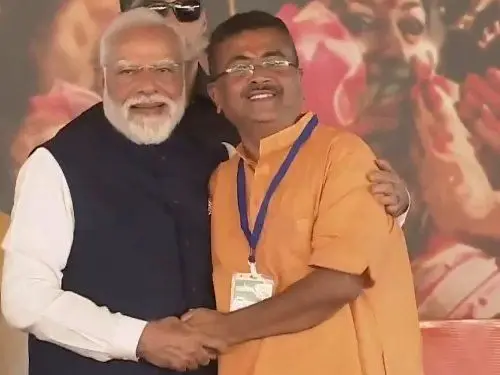
Suvendu Adhikari sworn in as Bengal CM Photograph: (ANI)
Suvendu Adhikari’s historic appointment as West Bengal’s first BJP Chief Minister raises questions about whether he can replicate the long-term political stability achieved by predecessors Jyoti Basu and Mamata Banerjee.
As the BJP formed its first government in West Bengal on Saturday (May 9) under Suvendu Adhikari, a key political question is beginning to dominate discussions across the state: can Bengal’s incoming chief minister enjoy the same long-term political stability that leaders like Jyoti Basu and Mamata Banerjee once did?
If there is one defining feature of Bengal politics over the past five decades, the electorate tends to stay with one dominant political force for extended periods rather than frequently changing governments. Unlike states such as Karnataka, Maharashtra or Uttarakhand, where coalition shifts and leadership changes are common, West Bengal has historically displayed a preference for continuity.
What does history say?
According to a recent analysis by The Times of India, only a handful of chief ministers have dominated Bengal’s political landscape across nearly half a century. The Left Front governed the state continuously from 1977 to 2011, with Jyoti Basu alone serving for more than 23 years. Following the Left era, Mamata Banerjee and her All India Trinamool Congress remained in power for three consecutive terms between 2011 and 2026.
Political analysts have often linked this continuity to Bengal’s deeply entrenched cadre-based political culture. According to research published by Cambridge University Press, both the Communist Party of India (Marxist) and later the Trinamool Congress developed extensive booth-level organisational structures that became closely integrated into local communities and everyday governance.
Trending Stories
)
)
)
)
&im=FitAndFill=(700,400))
)
)
)
)
)
&im=FitAndFill=(700,400))
&im=FitAndFill=(700,400))
)
)
)
&im=FitAndFill=(700,400))
)
)
)
)
)
)
)
&im=FitAndFill=(700,400))
)
)
&im=FitAndFill=(700,400))
)
)
)
Observers also note that Bengal’s voting behaviour has traditionally been shaped by ideological and emotional identity as much as by governance or development concerns. The Left Front’s rise was tied to land reforms and class politics, while the Trinamool Congress positioned itself around Bengali regional identity and welfare politics. Political discussions among voters and online forums have frequently highlighted how emotional alignment with a broader political ecosystem often translates into long-term electoral loyalty.
Another major factor behind political continuity in Bengal has been the weakness or fragmentation of the opposition. For decades, the Congress struggled to challenge the Left Front effectively. Later, both the Congress and the Left found it difficult to halt the rise of the Trinamool Congress. The BJP eventually emerged as the state’s principal opposition force, but only after years of organisational expansion at the grassroots level.
Successive governments also invested heavily in rural outreach, welfare delivery systems and local patronage networks. According to a report by The Times of India, many voters in Bengal associate political stability with continued access to welfare schemes, local infrastructure, and strong grassroots connections.
Can Adhikari get the same stability?
Whether Suvendu Adhikari can replicate that model remains uncertain. Analysts point out that he enters office under circumstances very different from those faced by the Left Front in 1977 or Mamata Banerjee in 2011.
According to The Economic Times, Adhikari is regarded as one of the BJP’s strongest mass leaders in Bengal and possesses deep organisational knowledge of the Trinamool Congress after spending years within the party before switching sides. The BJP’s victory also marks the first time Bengal will be governed by a national party enjoying a clear majority alongside strong backing from the Centre.

