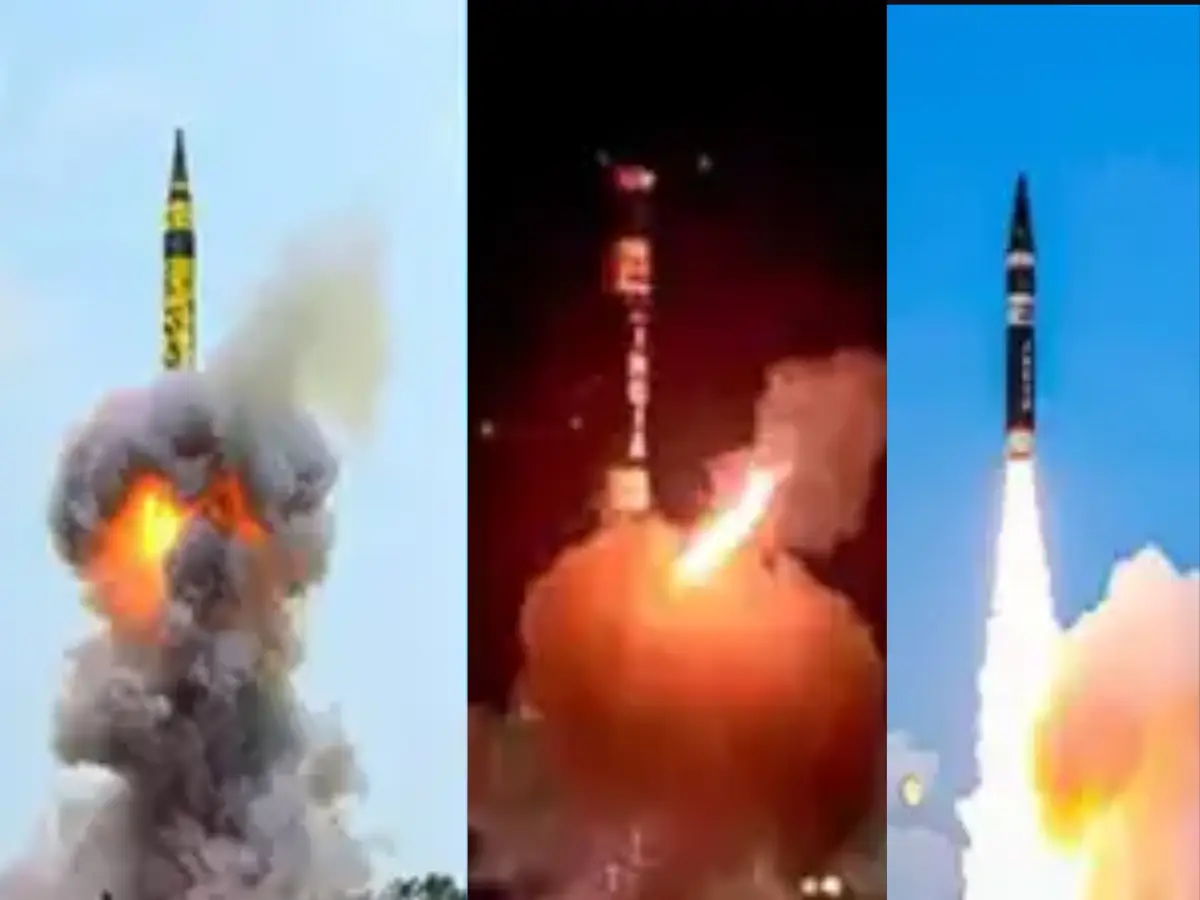
Fire in the sky: India's Prithvi-II, Agni-1 and Akash Prime missiles blaze through perfect test runs

&imwidth=600&imheight=450&format=webp&quality=medium "Fire in the sky: India's Prithvi-II, Agni-1 and Akash Prime missiles blaze through perfect test runs")
Three Big Missile Tests in Two Days Photograph: (X)
On Thursday, July 17, India's Ministry of Defence successfully fired the Prithvi-II and Agni-1 missiles from the Integrated Test Range in Chandipur, Odisha. A day earlier on July 16, India used the Akash Prime missile to destroy two fast-moving drone targets flying at high altitude.
India proved its growing military strength on July 17 and 16 with successful testing of three powerful missile systems. The country tested the Prithvi-II and Agni-1 missiles from Odisha coast on Thursday, July 17, while the advanced Akash Prime missile was tested in Ladakh on Tuesday, July 16. These tests show India's homemade weapons are working perfectly and the country is ready to defend itself.
Breaking News: Three Big Missile Tests in Two Days
On Thursday (July 17) India's Ministry of Defence successfully fired the Prithvi-II and Agni-1 missiles from the Integrated Test Range in Chandipur, Odisha. Both missiles hit their targets perfectly. The tests were done by India's Strategic Forces Command, which handles the country's most powerful weapons.
A day earlier on July 16, India achieved something special in Ladakh by using the Akash Prime missile to destroy two fast-moving drone targets flying at very high altitude. This test was extra important because it came after India's air defense systems worked so well during Operation Sindoor earlier this year.
Defence Minister Rajnath Singh praised the Indian Army, DRDO (Defence Research and Development Organisation), and defense companies for these great achievements. He especially appreciated how government companies like Bharat Dynamics Limited and Bharat Electronics Limited worked together to make these tests successful.
Understanding Prithvi-II: India's Battlefield Missile
Trending Stories
&imwidth=280&imheight=210&format=webp&quality=medium)
&imwidth=280&imheight=210&format=webp&quality=medium)
&imwidth=280&imheight=210&format=webp&quality=medium)
&imwidth=280&imheight=210&format=webp&quality=medium)
&imwidth=280&imheight=210&format=webp&quality=medium)
&imwidth=280&imheight=210&format=webp&quality=medium)
&imwidth=280&imheight=210&format=webp&quality=medium)
&imwidth=280&imheight=210&format=webp&quality=medium)
&imwidth=280&imheight=210&format=webp&quality=medium)
&imwidth=280&imheight=210&format=webp&quality=medium)
&imwidth=280&imheight=210&format=webp&quality=medium)
&imwidth=280&imheight=210&format=webp&quality=medium)
&imwidth=280&imheight=210&format=webp&quality=medium)
&imwidth=280&imheight=210&format=webp&quality=medium)
&imwidth=280&imheight=210&format=webp&quality=medium)
&imwidth=280&imheight=210&format=webp&quality=medium)
&imwidth=280&imheight=210&format=webp&quality=medium)
&imwidth=280&imheight=210&format=webp&quality=medium)
&imwidth=280&imheight=210&format=webp&quality=medium)
&imwidth=280&imheight=210&format=webp&quality=medium)
&imwidth=280&imheight=210&format=webp&quality=medium)
&imwidth=280&imheight=210&format=webp&quality=medium)
&imwidth=280&imheight=210&format=webp&quality=medium)
&imwidth=280&imheight=210&format=webp&quality=medium)
&imwidth=280&imheight=210&format=webp&quality=medium)
&imwidth=280&imheight=210&format=webp&quality=medium)
&imwidth=280&imheight=210&format=webp&quality=medium)
&imwidth=280&imheight=210&format=webp&quality=medium)
&imwidth=280&imheight=210&format=webp&quality=medium)
&imwidth=280&imheight=210&format=webp&quality=medium)
&imwidth=280&imheight=210&format=webp&quality=medium)
&imwidth=280&imheight=210&format=webp&quality=medium)
&imwidth=280&imheight=210&format=webp&quality=medium)
&imwidth=280&imheight=210&format=webp&quality=medium)
&im=FitAndFill=(700,400)&imwidth=280&imheight=210&format=webp&quality=medium)
&imwidth=280&imheight=210&format=webp&quality=medium)
&imwidth=280&imheight=210&format=webp&quality=medium)
&imwidth=280&imheight=210&format=webp&quality=medium)
&imwidth=280&imheight=210&format=webp&quality=medium)
The Prithvi-II missile is one of India's most reliable short-range weapons. It runs on liquid fuel and can carry heavy warheads to destroy enemy targets. Originally made for the Indian Air Force, now both the Air Force and Army use it.
What Makes Prithvi-II Special:
- Can hit targets 350 kilometers away
- Carries warheads weighing 500-1000 kg 8.5 meters long missile
- Weighs about 4.5 tonnes
- Uses smart computer guidance to hit targets accurately
- Launched from mobile trucks that can move anywhere
- The Prithvi-II is very accurate and can change its path while flying to avoid enemy defenses. It was first tested in 1996 and became part of India's main weapon force in 2003.
How Prithvi-II is Launched: The missile sits on a special truck called a mobile launcher. When needed, the truck drives to a safe location, raises the missile upright, and fires it toward the target. The truck can quickly move to a new hiding place after firing. This makes it very hard for enemies to find and destroy the launcher.
All Types of Prithvi Missiles India Has Made:
Prithvi-I (Army Version): Can hit targets 150 km away and carries 1000 kg warheads. The Army used these missiles from 1994 but now newer Prahaar missiles are replacing them. How it's launched: From mobile truck launchers that can drive on roads and hide in forests or behind hills.
Prithvi-II (Air Force Version):This is the one tested on July 17. It can hit targets 350 km away and carries 500-1000 kg warheads. Both Air Force and Army use it now. How it's launched: From special trucks with hydraulic systems that raise the missile upright. The truck needs to fuel the missile with liquid propellant before firing, then can quickly drive away.
Prithvi-III (Navy Version): Can hit targets 350 km away and carries 1000 kg warheads. It was designed for ships but is now mostly replaced by the improved Dhanush version. **How it's launched:** From reinforced helicopter decks of naval patrol vessels using special launch platforms.
Dhanush (Advanced Ship-Launched Version):This is the newest and most advanced naval version of the Prithvi family, also called Prithvi-III. It can attack targets 350 km away, but with smaller warheads it can reach up to 750 km. The name "Dhanush" means bow (like bow and arrow) in Hindi. How it's launched:From Indian Navy warships using special stabilized platforms that keep the ship steady during launch. The missile can attack enemy ships at sea or targets on the coast.
Agni-1: The Foundation of India's Strategic Arsenal
The Agni-1 missile holds the distinction of being India's first operational ballistic missile and forms the backbone of the country's nuclear deterrent capability. This road-mobile, nuclear-capable missile was specifically developed after the Kargil War to address immediate strategic requirements.
Technical Details:
- Range: 700-1200 kilometers (with reduced payload)
- Payload: 1000 kg warhead capacity
- Length: 15 meters
- Launch Weight: 12 tonnes
- Fuel: Single-stage solid fuel propulsion
- Deployment: Road and rail mobile platforms
The Agni-1 features a maneuverable re-entry vehicle (MRV) with body-lift aerodynamics that allows it to correct trajectory errors and reduce thermal stresses. Its solid fuel propulsion system ensures quick reaction time and extended storage capability compared to liquid-fueled systems. The missile was first deployed by the Strategic Forces Command in 2007 and has undergone numerous successful tests since then.
Akash Prime: Advanced Surface-to-Air Defense
The Akash Prime represents the evolution of India's indigenous surface-to-air missile (SAM) technology. Unlike ballistic missiles, SAMs are designed to intercept and destroy incoming aerial threats including aircraft, cruise missiles, and drones.
System Capabilities:
- Range: Up to 40 kilometers interception range Altitude: Effective at high altitudes and low temperatures
- Guidance: Active Radio Frequency (RF) seeker for enhanced accuracy
- Targets: Fighter jets, cruise missiles, drones, and air-to-surface missiles
- Platform: Mobile launcher systems for rapid deployment
The Akash Prime features significant upgrades over earlier Akash variants, including an advanced active RF seeker and improved ground systems optimized for high-altitude operations. The system can track multiple targets simultaneously and engage them with high precision, making it ideal for protecting critical installations and forward positions.
Complete Missile Family Variants
Prithvi Series Evolution:
- Prithvi-I (Army version): 150 km range with 1000 kg payload
- Prithvi-II (Air Force version): 350 km range with 500-1000 kg payload
- Prithvi-III (Naval version): 350 km range, ship-launched capability
- Dhanush: Naval variant for ship-to-ship and ship-to-shore operation
Agni Family Development:
- Agni-I: 700 km range, battlefield missile
- Agni-II: 2000-3000 km range, intermediate-range ballistic missile
- Agni-III: 3500 km range, strategic deterrent
- Agni-IV: 4000 km range, road-mobile IRBM
- Agni-V: 7000+ km range, intercontinental ballistic missile
- Agni-Prime: 1000-2000 km range, next-generation tactical missile
Akash Air Defense Family:
- Akash Mark-I: 25-30 km range, basic air defense
- Akash-1S: 30 km range with active seeker
- Akash Prime: 40 km range, high-altitude capable
- Akash-NG: 70-80 km range, next-generation system
Strategic Significance: Lessons from Operation Sindoor
The recent Operation Sindoor conflict between India and Pakistan in May 2025 demonstrated the crucial role of indigenous defense systems in modern warfare. India's air defense network, featuring systems like the Akash missile family, successfully neutralized hundreds of Pakistani drone and missile attacks during the four-day conflict.
The operation showcased how integrated air defense systems provide a multi-layered protection shield. The Akash missiles, along with other indigenous systems, proved their worth by intercepting incoming threats with remarkable efficiency. This real-world validation has enhanced confidence in India's domestic defense capabilities and reduced dependence on foreign weapons systems.
During Operation Sindoor, India's defense forces successfully demonstrated the effectiveness of indigenous technologies including BrahMos missiles, Akash air defense systems, and various loitering munitions. The operation marked a significant strategic shift, showing India's capability to conduct precision strikes using entirely domestic or domestically-assembled weapon systems.
Launch Mechanisms and Deployment
These missile systems employ sophisticated launch mechanisms designed for rapid deployment and enhanced survivability. The Prithvi-II and Agni-1 use mobile launcher platforms that can be quickly repositioned to avoid enemy detection and targeting. The road-mobile capability ensures these strategic assets remain hidden until needed, providing a credible deterrent.
The Akash Prime system features a multi-target engagement capability with its Rajendra phased-array radar system. Each battery can track up to 64 targets simultaneously and engage 12 targets at once, making it highly effective against saturation attacks. The system's mobility allows for rapid deployment to threatened areas, providing flexible air defense coverage.
India's Growing Defense Independence
These successful tests underscore India's remarkable progress toward defense self-reliance under the Atmanirbhar Bharat initiative. The indigenous development of these sophisticated weapon systems has reduced India's dependence on foreign suppliers while building substantial technological capabilities within the country.
The collaboration between DRDO laboratories, public sector undertakings like Bharat Dynamics Limited and Bharat Electronics Limited, and private industry partners has created a robust ecosystem for missile development and production. This indigenous approach not only saves foreign exchange but also ensures that India maintains complete control over its strategic weapons systems.
The success of these systems in both testing and operational scenarios like Operation Sindoor validates India's strategic decision to invest heavily in domestic defense research and development. As regional security challenges continue to evolve, India's indigenous missile capabilities provide the foundation for maintaining strategic autonomy and deterrent credibility in an increasingly complex security environment.
These technological achievements represent more than just military hardware - they symbolize India's emergence as a significant defense technology power capable of developing world-class weapon systems that can effectively counter modern threats while maintaining strategic independence.
