Delhi feels the burn: Why the national capital is facing its hottest September in 6 Years

&imwidth=600&imheight=450&format=webp&quality=medium "Delhi feels the burn: Why the national capital is facing its hottest September in 6 Years")
Representational Image. Photograph: (ANI)
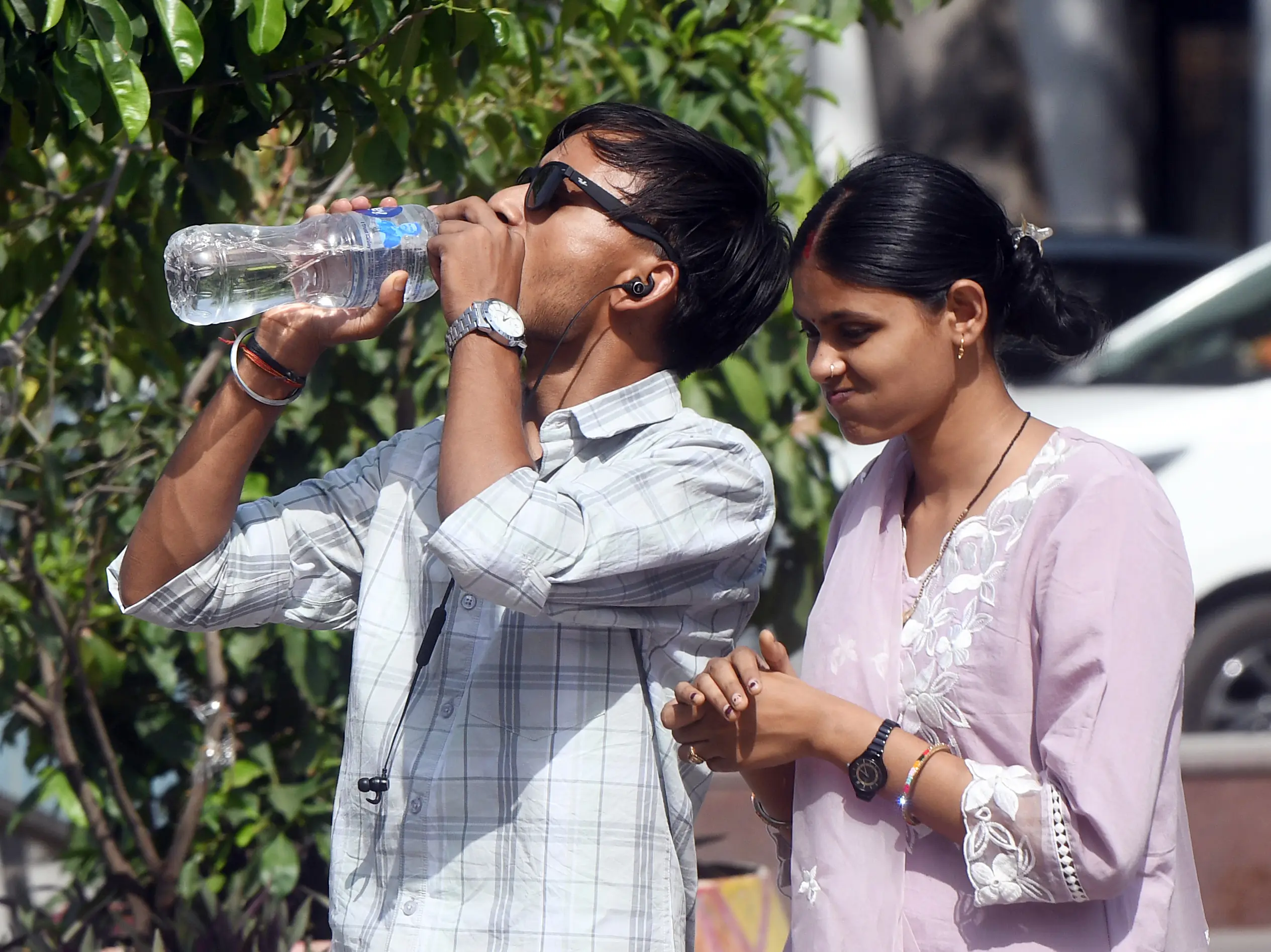
Delhi’s soaring temperatures are being driven by clear skies that intensified daytime heating and high humidity that limited cooling at night. Relative humidity hovered between 56% and 76% through the day, with the moisture acting like a blanket and trapping heat near the surface.
Delhi, the national capital of India, recorded an unusually hot day on Monday, with the minimum temperature climbing to 28.2°C, five degrees above normal and the hottest September morning in six years. The same temperature was reported on Sunday, signalling persistently hot nights at a time when temperatures typically begin to ease. The city last saw a higher September minimum in 2019, when 29.6°C was logged on September 12.
The Capital also remained harsh under daytime heat, with the maximum temperature on Sunday rising to 38.1°C, three degrees above the seasonal average and the hottest September day in two years. The previous higher maximum was recorded on September 5, 2023, at 38.6°C.
What is the reason behind the increase in heat in Delhi?
Delhi has witnessed the hot spell due to the absence of rain-bearing systems because the Southwest monsoon withdrew from Delhi on September 24 — marking its earliest retreat since 2002. The national capital has witnessed the rise in temperature even after Northwest India saw 42% surplus rainfall this September, as per the report by the Indian Express.
Following the early retreat of the monsoon, Delhi’s soaring temperatures are being driven by clear skies that intensified daytime heating and high humidity that limited cooling at night. Relative humidity hovered between 56 per cent and 76 per cent through the day, with the moisture acting like a blanket and trapping heat near the surface. Persistent easterly winds kept humidity levels high, denying residents night-time relief.
Over the past 24 hours, easterly winds with speeds up to 20 kmph have prevailed over the city, as per the IMD. The wind pattern has also aided air quality by preventing smoke from farm fires up north.
Trending Stories
)
)
)
)
)
)
)
)
)
)
)
)
)
)
)
)
)
)
)
)
)
)
&im=FitAndFill=(700,400))
)
)
)
)
)
)
)
)
)
)
)
)
)
The Indian Agricultural Research Institute (IARI) data indicated that 130 stubble-burning cases have been reported so far this season, with 90 in Punjab, 27 in Uttar Pradesh, 6 each in Haryana and Madhya Pradesh, and 1 in Rajasthan. Punjab and Haryana are frequently blamed for the increase in air pollution in Delhi after the harvesting of the paddy crop in October and November.
It has begun emerging since September 15, impacting the air quality of Delhi. On September 29, 2025, a farmer was also booked from Dera Bassi under Section 223 in the season’s first FIR against stubble burning in Mohali, as per the report in the news agency PTI.
On Sunday, Delhi’s 24-hour average Air Quality Index (AQI) was marked at 139 (“moderate”) at 4 pm, making a narrow improvement from Saturday’s 169, which was also the highest of the city since June 13.

