'We had full freedom': IAF chief lauds 'political will' during Operation Sindoor

&imwidth=600&imheight=450&format=webp&quality=medium "'We had full freedom': IAF chief lauds 'political will' during Operation Sindoor")
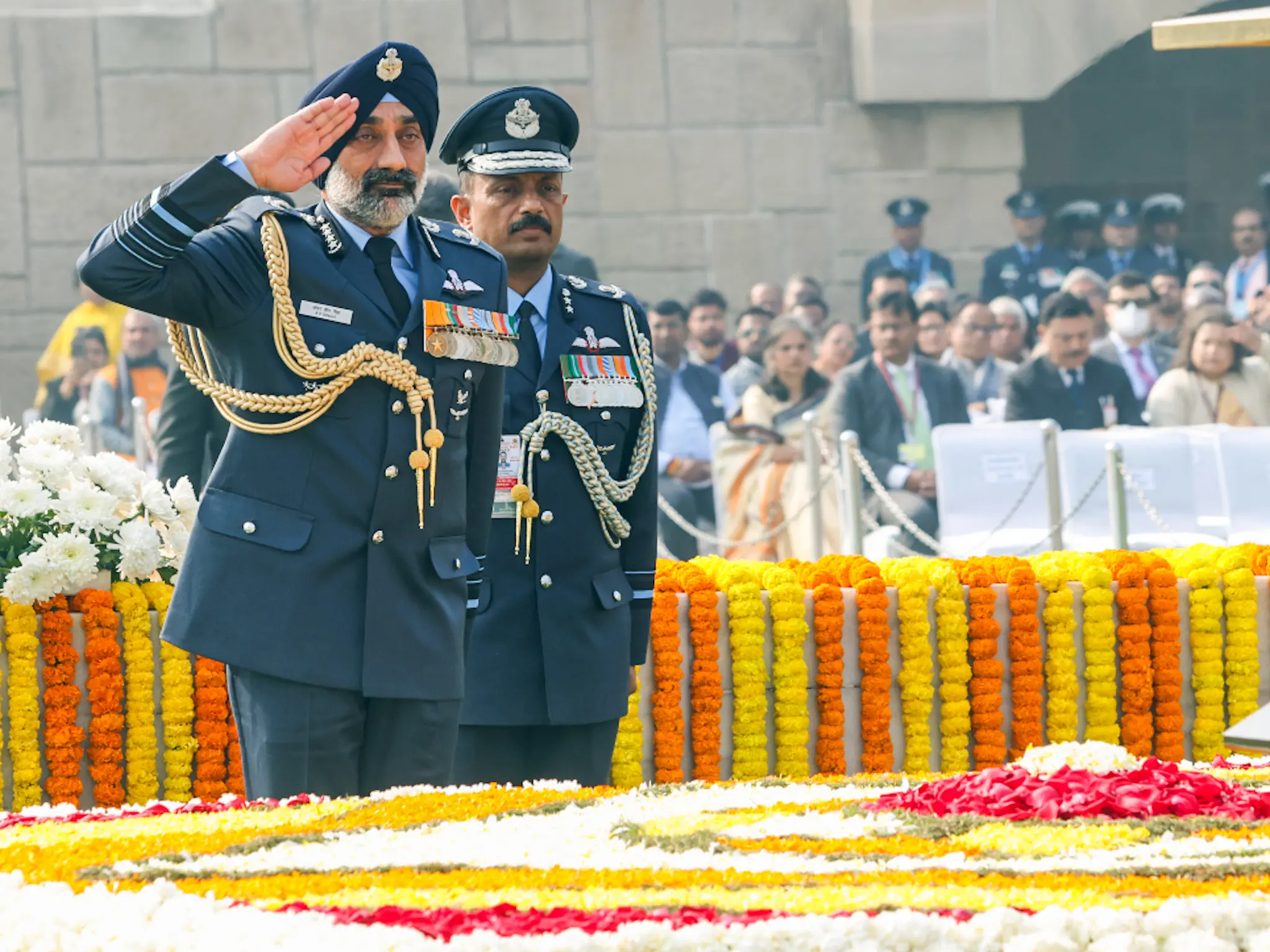
Chief of the Air Staff Air Chief Marshal AP Singh Photograph: (ANI file)
Air Chief Marshal AP Singh said the Indian forces downed at least 6 Pakistani aircraft during Operation Sindoor.
Air Chief Marshal AP Singh on Saturday credited India's political will for the success of Operation Sindoor against Pakistan, saying no restrictions were put on the military. Speaking in Bengaluru, the Indian Air Force (IAF) chief further said that the military got full freedom to respond to Pakistan's attack on civilian areas and military installations.
"A key reason for success was the presence of political will. There were very clear directions given to us. No restrictions were put on us... If there were any constraints, they were self-made...We decided how much to escalate...We had full freedom to plan and execute. Our attacks were calibrated because we wanted to be mature about it...There was a synchronisation between the three forces...The post of CDS made a real difference. He was there to get us together...NSA also played a big role in getting all the agencies," he said.
He said that the Indianforces downed at least six Pakistani planes.
He also revealed the rationale behind not escalating the conflict further.
"People got down to their egos in the war...Once we achieved our objective, we should have looked for all windows of opportunity to stop...Some people very close to me said, 'Aur maarna tha'. But can we continue to be at war?... The nation has taken a good decision," said the officer.
Trending Stories
)
)
&im=FitAndFill=(700,400))
)
)
)
)
)
)
)
)
)
)
)
)
)
)
)
)
)
)
)
)
)
)
)
)
&im=FitAndFill=(700,400))
)
)
)
)
)
)
)
)
)
Reminiscing about the Balakot strike, ACM AP Singh said that this time, the Indian forces had intelligence about the damage they wreaked in Pakistan.
“In Balakot, we could not get anything from inside, and it became a big issue trying to tell our people, unfortunately, as to what we have been able to achieve. We had intelligence of what had gone on inside, had a human kind of intelligence where we had a very clear picture of inside in terms of there had been huge damage. There have been so many terrorists who have been neutralised, but we could not convince our people that, look, we have achieved that...So I'm very happy that this time we were able to take care of that ghost of Balakot that we were ableto tell the world what we have achieved."
He said the Indian forces sent out the message to Pakistan that if they continued the conflict, they would sustain more damage.
"It was a high-tech war. In 80 to 90 hours of war, we were able to achieve so much damage that it was clear to them that if they continue, they are going to pay for it more and more. So they came forward and sent a message to our DGMO that they wanted to talk. This was accepted on our side," he added.