Japan's digital corridor: Free and open Indo-Pacific's backbone

&imwidth=600&imheight=450&format=webp&quality=medium "Japan's digital corridor: Free and open Indo-Pacific's backbone")
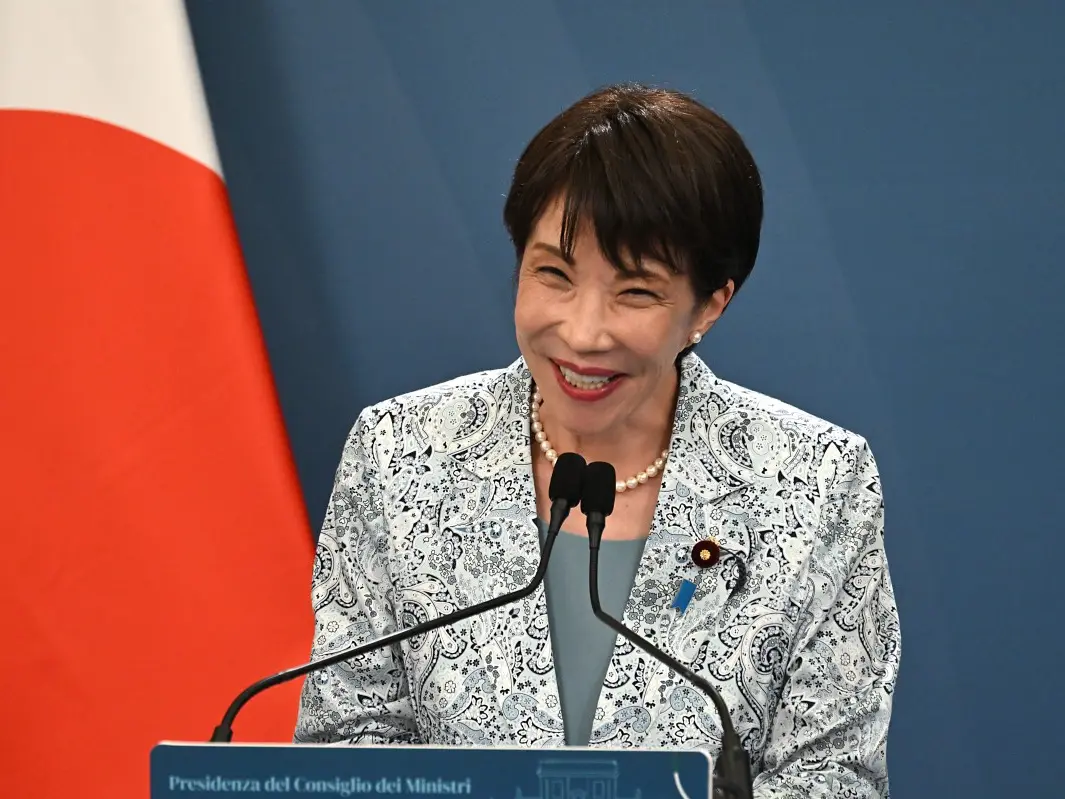
Japanese Prime Minister Sanae Takaichi is on her first India visit Photograph: (AFP)
Japanese PM Sanae Takaichi's India visit highlights Japan's digital corridor initiative under the Free and Open Indo-Pacific strategy, boosting cooperation on undersea cables, satellite communications and digital infrastructure while strengthening India-Japan strategic ties.
Japanese Prime Minister Sanae Takaichi's India visit brings with it a clear plan and agenda on the Free and Open Indo-Pacific doctrine. The digital corridor plan under that strategy is the sharper story for the India-Japan annual summit this week. Japan's updated Free and Open Indo-Pacific strategy, unveiled by Takaichi in Hanoi in May, reframes the strategy away from pure maritime security towards economic resilience: ai, data flows, undersea cables and satellites. The country's communications ministry is set to launch eight communications infrastructure projects in Taiwan and India under a new digital corridor initiative. That is to strengthen cooperation on undersea cables, satellite communications, and digital infrastructure.
Japan's ministry of internal affairs is rolling these out across Taiwan, India, Singapore and Chile, backed by roughly 8 billion yen, or nearly $5 billion. In Taiwan, Japan is testing resilience of undersea cables repeatedly damaged near its coast, which reports suspect is being done by China. In India and Singapore, Japan is betting on tech to secure digital payment infrastructure. In Chile, remote-operation tests using Japan's technology at the world's largest copper mine are underway.
Also Read: Takaichi's India visit: Decoding India-Japan Joint Vision for Next Decade and its eight pillars
While they are small, technical-sounding pilots, each one is a brick in a China-resistant digital architecture stretching from the Taiwan strait to South America. The pattern across minerals, chips and cables is identical. Reduce dependency on one country, build parallel infrastructure with trusted partners. India, for Japan, isn't just a partner anymore, it's insurance.
Indo-Pacific strategy to Mediterranean strategic agenda
Trending Stories
)
)
)
)
)
)
)
)
)
)
)
)
)
)
)
)
)
)
)
)
)
)
)
)
)
)
)
)
)
)
)
)
)
)
&im=FitAndFill=(700,400))
)
)
)
)
At the recently concluded G7 meeting in France, the Indo-Pacific strategy expanded in a broader manner to the European and Mediterranean strategic agenda. Italian Prime Minister Giorgia Meloni's foreign policy now champions a Free and Open Indo-Pacific plan. That policy links the region's security with Italy's strategic "Global Mediterranean" vision.
Rome is pursuing this objective through a series of key diplomatic, economic, and defense partnerships across Asia. So, Italy's Indo-Pacific pivot is now structural and not just symbolic.
Meloni's special strategic partnerships with India and Japan - covering critical minerals, and the 20-billion-euro trade target - signal Rome hedging against China dependency. Takaichi's political alignment, and the Indo-Mediterranean framing show Italy positioning itself as Europe's bridge into Asian security architecture.
For Japan, India's north east is the gateway for that strategy.