&imwidth=800&imheight=600&format=webp&quality=medium "Secretive, undeclared or public, Iran is littered with nuclear sites and facilities - See list in wake of Israel attack")
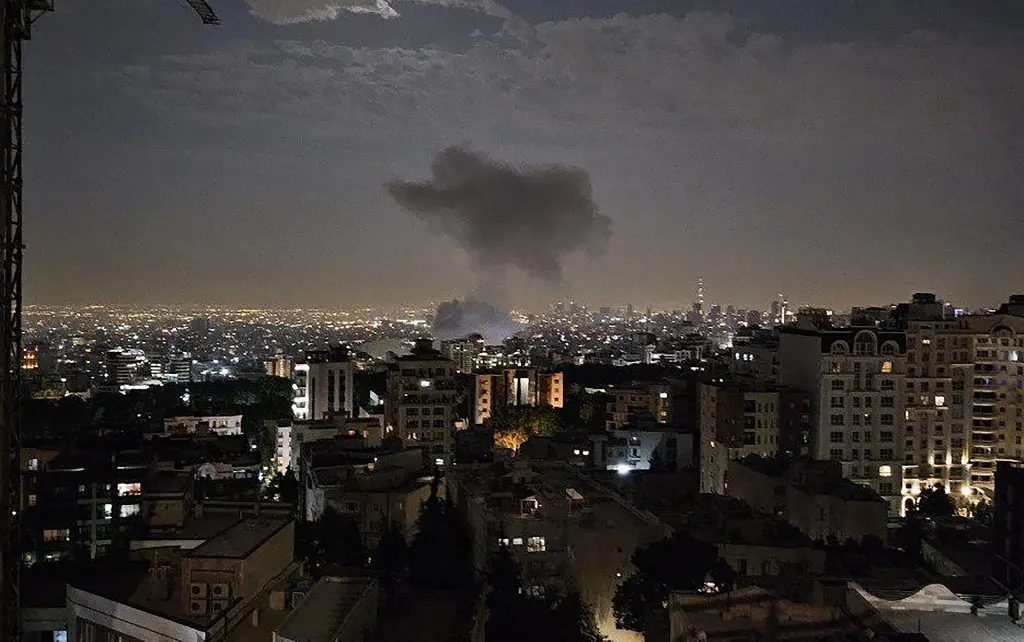
Israel's attack targeting Iran's nuclear programme on Friday (June 13) shed the limelight on its key nuclear facilities. Iran’s nuclear programme began under the US-backed Atoms for Peace initiative in the 1960s. The programme saw significant growth in the 1990s with assistance from Russia, China, and the AQ Khan network of Pakistan. Iran ran a nuclear weapons programme, the so-called Amad Plan, from late 1990s to around 2003, with facilities like Fordow, Varamin, and Parchin playing key roles. But that programme was reportedly stopped in 2003. Iran continued undeclared nuclear programme activities since then, raising concerns in the global community, particularly Israel, its arch rival in the region.
The 2015 nuclear deal, formally known as Joint Comprehensive Plan of Action (JCPOA) imposed limits on the Iranian nuclear programme, in return for the easing of sanctions. The deal capped the uranium enrichment at 3.67 per cent, and imposed other restrictions, like limiting uranium stockpiles to 300 kg and allowing monitoring by IAEA, the UN nuclear watchdog. But after the US withdrew from the Iran nuclear deal under President Donald Trump's first term in 2018, Iran resumed enrichment beyond limits imposed on the pact.
Since then, its uranium stockpiles are thought to have exceeded 30 times the agreed limit and enrichment is thought to have reached anywhere between 60 to 83.7 per cent. Note that 90 per cent enriched uranium is considered weapons-grade, but nuclear weapons can be made even with 20 per cent enrichment, with some effort.

Iran has had a tense history with IAEA monitoring, with the nuclear agency reporting on Thursday it had violated several norms. Iran often restricted access to IAEA monitors, particularly since 2021, and failed to resolve issues at undeclared sites like Turquzabad and Varamin.
The IAEA has also accused Iran of non-compliance with safeguards of the Non-Proliferation Treaty or NPT , which Iran had ratified. There are specific fears regarding the undisclosed nuclear facilities of Iran.
At this juncture, here is a detailed look at the key Iranian nuclear facilities and allied concerns, including those that are publicly known or inactive, as well as research facilities and universities.
Natanz Fuel Enrichment Complex
Trending Stories
)
'Lot of things to learn from experienced players': Jayasuriya backs Rohit, Virat for 2027 ODI World Cup
&im=FitAndFill=(700,400))
Kareena Kapoor birthday special: Inside her net worth, best movies, luxurious lifestyle and love story with Saif Ali Khan
)
Trump says he'll build an 'AI Force' and appoint a czar, for 'high IQ' people only
)
Punjab man consumes poison outside DC office; Congress, BJP target AAP government
)
SNL UK takes aim at Ed Sheeran with AI Princess Diana sketch
)
Iran sets 7 conditions to end war with US: What are Tehran’s demands?
)
AI actress Tilly Norwood glitches mid-interview, switches from English to Chinese | Watch
)
Mahabharat actor Saurav Gurjar arrested in Hyderabad, sent to 14-day judicial custody in sexual exploitation case
)
Chancellor Friedrich Merz vows to stay on as exit polls signal major poll setback
)
J&K Assembly Session begins amid chaos: BJP, ruling alliance clash as statehood demand dominates
)
Taylor Swift has a 'proud wife' moment as Travis Kelce scores first touchdown of season: 'That’s my husband!'
)
'Were you here to sell chickpeas?': Wasim Akram criticises Babar Azam's captaincy
&im=FitAndFill=(700,400))
New OTT releases this week (September 21-27, 2026): Shaque: Trust No One, Hunkkaar, Don’t Be Shy- 5 new titles coming to Netflix, Prime Video and more
)
Noel Tata challenges Chandrasekaran’s reappointment as Tata Sons chairman. What happened at the board meeting
)
Italy moves to ban face veils in schools as Meloni pushes new integration measures
)
TIFF 2026: Theja Rio’s Angh wins Platform Prize, puts Nagaland story on global stage
)
Delhi: Flagged voters remain on the draft roll but face hearings
)
Saudi Arabia exits China-led mBridge digital currency platform amid Saudi-Houthi conflict
)
40-foot waves crash into cruise ship in dangerous stretch near Antarctica. Watch
)
Jailer 2: Vidya Balan joins Rajinikanth's upcoming film as Kantha | Watch
)
‘0% chance’: Nvidia CEO Jensen Huang dismisses AI extinction fears by 2030
)
Samsung raises Galaxy S26 prices by Rs 20,000: Here’s what each model now costs
)
Bessent meets China’s He Lifeng to prepare for Trump-Xi summit
)
CDU suffers historic defeat in eastern Germany as AfD surges, Merz vows to stay on
)
China now makes advanced memory chips without the machines it was banned from buying
)
Arvind Kejriwal, family members, Delhi CM Rekha Gupta get SIR notices
)
Trump-Xi summit: US Treasury Secretary holds meeting with Chinese Vice Premier
)
Fleming's aspirations as England Test coach include WTC, top ranking and Ashes
)
Saudi vs Houthis: Houthis claim missiles & drones used in attack on key Saudi sites
)
Delhi Air pollution: Strict crackdown on waste burning
)
Apple reportedly building AI server with M8 Ultra chips, may use Nvidia technology
&im=FitAndFill=(700,400))
What TSMC's 2nm technology means for Apple
)
Glitch in the matrix caught on camera: Woman vanishes after talking to reporter
)
Several petrol pumps, other businesses to refuse UPI payments above Rs 2,000 from Oct 16: Is it legal?
)
AI kill switch explained: Why shutting down a dangerous AI may not be as simple as pressing a button
)
Microsoft executive called AI training the ‘largest theft of labour in human history’
)
Pilot recreates Mona Lisa in sky over Oklahoma and Arkansas in four-hour flight: VIDEO
)
US ships in Indian Ocean ‘will be attacked’ if war resumes, warns Iran
)
Samay Raina-Mukesh Chhabra controversy explained: What happened over girlfriend joke on India's Got Latent?
)
Putin's United Russia party wins 355 seats in Duma election; 4 other parties cross threshold to enter parliament
)
S Jaishankar, former Army chief among high-profile names issued Delhi SIR notices
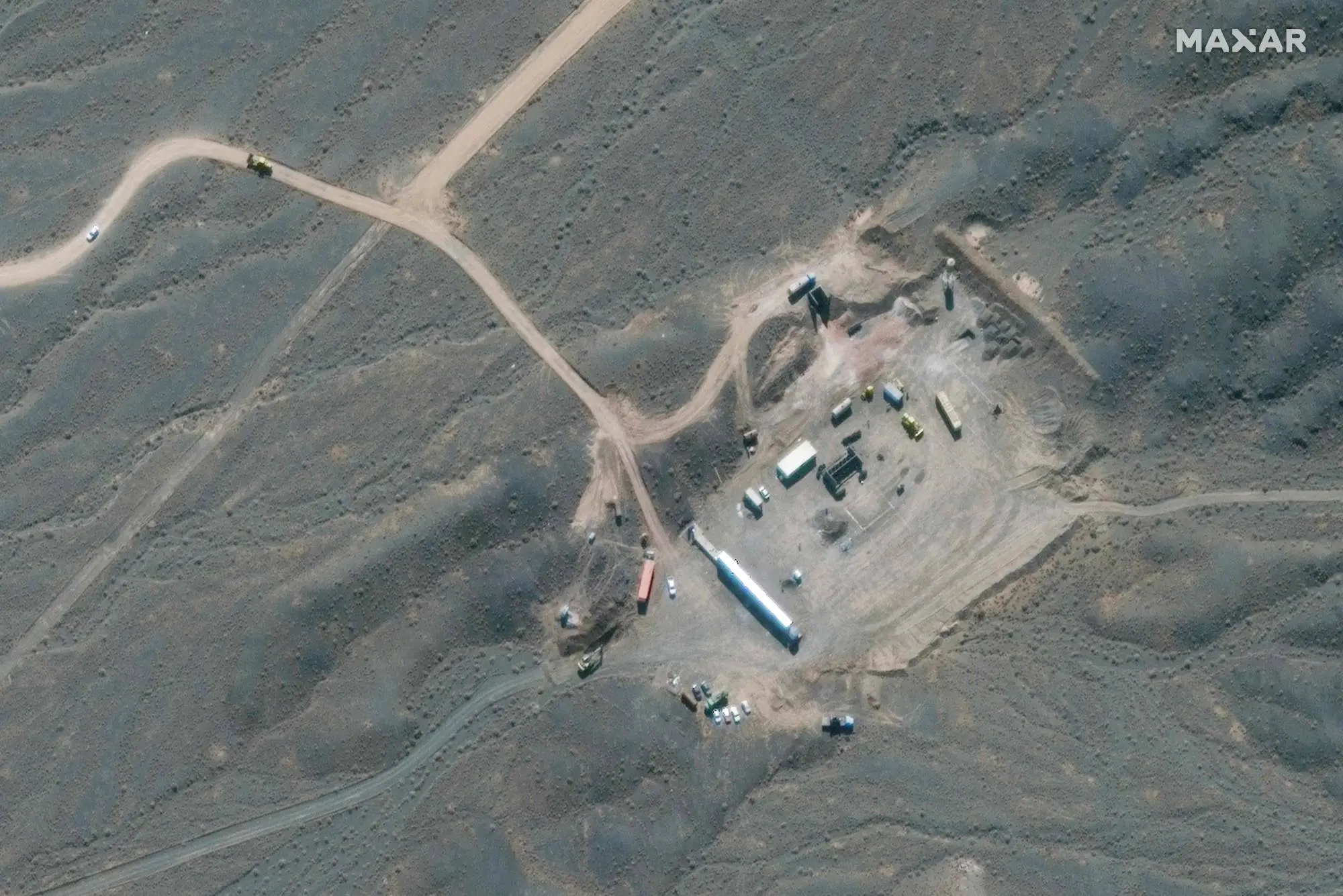
Located 322 km south of Tehran amid mountains outside Qom, Natanz is the primary uranium enrichment facility of Iranian nuclear programme.
Natanz produces most of Iran’s enriched uranium and is at the heart of its nuclear programme.
It has a Fuel Enrichment Plant (FEP), a vast underground facility designed for commercial-scale enrichment. The FEP can house up to 50,000 centrifuges. This facility is possibly beyond the reach of even US-made bunker buster bombs. As of 2025, approximately 16,000 centrifuges are installed, out of which some 13,000 are believed to be operational, enriching uranium to 5 per cent purity.
Above ground, there is a Pilot Fuel Enrichment Plant (PFEP) that conducts research and smaller-scale enrichment.
Fordow Fuel Enrichment Plant (FFEP)
Fordow was once a covert uranium enrichment facility and part of the Amad Plan for weapons-grade uranium production. Under the 2015 JCPOA, Fordow was redesigned for non-enrichment research, but enrichment resumed after 2018.
Located Near Qom and dug into a mountain approximately 80–90 metres underground, Fordow is reported to have 1,000 centrifuges, including advanced IR-6 models, which are enriching uranium to 60 per cent. In 2023, uranium enriched to 83.7 per cent was detected in Fordow, which is very close to weapon-grade.
Fordow, to which IAEA monitoring access is restricted, is deep underground, making it Iran’s best-protected nuclear site. It is difficult to target with military strikes.
Arak (Khondab) Heavy Water Reactor (IR-40)
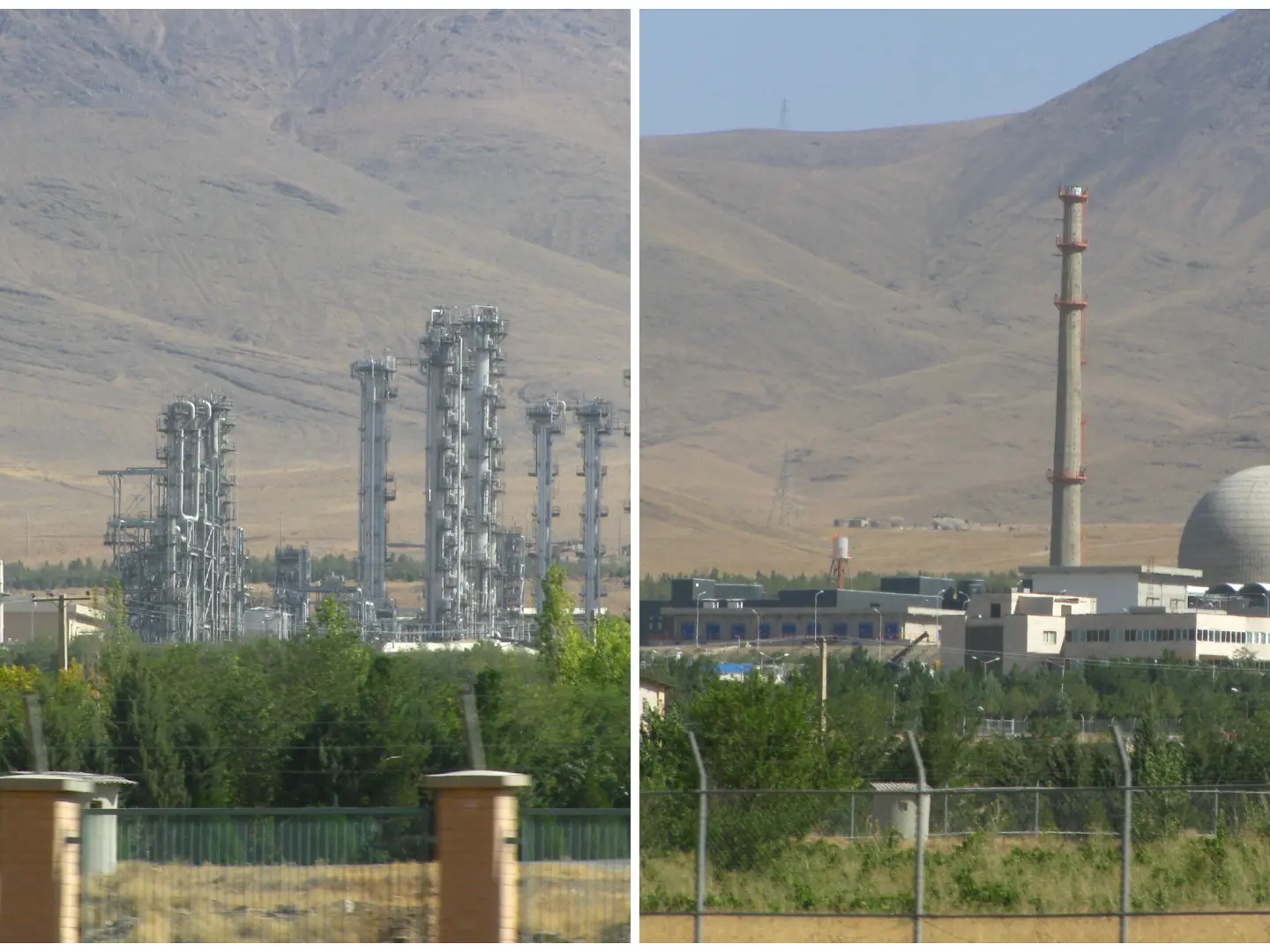
Arak is a 40 MW heavy-water research reactor designed to produce plutonium that can be used for nuclear weapons. The core of the reactor, located near Arak in Markazi province, was removed after the Iran nuclear deal. It was filled with concrete to stop production of weapons-grade plutonium and the reactor was redesigned to use natural uranium fuel. In 2015, it was reported that Arak was being modified with Chinese assistance to prevent large-scale plutonium production. Iran has frequently denied IAEA monitoring of Arak.
Isfahan Nuclear Technology Centre
Ishfahan is a nuclear research centre that hosts a Uranium Conversion Facility (UCF). The UCF converts yellowcake into uranium hexafluoride (UF6) for enrichment. The UCF produced 550 tonnes of natural UF6 by 2015, with about one-third transferred to Natanz.
Located on the outskirts of Isfahan, Iran’s second-largest city, the centre reportedly engages in centrifuge component manufacturing, and produces parts for IR-1 centrifuges. The centre was relocated to Isfahan in 2022 after an attack on the TESA Karaj complex.
It contains small research reactors, ostensibly for medical and industrial isotope production.
It is believed that China provided Iran with the blueprints for UCF, in spite of a 1997 agreement to halt nuclear cooperation.
Isfahan is critical for the nuclear fuel cycle and plays a crucial role in Iran’s enrichment programme.
Bushehr Nuclear Power Plant
This is Iran’s only operational nuclear power reactor. The Russian-designed VVER-1000 unit, located in the Gulf coast near Bushehr, has been generating electricity since 2011. Russia supplies the fuel, and spent fuel is returned to Russia.
Two additional units are planned, and construction of the first started in 2019.
Tehran Nuclear Research Centre (TNRC)
This is Iran’s largest nuclear research facility, hosting a small research reactor and laboratories for plutonium separation and purification as well as uranium conversion. Note that polonium production has dual-use potential for nuclear weapons triggers.
Located in the capital Tehran, TNRC houses some 3,000 scientists.
Parchin Military Complex
Located 20 miles southeast of Tehran, Parchin is a multi-purpose military complex involved in missile and ammunition development, with suspected nuclear weapons research involvement. It houses Taleghan 2, part of the Amad Plan, and was used for nuclear weapons-related research until at least 2018. This was attacked and destroyed by Israel in 2024.
The complex also has an underground tunnel complex linked to the Amad Plan, which was operational as recently as 2018.
There had been reports in the past of high-explosive testing for hydrodynamic experiments, potentially related to nuclear warhead development, in the complex.
Iran has consistently opposed IAEA monitoring access to the complex.
Lavisan-Shian undeclared nuclear site
Located near Tehran, this was a suspected site of undeclared nuclear activities by Tehran. It is believed that Iran conducts neutron detector development and testing for nuclear weapons from this site. Subject of an investigation, it was allegedly sanitised and destroyed in 2004 to remove evidence.
Varamin secret unarium conversion site
This was a secret pilot uranium conversion site operating between 1999 and 2003. Codenamed the New Tehran Plant, this site processed uranium ore into yellowcake, UF4, and UF6 during the Amad Plan. It was overhauled in 2004 and has been inactive since then.
Turquzabad storage site
This is a suspected storage site for nuclear material and equipment, identified in 2018 by the IAEA. Environmental samples in 2019 detected uranium particles in the site, located near Tehran, which is thought to have been a warehouse for Amad Plan.
Marivan suspected explosive testing site
Located in western Iran, Marivan was a suspected high-explosive testing site for nuclear weapons under the Amad Plan. Iran is believed to have conducted neutron detector experiments at this site. While linked to Iran’s historical weapons programme, there is no evidence of current activity at Marivan.
Ivanaki (Rangin Kaman or Rainbow Site)
Located in the Semnan Province, southeast of Tehran, Ivanaki is a suspected covert site of the Organization of Defensive Innovation and Research (SPND). Since 2009, this place, publicly known as Diba Energy Sina Company's chemical plant, has reportedly focused on tritium extraction for boosted nuclear warheads and hydrogen bomb development. If confirmed, this could be a site of ongoing nuclear weapons research, but nothing has been said to this extent by the IAEA.
Gorgan (Neka) alleged nuclear research site
Gorgan in northern Iran allegedly hosted a secret nuclear research facility, possibly for weapons development, in the 1990s. It is thought to have hosted scientists from Iran, Ukraine, Russia and Kazakhstan. There have been reports of military applications at this site, but authentic data is not available.
Sharif University of Technology
This university in Tehran is the centre of Iran's nuclear research and is allegedly involved in uranium centrifuge development. It has helped in the development of small research reactors at the University of Tehran.