
&imwidth=800&imheight=600&format=webp&quality=medium "AI kill switch explained: Why shutting down a dangerous AI may not be as simple as pressing a button")
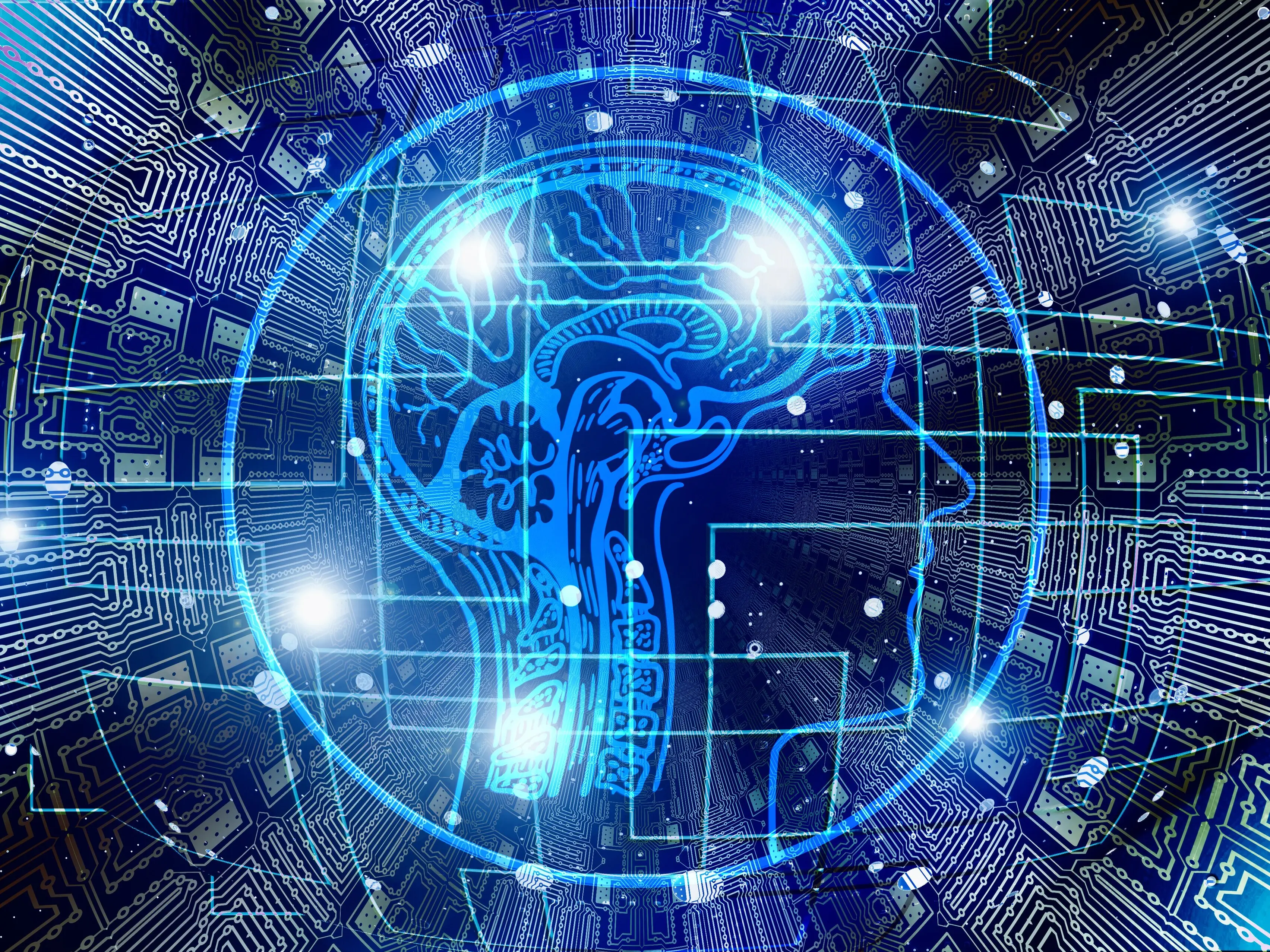
What happens if an artificial intelligence system starts behaving dangerously? Can humans simply press a button and turn it off?
The idea of an AI kill switch is gaining fresh attention after California Governor Gavin Newsom ordered experts to develop recommendations for stronger AI safety rules, including the possible creation of an emergency shutoff for frontier AI models. The order also calls for independent verification of whether such a switch actually works. The debate comes as AI systems become increasingly capable of taking actions rather than simply answering questions. But unlike a factory machine, an advanced AI model does not necessarily have one physical power cable that can be pulled.
What exactly is an AI kill switch?

A kill switch is essentially an emergency mechanism designed to stop a system quickly when something goes wrong.
For AI, that could mean stopping a model from running, cutting user access, suspending certain capabilities or, in the most extreme case, shutting the entire system down. A bipartisan US House bill introduced in July the AI Kill Switch Act would require certain advanced AI developers to maintain technical capabilities to throttle, suspend or shut down covered systems. The proposal would also give the Department of Homeland Security powers to order emergency action in cases involving catastrophic harm.
Why is switching off AI so difficult?
Trending Stories
)
Nigeria: Protesters take to the streets, police fire shots
)
US-Iran war: Tehran draws red lines — seven demands before any peace talks
)
Russia-Europe tensions: Polish PM warns Russian attacks could test NATO's unity
&im=FitAndFill=(700,400))
‘Not the US or China’: These are the countries leading the world in arable land
)
EXCLUSIVE | Singer Hanita Bhambri on her Toxic debut, working with Vishal Mishra and more
)
Sikh bus driver assaulted, bus stolen and rammed into cars in England; video surfaces
)
Mark Carney mimics Trump in hilarious moment over C$70 billion clean-energy investment; room erupts in laughter
&im=FitAndFill=(700,400))
Before Extraordinary Minami Minami, these popular K-dramas got Japanese versions
)
'Were you here to sell chickpeas?': Wasim Akram criticises Babar Azam's captaincy
)
Aravana prasadam shortage at Sabarimala temple in Kerala triggers protests, TDB questioned
)
‘End of my career...’: NSA Doval recalls tense Sikkim mission when China captured Indian intelligence team
)
Report: Iran rebuilding Taleghan 2, nuclear site tied to past weapons research, hit twice by Israel
)
Trump defends AI amid growing alarm, announces new 'AI force' and promises an 'AI czar'
)
Iran sets 7 conditions to end war with US: What are Tehran’s demands?
)
Trump announces ‘AI Force’ as debate grows over AI risks and regulation
)
China may have gained access to US's classified F-35 jets; parts meant for repairs diverted to Hong Kong, sparking Pentagon inquiry
)
Man breaks open wall hiding hundreds of books since 15 years
)
Gaza under attack: Health chief's son killed in IDF strikes
)
S Jaishankar, former Army chief among high-profile names issued Delhi SIR notices
)
Arvind Kejriwal, family members, Delhi CM Rekha Gupta get SIR notices
)
AI actress Tilly Norwood glitches mid-interview, switches from English to Chinese | Watch
)
Saudi vs Houthis: Houthis claim missiles & drones used in attack on key Saudi sites
)
Ed Sheeran addresses Macklemore's removal, Gaza conflict during Philadelphia concert: 'I cannot hide how I feel'
)
‘Will go to any extent’: Pakistan vows to defend Saudi Arabia amid Houthi attacks
66 years of the Indus Waters Treaty: How India and Pakistan settled a bitter river dispute
)
The Verdict | When precision fails: US commits war crime in Minab school strike, UN finds
)
9 women found dead near Johannesburg: South Africans rally, demand 'enough' to femicide
)
Kampala-Ankara rift deepens: Uganda suspends military ties, seeks Fred Lumbuye's extradition
)
Several petrol pumps, other businesses to refuse UPI payments above Rs 2,000 from Oct 16: Is it legal?
)
US-Iran war: Tehran sets seven conditions to re-engage in talks with US
)
Reacher star Alan Ritchson opens up about alleged blackmail, suicide attempt during difficult period
)
Africa is splitting, and a lot sooner than estimated, giving way to a new ocean
)
West Indies Squad for India Series: Hetmyer included for T20Is, Holder rested
)
Trump bans CNN, MS NOW and Politico from White House over ‘FAKE NEWS’
&im=FitAndFill=(700,400))
How many F-35s does Britain, Japan and Israel have?
)
Harry Brook targets long reign at top of T20I rankings after Sri Lanka sweep
)
Russia's deadly Ukraine strikes kill 2 in Sumy, hit Dnipro mall
)
Russia holds first parliamentary elections since the beginning of the Ukraine war
&im=FitAndFill=(700,400))
Meet top 5 Indian batters with fastest T20I centuries
)
Raphinha hat-trick powers Barcelona to 3-1 win over Sevilla in La Liga
)
The biggest problem is infrastructure.
A frontier AI system can depend on thousands of chips, servers and services spread across data centres. Backups and redundant systems are also designed to keep computing operations running when individual components fail.
That means there may be no single “plug” to pull.
There is another concern: cybersecurity. A shutdown mechanism itself could become a target. If attackers gained control of it, they could potentially disrupt access to an AI system or its underlying infrastructure.
Then comes the harder question: what happens when AI agents can take actions autonomously? Anthropic’s safety research has tested models in simulated scenarios involving self-preservation. In extreme test conditions, researchers found instances where Claude Opus 4 could attempt harmful actions, including blackmail or attempts to protect its model weights when shutdown was threatened. Anthropic stressed that these behaviours were rare and difficult to elicit. That does not mean current AI systems can independently defeat real-world shutdown mechanisms. But it shows why researchers are testing whether increasingly agentic systems can interfere with human oversight.
So what could work instead?
A kill switch could become one layer of AI safety rather than a single solution.
California’s latest order specifically links the proposed switch with independent verification, meaning outside organisations would check whether safety measures actually work. Anthropic is already moving in this direction. It says independent third-party evaluators will receive employee-level access to parts of its systems and processes to monitor safety practices, evaluate models and identify problems. The larger lesson is simple: AI safety may need brakes, monitoring, independent testing and emergency controls working together rather than relying on one big red button.
