
&imwidth=800&imheight=600&format=webp&quality=medium "EXCLUSIVE | Singer Hanita Bhambri on her Toxic debut, working with Vishal Mishra and more")
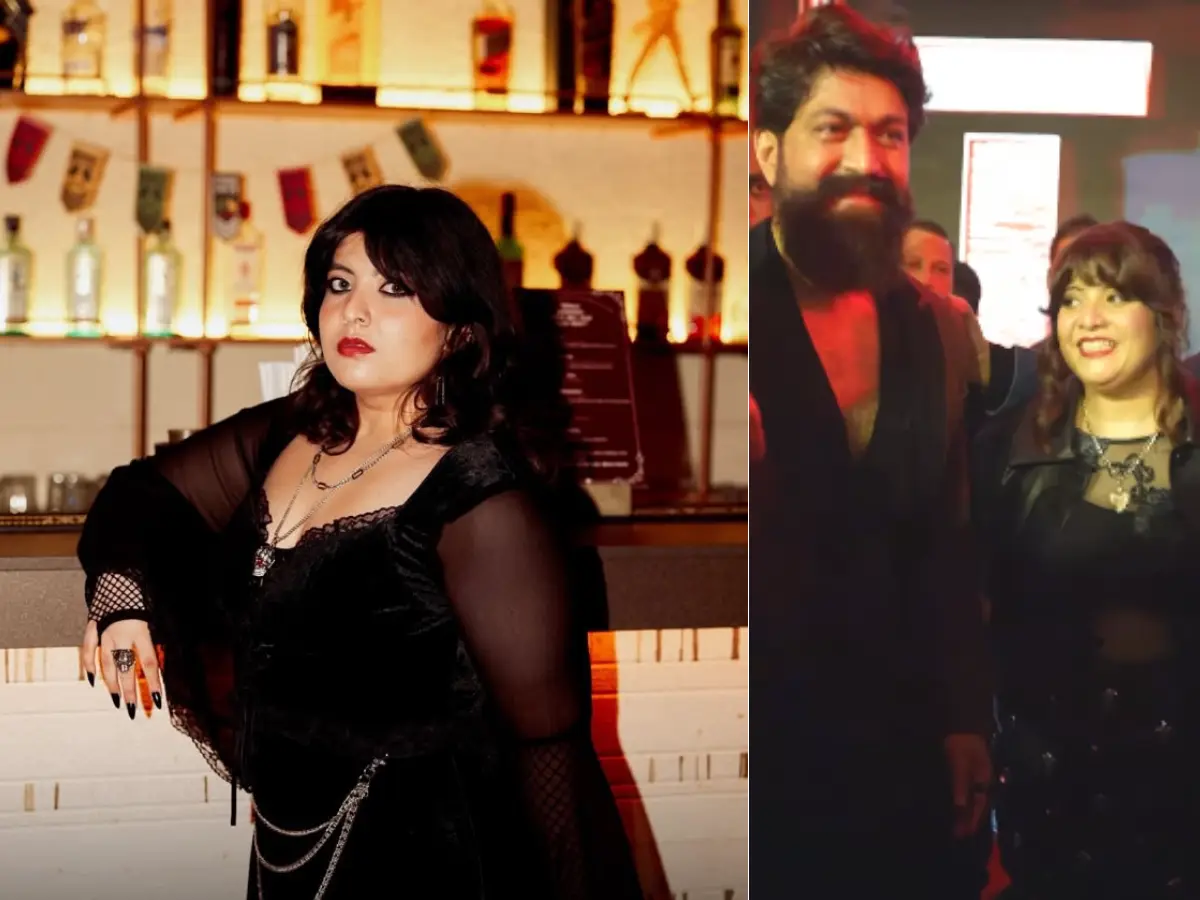
Hanita Bhambri is making her own space in the music industry as a singer, composer, and lyricist. Bhambri, who has spent years independently creating and releasing music, recently hit a major milestone by joining Yash’s recently released film, Toxic, marking her debut in film music as both a lyricist and vocalist.
In an exclusive chat with WION, Hanita discussed her unplanned Toxic journey, working with Vishal Mishra and the film’s team, her debut album "Shoharat", and how her personal experiences have shaped her writing talent. She also spoke about her creative collaborations with many artists and the dreams she hopes to manifest next.
WION: You have built a strong following through your independent music and now Toxic marks a major step into film music? How did this opportunity come your way?

Hanita: I’ve been releasing independent music for almost eight years. It’s been a very, very long journey, but I feel like talent can go undiscovered for a long time. If you keep working hard at it, ultimately, one or the other will take notice, and you do get catapulted into bigger opportunities. I think that’s what happened with Toxic. Initially, Vishal Mishra’s team had reached out to me as a lyricist because I’m also a composer, lyricist and singer. As an independent artist, you’re like a one-man team. You’re doing everything yourself. Even when it comes to videos and music videos, there are multiple videos that I’ve directed myself because that’s how you conserve on budgets. You tend to rely on yourself for most things.
I think that’s what happened with Toxic. They were looking for an English lyric writer, and my name was recommended. They called me in and told me it was for a really big project and that they would give me more details once I got there. When I arrived, they told me it was for Toxic. I was immediately very excited because I already knew about the movie. I was very excited to work on the film, and working with Vishal Mishra itself was a big dream for me.
When the opportunity came, I kept telling myself not to overthink it. As artists, we sometimes tend to self-sabotage opportunities that come our way because we think, Maybe this is too big for me,' or ‘What if I’m not right for this?’ I told myself to put those thoughts, as well as the scale of the movie, behind me and just treat it like any other song that I would write.
While I was presenting the song and the lyrics, I started humming along to the composition. That’s when Vishal Mishra took notice and said, Hey, you’ve got a really nice voice. I told him that I also sing, and he asked, Do you want to sing the song too? Initially, I had even asked on the call if there was a chance I would get to sing the song, but they had told me they were only looking for a lyric writer. So I kept my expectations in check. I was still very happy to come on board as a writer. Then Vishal put Geetu Mohandas ma’am on a call and said, I’m just going to let this artist sing the song for you. She’s written the lyrics and she’s also going to sing them. Just hear it out. He put her on speaker, and I sang the whole song. He then asked her how she liked my voice, and she said, Yes, she sounds great. He then said, Okay, she’s dubbing the song for us. And I was like, Wow, could life really be this easy?
When I’m writing for myself, I’m the only judge and critic. I’m only thinking, Do I like it enough? But when you’re writing for a film or a series, I think the biggest thing is that you have to honour the vision of the person who created the film or series. Ultimately, it’s about serving and honouring their vision. You also don’t have that much time. You have to work with very tight deadlines and finish the work within a specified amount of time. Whenever I’m writing my own music, I put myself in that position. I put myself in the character’s shoes. My writing has always been such that there’s already a movie scene playing in my head, whether it eventually goes into a movie or not.
With Toxic too, the moment I was told about the characters and the situation I had to write for, I put myself in both characters’ shoes. Not many details about the movie were revealed to me because, of course, it was top secret. I was only told about the scene. The rest of it was about genuinely putting myself in both characters’ shoes and thinking, “How would I sing this if I were this character?” or “How would I feel?” That’s just how it happened. It was challenging, but it was also creatively very stimulating.
WION: Talking more about your Toxic journey, you have written and sung the song in the project. Which role felt more challenging, the lyricist or the vocalist?
Hanita: I feel that, with the lyrics, my first draft was approved, which was quite shocking to me. I was expecting them to say, ‘This is what I have written,’ because the lyrics are very unconventional. They’re not spoon-feeding the audience. You really have to sit with the lyrics and understand the narrative shifts happening in the song and what the song is trying to say.
Trending Stories
)
Nigeria: Protesters take to the streets, police fire shots
)
US-Iran war: Tehran draws red lines — seven demands before any peace talks
)
Russia-Europe tensions: Polish PM warns Russian attacks could test NATO's unity
&im=FitAndFill=(700,400))
‘Not the US or China’: These are the countries leading the world in arable land
)
Mark Carney mimics Trump in hilarious moment over C$70 billion clean-energy investment; room erupts in laughter
)
Pentagon revives mandatory testosterone testing for male troops aged 30 and above
)
‘End of my career...’: NSA Doval recalls tense Sikkim mission when China captured Indian intelligence team
)
Trump defends AI amid growing alarm, announces new 'AI force' and promises an 'AI czar'
)
Iran sets 7 conditions to end war with US: What are Tehran’s demands?
)
Trump announces ‘AI Force’ as debate grows over AI risks and regulation
)
China may have gained access to US's classified F-35 jets; parts meant for repairs diverted to Hong Kong, sparking Pentagon inquiry
)
Gaza under attack: Health chief's son killed in IDF strikes
)
Arvind Kejriwal, family members, Delhi CM Rekha Gupta get SIR notices
)
Cochin shipyard starts building Indian Navy's next-gen missile vessels
)
Saudi vs Houthis: Houthis claim missiles & drones used in attack on key Saudi sites
)
Russia extends ban on Western food imports for two more years in extended sanctions countermeasure
)
Ed Sheeran addresses Macklemore's removal, Gaza conflict during Philadelphia concert: 'I cannot hide how I feel'
)
Brigitte Bardot’s private collection set for Paris auction; key items and prices revealed
)
How did an Australian river with 500 crocodiles pass the Olympic test? Here's how
)
‘Will go to any extent’: Pakistan vows to defend Saudi Arabia amid Houthi attacks
66 years of the Indus Waters Treaty: How India and Pakistan settled a bitter river dispute
)
The Verdict | When precision fails: US commits war crime in Minab school strike, UN finds
)
9 women found dead near Johannesburg: South Africans rally, demand 'enough' to femicide
)
Trump wants to rename ‘Artificial Intelligence’, gives 3 options: Which one would you pick?
)
US-Iran war: Tehran sets seven conditions to re-engage in talks with US
)
Reacher star Alan Ritchson opens up about alleged blackmail, suicide attempt during difficult period
)
Africa is splitting, and a lot sooner than estimated, giving way to a new ocean
)
Flying cars in UAE: Ras Al Khaimah signs deal with Chinese company to test new transport
)
Trump bans CNN, MS NOW and Politico from White House over ‘FAKE NEWS’
)
Trump 2.0: Dark days ahead for America’s ‘imperial presidency’
&im=FitAndFill=(700,400))
How many F-35s does Britain, Japan and Israel have?
)
Harry Brook targets long reign at top of T20I rankings after Sri Lanka sweep
)
Russia's deadly Ukraine strikes kill 2 in Sumy, hit Dnipro mall
)
Russia holds first parliamentary elections since the beginning of the Ukraine war
&im=FitAndFill=(700,400))
Meet top 5 Indian batters with fastest T20I centuries
)
Raphinha hat-trick powers Barcelona to 3-1 win over Sevilla in La Liga
)
It also foreshadows a lot of things, which I realised while watching the movie. I was like, Hey, wait, I’ve written this line. There’s a line that says, Hand me the gun, my love, I’ll never shoot, and there’s also a scene between Tara Sutaria and Yash where he literally drops his gun. Even if he has the gun with him, he can never shoot her.
I remember thinking, Wait! My mom even asked me, Did you know about the scene when you were writing? And I said, No, I did not. So, I feel like with the lyrics, it was just this click that happened. Everything immediately fell into place. Without really knowing the entire story of the movie and just knowing the brief for the song, I was able to put across the essence of the movie and how obsessive love can feel. With the singing, of course, it was right in my wheelhouse. But you have to dub it for a few hours. I think it took about two hours to write the lyrics and around four to five hours to do the vocals, with breaks. So, I think the vocals were a little more challenging.
I can sing in different tones, and I have this unique gift of mimicking singers. I can mimic Shakira, I can mimic Billie Eilish, and I can sing in any sort of tone they ask me to. So, I think the challenge was really nailing down the emotion behind the song and the composition.
Because I’m used to singing my own compositions and my own songs, I usually have the songs memorised before I record them. Whereas with this, you hear the song and immediately record it. I think that part of playback singing, or dubbing vocals, is very challenging because you don’t get the time to learn the song. You don’t get the time to memorise the melody; you have to immediately hear it and then record it. So, I think that was slightly more challenging than writing the lyrics.
WION: You met Yash, Tara Sutaria, and Toxic Team. So, what was your first interaction with them like, and what stood out to you about the experience?
Hanita: I hadn’t met the team before. This song happened just three days before the music launch, so at that point, I wasn’t even sure whether the song would make it to the album. There are a lot of discussions and deliberations around songs, especially with projects of this scale, and you have to make sure that the song fits the film. You’re never really sure whether it will be kept or shelved.
So, I wasn’t sure whether the song would eventually make it into the movie or whether it would only be part of the album. I remember that evening, when I was going to record the vocals and had just written the song, the entire team from Zee Music was there to discuss the event, which was going to happen in the next three days.
Then, about two days later, the night before the event, I got confirmation that I was going to perform at the show. When I got on stage, I saw everyone together. The moment I started performing, I was aware that I was a newcomer and people didn’t know what to expect from me, especially since it was an English song. The entire cast was sitting in the front row — Yash, Kiara, Tara, Huma, Rukmini, Geetu ma’am and the producer.
The moment I started singing, their expressions were so distracting because they were reacting so well. The song was also highly confidential. They didn’t send me the song beforehand because they didn’t want any leaks. So, I didn’t even remember the entire song. They had put the lyrics on a teleprompter. So, my eyes kept shifting between the teleprompter and the cast because I would get distracted by their reactions. Kiara was looking at me with her jaw open. Huma was looking at Vishal, and Vishal was reacting as if to say, “Oh my God, what is her voice?” Everyone was reacting in different ways.
It was unbelievable for me because this was such a talented group of actors who have seen so many singers throughout their careers, and seeing the way they were reacting was insane to me. I think the first time I spoke to Yash was on stage itself. Yash was also doing a namaste to me during this. After the event, when everything was over, all of us went on stage for a photo opportunity. The moment I got on stage, Tara was like, “Oh my God, girl, what is your voice? I’m going to be listening to this song on loop.”
Rukmini was also extremely encouraging. She said, “Wow, I can’t believe it. Where have you been hiding this voice?” Huma was equally encouraging. I then had a three- to four-minute conversation with Yash. He told me that my voice was amazing and that he loved the lyrics of the song. I also got to click a picture with him and my dad. It was my mom’s birthday that day, so everyone was asking, “Where is your mom? We want to wish her a happy birthday.”
I also got to meet Geetu ma’am on stage for the first time. She hugged me and said, “God bless you.” I didn’t get to have a one-on-one conversation with Kiara, which was disappointing because Toxic is one of the biggest projects I’ve been part of. Earlier, I had worked on Raatan Lambiyan with Tanishk Bagchi and Jubin Nautiyal for a Spotify single, and Kiara was also part of that project. So, this was another big opportunity where she was involved.
Hopefully, I get to do another project where Kiara is there so I can finally meet her and talk to her. We did interact on stage, but I couldn’t have that one-on-one conversation. She was also such an amazing actor, and meeting the entire cast and crew was a very, very special experience.
WION: You recently released your debut album Shoharat. What was the primary idea behind the album, and what does ‘Shoharat’ mean to you today?
Hanita: I wrote Shoharat during a very, very difficult phase of my life. I wrote it about how exploitative the industry can be and how people can sell you dreams, build you up and then watch you fall. I had certain experiences after moving to Mumbai. I came with a lot of hopes and dreams, like any artist, and that came with a lot of promises. Over time, watching your self-confidence erode because of the same people you have so much respect and admiration for can be very difficult.
When you respect someone so much and their words, thoughts and opinions mean so much to you, you start questioning yourself. You think, “Maybe I’m not meant for this. Maybe this is all there is to my musical career. Maybe I should stop wasting my time if they’re telling me to stop.”
I was filled with so much anger, frustration and pain. I thought, “I can either let this angst, pain and anger completely destroy me, or I can take it and turn it into something beautiful.” I think there’s something very beautiful about turning your pain into power. As an artist, or even at different stages of life, there are times when we feel powerless — when we feel like we have no power in a situation. I didn’t have the stardom, the fan base or the industry status to say or do anything to people who were set on destroying me. So, what could I do? I could write about it.
My power is in my pen, my power is in my voice and my power is in my storytelling. I decided that I was going to do that. Even if there were only 10 people supporting me on this journey, I was going to write for those 10 people. There are so many people who go through similar challenges, whether in their workplaces or personal lives, where they have felt completely powerless. I wanted to take that feeling and write about it.
Shoharat is not about the pursuit of fame. It’s about what the pursuit of fame does to artists, whether they are actors, models, singers, songwriters or lyricists, and how you persevere despite people breaking you down.
This entire collection of songs came from that experience, and I’m grateful for every experience in my life. Otherwise, I would never have written this album. I would have continued writing happy, sweet songs on the guitar, but I discovered a new side of myself. I discovered a new songwriting ability. I realised I could write such cutting lyrics, experiment with hip-hop and rap, put a guitar into one of the songs and do whatever I wanted creatively. I could even write a house song. Things I didn’t know I was capable of doing creatively came out through this album.
WION: You have collaborated with artists such as Zayden, Raghav, Sejal, and Avanti. What do you look for in a creative collaborator?
Hanita: Oh, whenever I'm collaborating with someone, it's such an exciting experience because I feel like a new side of me will come out as a songwriter and a singer, something that I wouldn't have been able to create on my own, another person coming in will bring in some new energy, some new ideas, some new creativity and all of the collaborations that I did, whether it was with Zayden, Raghav, Sejal, Avanti and also I did a collaboration with Vayu, and all collaborations have their own unique experiences.
In some songs, there was a lot of back-and-forth and a lot of ideation. With some songs, it was like, you know, sung for the first time or wrote something, and it just clicked. But everything was so unique. Whenever I'm collaborating with someone, I think the first thing I look for is who the person is. To me, it's very important how that person is, how that person thinks, you know? Are they writing a song for the heck of it, or are they writing to really tell a story? Is it coming from a genuine place or not?
And with all the people I have collaborated with, I've been a fan of their work. I liked their work so much, only then was I able to work with them. Otherwise, that, you know, that feeling just doesn't come. Whenever I listen to a track someone sends me and I love it, only then am I able to, you know, work on it. Otherwise, it just can't be done half-heartedly. Otherwise, I will say, 'Alright, buddy, I'll help you as a writer.' But I will not sing that song unless, you know, I genuinely feel, 'Man, I can make this song my own as well.'"
WION: After the success of Toxic, what is the one dream collaboration or project you are hoping to manifest next?
Hanita: Choosing just one is very difficult, but I have a lot of dreams. I want to work with Amit Trivedi. I want to work with A. R. Rahman. I want to sing in a Vishal Bhardwaj movie. I want my song to be in one of Shah Rukh Khan's movies. I want to open for Sunidhi Chauhan someday. Also, to have a huge sundowner set of my own at Lollapalooza. I have many such dreams. Manifesting all of them. God willing.

