Fear in Japan grows over revival of Aum Shinrikyo. Know all about doomsday cult behind 1995 Tokyo sarin gas attack

&imwidth=600&imheight=450&format=webp&quality=medium "Fear in Japan grows over revival of Aum Shinrikyo. Know all about doomsday cult behind 1995 Tokyo sarin gas attack")
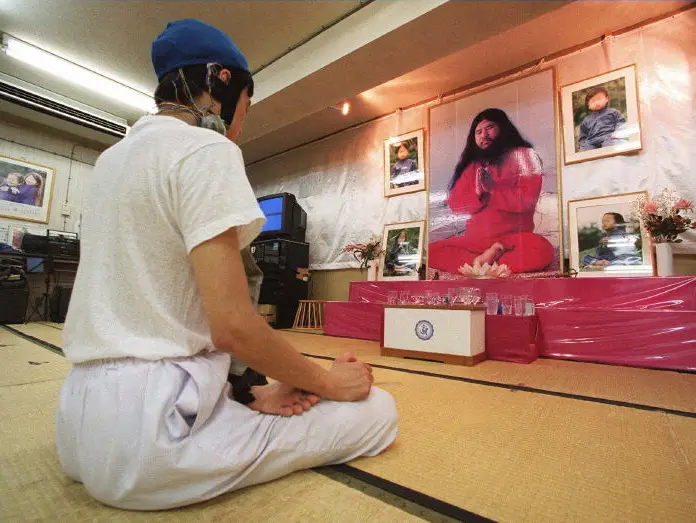
File photo: This 11 August 1999 file picture shows a follower meditates before portraits of Aum Supreme Truth guru Shoko Asahara and his two sons posted on an altar at a seminary of a Tokyo building. Photograph: (AFP)
In 2018, the cult’s wild-haired, nearly blind leader, Shoko Asahara, was executed. Another 12 of his disciples involved in the Tokyo attack and other violent crimes were also executed.
Over three decades after the deadly sarin gas attack on Tokyo’s subway system that killed more than a dozen and injured thousands, the widow of a man killed in the incident has warned that the son of the founder of the Aum Shinrikyo, the cult behind the attack, intends to resurrect its operations. Shizue Takahashi also cautioned fading public memory of what happened in 1995 is making it easier for Shoko Asahara’s son to reassert control and rebuild the doomsday religious group.
“Asahara’s second son was born and raised within the Aum Shinrikyo cult and has been indoctrinated during that time by his father’s teachings,” Takahashi told This Week in Asia.
“Rather than being encouraged by Asahara’s loyal believers to become the next leader of the cult, I believe he personally desires to seize power and rebuild the organisation,” Takahashi said. “If he becomes as powerful within the cult as his father was, I believe he will try to expand it and create a new version of Aum Shinrikyo.”
Earlier this week, Japan’s Public Security Intelligence Agency reported that Asahara’s second son, 31, has emerged as the “second-generation guru” and leader of Aleph, which formed after Aum was forced to disband.
What happened in 1995 attack?
On March 20, 1995, five members of the Aum cult dropped sarin nerve agent bags inside morning commuter trains. They pierced the pouches of the Nazi-developed chemical weapon with sharpened umbrella tips before fleeing. As the trains drove on, the passengers inside were exposed to the deadly fumes. Once the trains stopped, people rushed out of the trains, many vomiting and struggling to breathe, as emergency workers provided care by the side of the road.
In the incident, 14 people were killed while more than 5,800 others were injured, many of those who still suffer from vision problems, fatigue and psychological trauma.
Trending Stories
)
)
)
)
)
&im=FitAndFill=(700,400))
)
)
)
)
)
)
)
)
)
)
)
&im=FitAndFill=(700,400))
)
)
)
)
)
)
)
)
)
)
&im=FitAndFill=(700,400))
)
)
)
)
What was Aum Shinrikyo?
Aum Shinrikyo, translated as “supreme truth” was founded in the 1980s. The spiritual group was formed after mixing Hindu and Buddhist beliefs, and later elements of apocalyptic Christian prophesies as well. Shoko Asahara, the founder of the cult, declared himself to be both Christ and the first “enlightened one” since Buddha. In 1989, the group gained official status as a religious organisation in Japan. At its peak, it had tens of thousands of members globally. However, it gradually became a paranoid doomsday cult, believing that the world was about to collapse with World War Three breaking out, with only its members surviving.
The group became increasingly violent with kidnapping, injuring and killing opponents. It also used chemical and biological agents in other attacks. Following the 1995 attack, it attempted to release hydrogen cyanide in various stations in Japan but failed. While the group went underground following the attack in Tokyo, it did not disappear and renamed itself to Aleph.
In 2018, the cult’s wild-haired, nearly blind leader, Shoko Asahara, was executed. Another 12 of his disciples involved in the Tokyo attack and other violent crimes were also executed.

