Could quasi-moon 2025 PN7 be of technological origin? Scientists raise doubt

&imwidth=600&imheight=450&format=webp&quality=medium "Could quasi-moon 2025 PN7 be of technological origin? Scientists raise doubt")
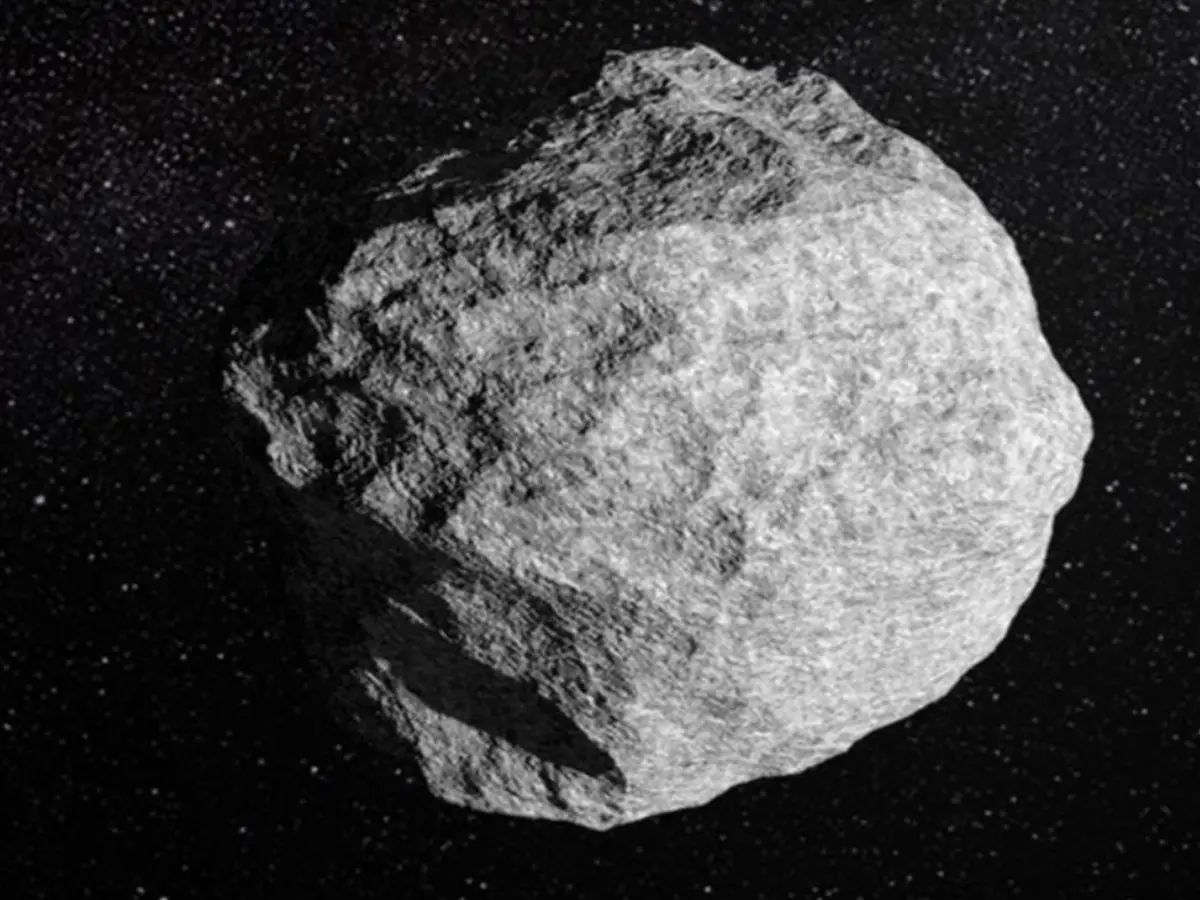
Earth's quasi-moon, 2025 PN7 has been around since 65 years. Photograph: (ESA)
Is 2025 PN7 of terrestrial technological origin? A new study has raised questions over Earth's quasi-moon, which has been around since the 1960s. Could it be a part of a failed mission sent by the Soviets to Venus?
Earth's quasi-moon, 2025 PN7, which has been sharing Earth's path around the Sun since the 1960s, could be a remnant of a failed mission to Venus, according to a new paper. Harvard scientist Avi Loeb and Adam Hibberd from the Initiative for Interstellar Studies collaborated to understand if it is possible that, instead of being an asteroid, 2025 PN7 is a piece of terrestrial technology. Researchers cite in the paper that 2025 PN7 has been a quasi-satellite since the 1960s. This was a period when both the Soviet Union and the US were making leaps in space programs. Moon and the planets Venus and Mars were a particular area of interest. The Soviets had launched the Zond 1 mission to Venus on April 2, 1964. The mission failed due to technological reasons. There were other missions, such as the Soviet Union's Venera 2 and Venera 3, both of which failed, one due to a malfunction, while the other crashed on impact. NASA launched Mariner, which failed, and followed it up with other Mariner missions. There were several more of them, and the paper authors calculated the chances of which of them could have remained stuck near Earth.
Also Read: WHAT! Earth has been sharing its orbit with a cosmic body for 60 years. We have only now seen it
They state that, as per the data and calculations, there is a high chance that 2025 PN7 could be nothing but the Zond 1 mission to Venus. However, certain discrepancies show that it is not the full spacecraft, but possibly only a part of it. Loeb wrote in his blog, "Could this instead be the Blok-L upper stage of the Zond 1 mission? Indeed, could the Blok-L have fallen short of Venus, in the way 2025 PN7 did?" He added, "Our dynamical calculations show that the Blok-L for the Zond 1 mission may have failed to deliver the required velocity boost ∆V, since after the Blok-L burn Zond 1 needed to conduct an additional burn (possibly to correct for a shortfall) on April 3, 1964."
Also Read: Jupiter is literally the father of not just Earth, but the entire solar system. Here's why
What is 2025 PN7, Earth's quasi-moon?
The quasi-moon was discovered on August 2 by the Pan-STARRS observatory in Hawaii. Scanning through past data revealed images dating back to 2014. Scientists wrote in a study published in Research Notes of the American Astronomical Society that it has been moving alongside Earth in a stable orbit for over 60 years. Moreover, it will remain with us for another 60 years before flying away. 2025-PN7 is around 62 feet wide, and between 4.5 million kilometres and 59.8 million kilometres away from Earth. The Pan-STARRS observatory located the quasi-moon in the constellation Piscis Austrinus.
Trending Stories
)
)
)
)
)
)
)
)
)
)
)
)
)
)
)
)
)
)
)
)
)
)
)
)
)
)
)
)
)
)
)
)
)
)
&im=FitAndFill=(700,400))
)
)
)
)
What is a quasi-moon?
Quasi-moons are asteroids that move on the same orbit as our planet. However, they aren't caught by Earth's gravitational force and are only influenced by it. This is why they are not technically moons. They share Earth's orbit around the Sun and do not orbit the planet. Earth has around seven such quasi-moons. The most famous quasi-moon is Kamoʻoalewa, officially known as 2016 HO3. It was detected on April 27, 2016, and isn't exactly a sphere. It measures between 131 and 328 feet across. China's Tianwen-2 mission was launched in May this year with the aim of studying this quasi-moon.

