5,200 mysterious holes in Peru finally explained. Not graves, or garden, but...

&imwidth=600&imheight=450&format=webp&quality=medium "5,200 mysterious holes in Peru finally explained. Not graves, or garden, but...")
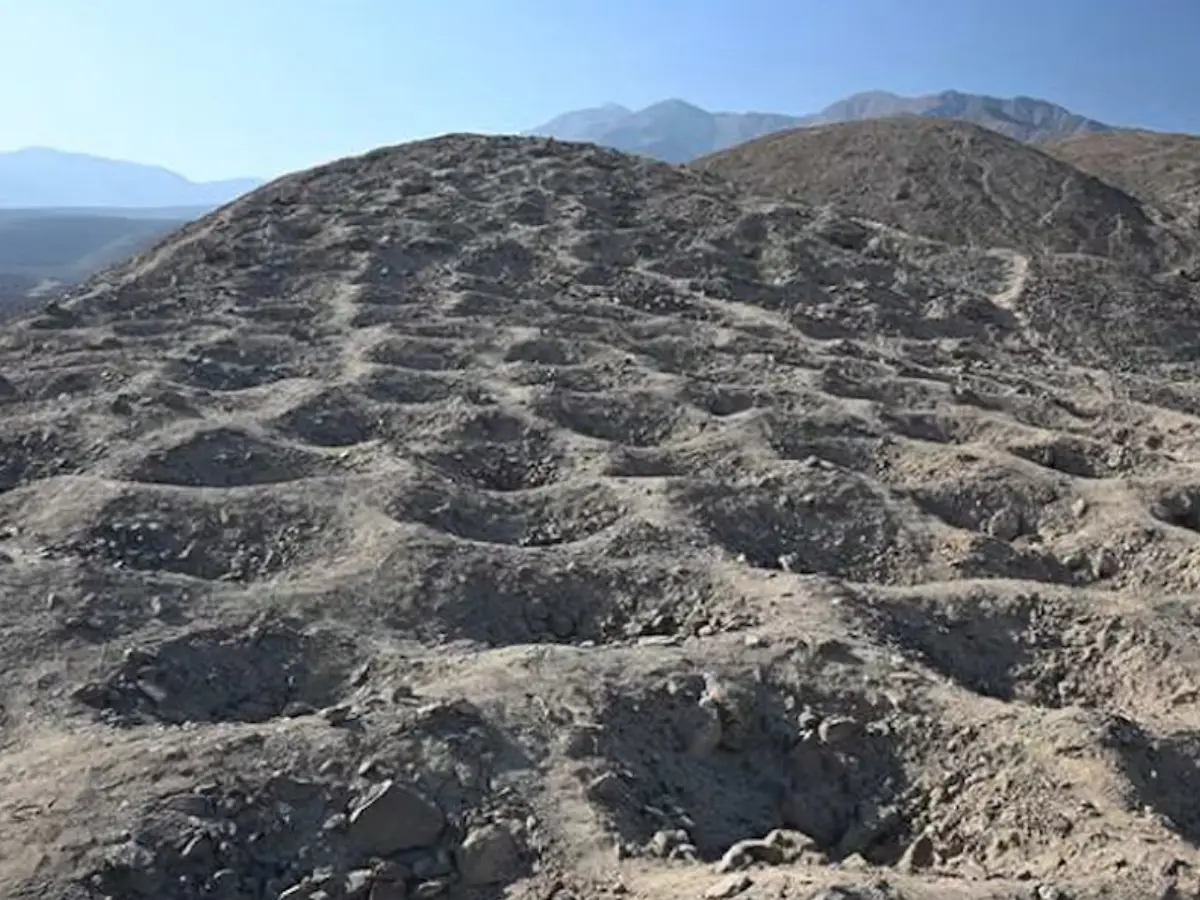
Monte Sierpe, or Serpent Mountain, in Peru has over 5,000 mysterious holes. Photograph: (Jacob Bongers/ Charles Stanish)
Monte Sierpe, or Serpent Mountain, in Peru, is covered with 5,200 holes that are nearly six feet wide and three feet deep. Once believed to be graves, they turned out to be something completely different, a melting point that brought people together.
Nearly 5,200 holes dug on a mountainside in southern Peru’s Andes have been a mystery for nearly 100 years. Monte Sierpe, or Serpent Mountain, has ancient holes dug into the foothills that first came to light after an aerial photograph was published in National Geographic in 1933. Researchers have long come up with various theories in an effort to explain them. Initially, these holes were believed to be unused pre-Inca civilisation graves. A study published in the journal Antiquity has now revealed the true nature of these holes spreading for around 1.6 kilometres. “Why would ancient peoples make over 5,000 holes in the foothills of southern Peru? We don’t know why they are here, but we have produced some promising new data that yield important clues and support novel theories about the site’s use,” lead author of the study, Jacob Bongers, said in a statement.
“Band of Holes" were filled with corn and wild plants
The researchers state in the study that the holes were part of a pre-Inca marketplace, and it later turned into an accounting system to extract tribute. Also known as “Band of Holes," the site has about three-to six-foot wide holes that are up to three feet deep. Microbotanical analysis of sediment samples revealed corn and ancient wild plants commonly used to make baskets. They were likely stored in the holes. The soil analysis was “very intriguing” and reveals that it was “perhaps a pre-Inca marketplace, like a flea market," Bongers said. They added, "Perhaps mobile traders (seafaring merchants and llama caravans), specialists (farmers and fisherfolk), and others were coming together at the site to exchange local goods such as corn and cotton."
Another surprising find was that the layout of the holes was linked to an ancient knotted-string accounting device, which the Inca people once used in the same valley. What made the analysis possible was drone technology. “Once we had precision, low-altitude images, it was immediately clear that this site was profoundly important and had to be scientifically studied,” Charles Stanish, University of South Florida researcher and senior co-author on the research, said in a statement. Despite getting some answers, there are still more mysteries. Dr Bongers says, “Why is this monument only seen here and not all over the Andes? Was Monte Sierpe a sort of ‘landscape khipu’?” He is hoping to unravel more about the mysterious site in the future.
)
)
)
)
)
)
)
)
)
)
)
)
)
)
)
)
)
)
)
)
)
)
)
)
)
)
)
)
)
)
)
)
)
)
&im=FitAndFill=(700,400))
)
)
)
)

