‘Olympic inclusion is our major target’: WPA President Ishaun Singh on pool’s global ambitions

&imwidth=600&imheight=450&format=webp&quality=medium "‘Olympic inclusion is our major target’: WPA President Ishaun Singh on pool’s global ambitions")
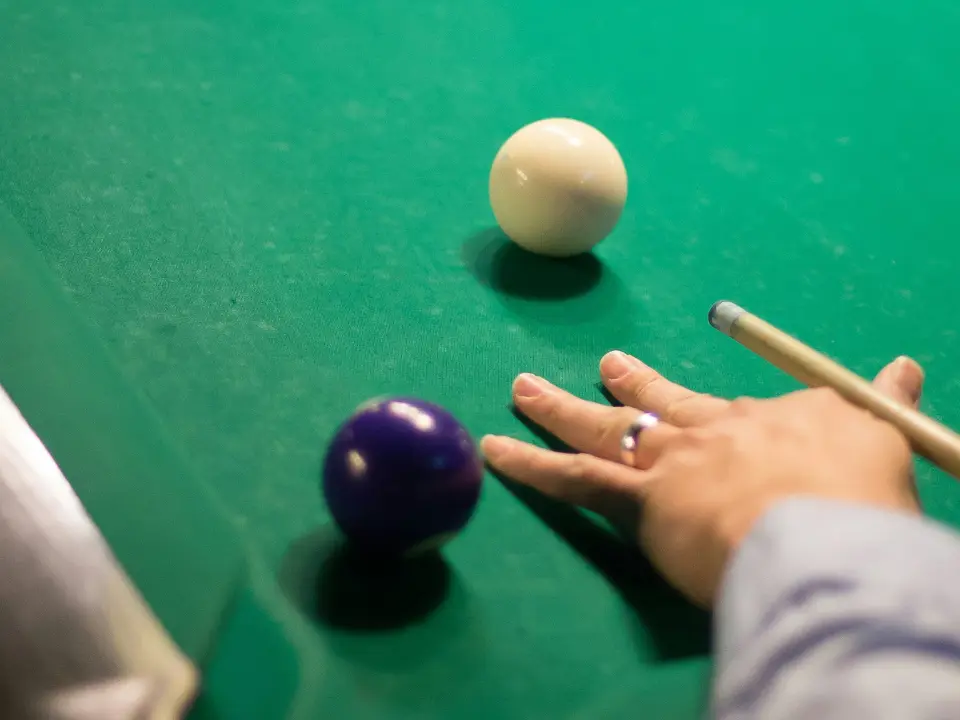
For representative purpose only Photograph: (Unsplash)
WPA President Ishaun Singh discusses pool’s Olympic ambitions, India 2036 hopes, heyball’s growth, player finances and the Commonwealth Championships
As cue sports continue their push for greater global recognition, the road to Olympic inclusion remains one of the biggest challenges for the sport. From unifying different disciplines and expanding into emerging markets to improving prize money and creating a sustainable career path for players, the World Pool Association (WPA) is attempting to reshape the sport at the highest level. In an exclusive conversation, WPA President Ishaun Singh spoke about the organisation’s Olympic ambitions, the significance of India and a potential 2036 Games, the rapid rise of heyball, efforts to bring different cue-sport disciplines under one umbrella, and why financial stability for professional players could be crucial to the sport’s future. He also discussed the Commonwealth Cue Sports Championships in Ahmedabad and why the event’s return to India carries wider significance for the global growth of cue sports.
Q1. What do you believe is the biggest obstacle standing between cue sports and permanent inclusion in the Olympic Games, and what is the WPA doing to overcome it?
The biggest obstacle is technically nothing on our end, it's the design of the Olympics itself. This isn't just about billiards, many sports struggle to get in because of the Olympic system's core sports. Some of those core disciplines have multiple medal events that, frankly, don't carry the same viewership, interest, media coverage or finances that our sport does, take some of the longer distance athletics events as an example, where even the stadium crowd checks out until the finish. We believe some of those medals should be redistributed. There's a real campaign for the IOC to review this, and the new IOC president, Kirsty Coventry, has made statements that they will in time review all the codes. At this stage, only a host country can request our inclusion, getting an existing code removed to make room for us is extremely difficult, because everyone protects their sport. So we can only try to find a spot through hosts. We ran a big campaign for Brisbane 2032, hoping the Australian public would recommend us, especially since our junior world champion this year came from Australia, that showed people there that Australia could realistically win a medal in our sport by 2032. Our bigger hope, though, is India for 2036. We're aware India has an excellent chance of winning that bid, and we're putting in the work, as many events here as possible, because the sport originated in India, which makes it an easier story to tell the public and the IOC. If India wins the bid, I believe they'd seriously consider including us. It would be a massive story.
Q2. Under your leadership, how is the WPA working to expand the global reach, commercial appeal and professional ecosystem of pool, particularly in emerging markets?
For the last four years we've focused on showing the professional side of our sport and a career path, especially in schools in emerging markets like Africa and South America. Kids are limited in the number of sports they can take up, and pool suits athletes who might not be built for soccer or cricket, our players come in all shapes and sizes. We've signed cooperation agreements with school and university sporting bodies to get billiards included in their structures, and I expect us to be included in the next editions of the university and school games. At the continental level, we've pushed into the African Games, South American Games, and Pan American Games. We were previously in the Asian Games until around 2010 to 2012, lost that spot, but have now regained it after fixing a lot internally, we'll be included in Qatar 2030, though the official announcement comes after this year's Asian Games. We've also increased prize funds significantly, no major event today offers less than $10 million across the board for professional players.
Q3. Pool has historically been divided across different disciplines, formats and governing structures. How important is greater unification, and what steps are being taken to achieve it?
Trending Stories
)
)
)
)
)
)
)
&im=FitAndFill=(700,400))
)
)
)
)
)
)
&im=FitAndFill=(700,400))
)
)
)
)
)
)
)
)
)
)
)
)
)
)
)
)
We compare ourselves to athletics in structure, they have the 100m, 200m, 400m, we have 8 ball, 9 ball, 10 ball, heyball, black ball, and so on, plus regional variations across all 206 countries that play pool. About six or seven years ago, we decided at the world level to bring all disciplines under our banner, which is a big reason heyball has grown the way it has. We've made real progress, most associations now appear on our website. There are still two or three fairly large independent organizations we're in talks with to merge, because having every federation under one banner is going to be massive for our numbers with the IOC. Heyball in particular is our fastest growing discipline, over the last ten years it's gone from a small footprint to being played in more than 90 countries. We compare its trajectory to how people talk about padel and pickleball.
Q5. What changes are needed to give professional pool players greater financial security, better competitive opportunities and a clearer career pathway?
Right now the biggest concern for professional athletes is income stability, it's essentially 100% performance driven. For example, a runner up might win $30,000, while our biggest tournament pays $1.5 million to the winner, so athletes often need to win a few rounds just to cover their costs. Unlike tennis, where a handful of legends dominate most tournaments, our sport is much harder to predict, in a field of 64, any of 32 players realistically could win, so we get different winners constantly, which makes surviving on the pro circuit tougher. We're working on a model, similar to what professional snooker does, to guarantee top ranked players a fixed minimum income, so if you're in the top rankings, you know you'll survive at least a year regardless of a single tournament's results. That should help convince more people that this can genuinely be a career.
Q6. Looking five to ten years ahead, what would you like the global pool landscape to look like, and what would you consider the biggest achievement of your tenure as WPA President?
For the professional athletes, the biggest concern is income stability, which is why we're working on a fixed income model for top ranked players. Beyond that, I see our path forward built on, continuing to unify all disciplines and associations under one banner so our numbers are strongest with the IOC, heyball continuing its rapid growth, more than 90 countries now, up sharply in the last decade, deepening our schools and universities pipeline in emerging markets like Africa, South America, and India, and ultimately, Olympic recognition, which India winning the 2036 bid would make a realistic, powerful story given the sport originated here.
Q7. Tell us about the Commonwealth Cue Sports Championships in Ahmedabad, why was the city chosen, what disciplines and how many nations/athletes will compete, and why does this return to India matter?
The Commonwealth coming here was originally part of the hundred year celebration too, but it's combined with our ambitions for the Commonwealth Games and the Olympic Games, knowing India has an excellent chance for 2036. We received the permission and blessings of the Commonwealth Federation last year to run our own championship under the Commonwealth banner, and we held the first edition in Mauritius, that's where we had our initial talks with India for this year. About 34 or 35 countries participated in Mauritius, which showed the Commonwealth Federation the interest in our sport, and we intend to run these championships every year until we get into the Games itself. This year, our second year, we've increased from four disciplines to five, ten ball, heyball, black ball, snooker, and now English billiards, added largely because of the Indian population and market. All five are medal events, in both men's and women's categories, with 16 athletes per gender per discipline in ten ball, heyball, black ball & snooker, and 8 ahtletes per gender in English billiards. As of now we're sitting on 45 different countries entered, with another week or two before entries close. Every Commonwealth country gets one guaranteed unranked entry to ensure their spot, and the rest of the field is drawn from the world rankings, so we're getting the best of the elite athletes from Commonwealth countries."

