A Brahmin Blunder: Navarro’s weaponised misunderstanding of caste and class


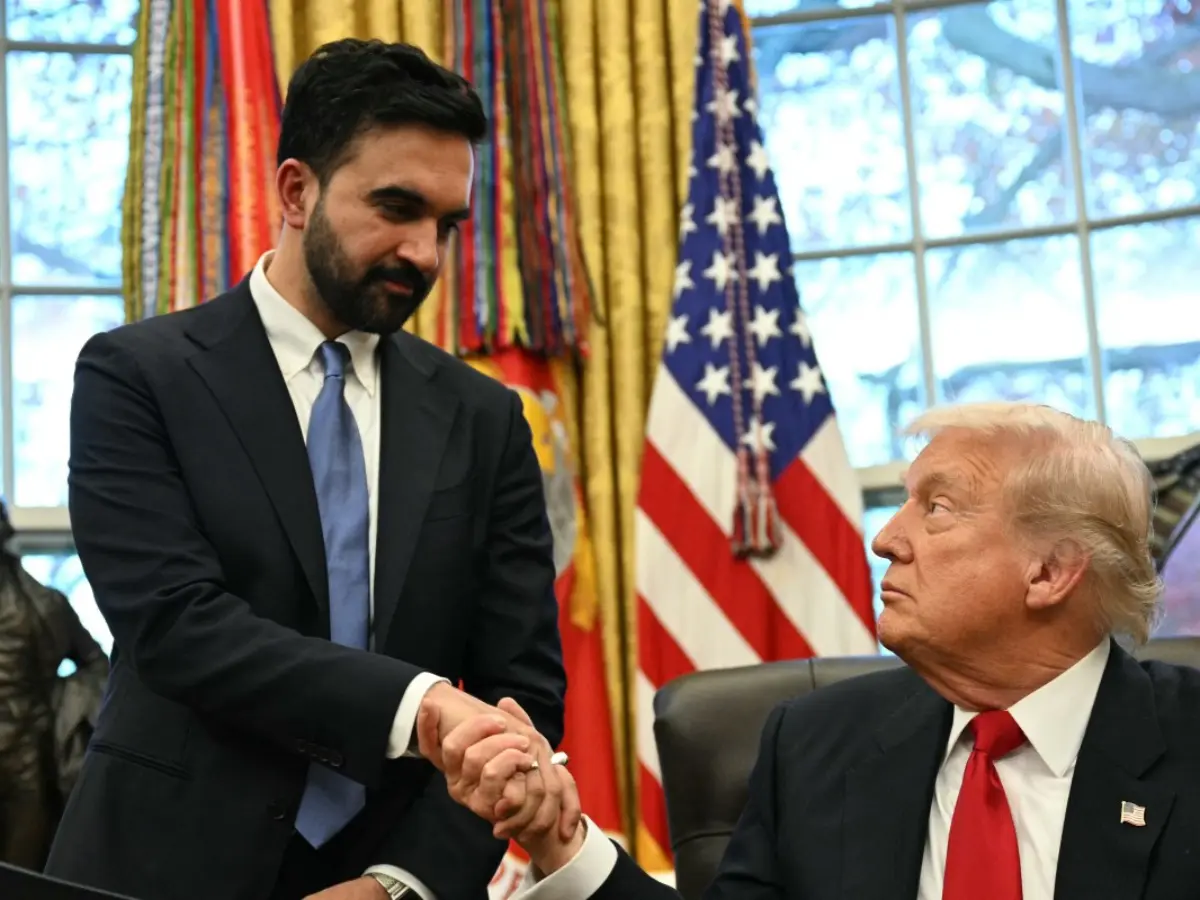
White House trade adviser Peter Navarro Photograph: (AFP)
The Boston Brahmins were indeed business leaders and profiteers. They founded elite schools, married within their circle, and looked down on immigrants, especially the Irish Catholics who later challenged their dominance.
Peter Navarro has done it again. Donald Trump’s senior adviser has once more taken aim at India, but this time his target reveals a stunning ignorance that goes beyond simple trade disputes. On September 1, Navarro declared on Fox News that “Brahmins are profiteering at the expense of the Indian people,” mixing up centuries of history, culture, and economics in one confused statement.
This is not just another diplomatic gaffe. It is a perfect example of how Western politicians continue to view India through outdated and fundamentally wrong lenses, creating dangerous misunderstandings that hurt both countries.
Navarro’s comments came during his usual complaints about India’s trade policies. He called India “the maharaja of tariffs” and questioned why Prime Minister Modi aligns with Putin and Xi Jinping. But then he made his most revealing mistake, suggesting that Brahmins are somehow the business elite profiteering from trade with America.
The problem is that Navarro appears to be confusing two completely different uses of the word “Brahmin”. In India's ancient caste system, Brahmins are traditionally priests and scholars, not merchants or business leaders. They have held cultural and religious influence, yes, but they were never the trading class. That role historically belonged to other communities like the Vaishyas.
What Navarro seems to be thinking of are the “Boston Brahmins”, a term coined by American writer Oliver Wendell Holmes in 1861 to describe Boston’s wealthy Protestant elite. These were the descendants of English colonists who built fortunes through trade and shipping, then used their wealth to control Boston’s social and cultural life for generations.
The Boston Brahmins were indeed business leaders and profiteers. They founded elite schools, married within their circle, and looked down on immigrants, especially the Irish Catholics who later challenged their dominance. They were the ones who built walls around their peninsula city and tried to keep outsiders from sharing their power.
Trending Stories
)
)
)
)
)
)
)
)
)
)
)
)
)
)
)
)
)
)
)
)
)
)
)
)
)
)
)
)
)
)
)
)
)
)
&im=FitAndFill=(700,400))
)
)
)
)
But calling wealthy Indians “Brahmins” in this American sense reveals exactly the kind of orientalist thinking that has poisoned Western views of Asia for centuries. Navarro is taking an American term inspired by incomplete understanding of Indian culture and applying it back to modern India in a way that makes no sense.
Modern India’s business leaders come from all backgrounds. The Tatas, Birlas, Ambanis, and other major industrial families represent various communities, not just one caste. India’s tech boom has created entrepreneurs from every corner of society. To suggest that one traditional priestly caste controls India’s economy shows a complete misunderstanding of how modern India actually works.
This confusion matters because it shapes policy. If American leaders think India operates like some medieval caste hierarchy with Brahmins pulling all the strings, they will make wrong decisions about trade, diplomacy, and partnership. They will miss the real dynamics of Indian democracy, which is far more complex and diverse than their stereotypes suggest.
The reaction on social media was swift and angry, with many Indians calling Navarro’s comments racist and casteist. They are right to be upset. These are exactly the kinds of statements that make Indians wonder whether America truly sees them as equals or just as characters in some colonial-era story.
Navarro’s bigger point about trade disputes might have some merit. Countries can disagree about tariffs and trade policies without anyone being wrong. But when those disagreements get mixed up with cultural ignorance and historical confusion, they become something much worse.
America and India are natural partners in many ways. Both are large democracies dealing with the challenges of managing diverse populations and growing economies. Both face pressure from authoritarian neighbours. Both benefit when their relationship works well.
But partnerships require understanding, not assumptions. They require seeing each other as they really are, not as characters in outdated stories. When American leaders use terms they do not understand to describe Indian society, they damage the trust that makes real cooperation possible.
Navarro’s “Brahmin blunder” is more than just an embarrassing mistake. It is a warning about what happens when ignorance meets authority. In an age when America and India need to work together on everything from technology to security, such misunderstandings are not just wrong but dangerous.
The solution is simple but not easy. American leaders need to learn about modern India from Indians, not from colonial-era books or Hollywood movies. They need to understand that India in 2025 is not the India of their imagination. And they need to realise that making policy based on cultural stereotypes helps no one, least of all the American workers they claim to represent.
Peter Navarro may think he is defending American interests, but his confused comments about Brahmins show he does not even understand the country he is criticising. That ignorance makes him a poor guide for American policy and a worse advocate for American workers.
If America wants to compete with India, it should start by understanding India. Real understanding, not orientalist fantasies dressed up as foreign policy expertise.
(Girish Linganna is an award-winning science communicator and a Defence, Aerospace & Geopolitical Analyst. He is the Managing Director of ADD Engineering Components India Pvt. Ltd., a subsidiary of ADD Engineering GmbH, Germany.)
(Disclaimer: The views of the writer do not represent the views of WION or ZMCL. Nor does WION or ZMCL endorse the views of the writer.)
