Income tax to Viksit Bharat: What’s new in NCERT’s Class 9 Social Science textbook

&imwidth=600&imheight=450&format=webp&quality=medium "Income tax to Viksit Bharat: What’s new in NCERT’s Class 9 Social Science textbook")
Income tax to Viksit Bharat: What’s new in NCERT’s Class 9 Social Science textbook
NCERT’s new Class 9 Social Science textbook introduces students to income-tax calculations, personal finance and entrepreneurship while discussing Viksit Bharat 2047 and Atmanirbhar Bharat. It features examples including Lijjat Papad and hotelier Mohan Singh Oberoi
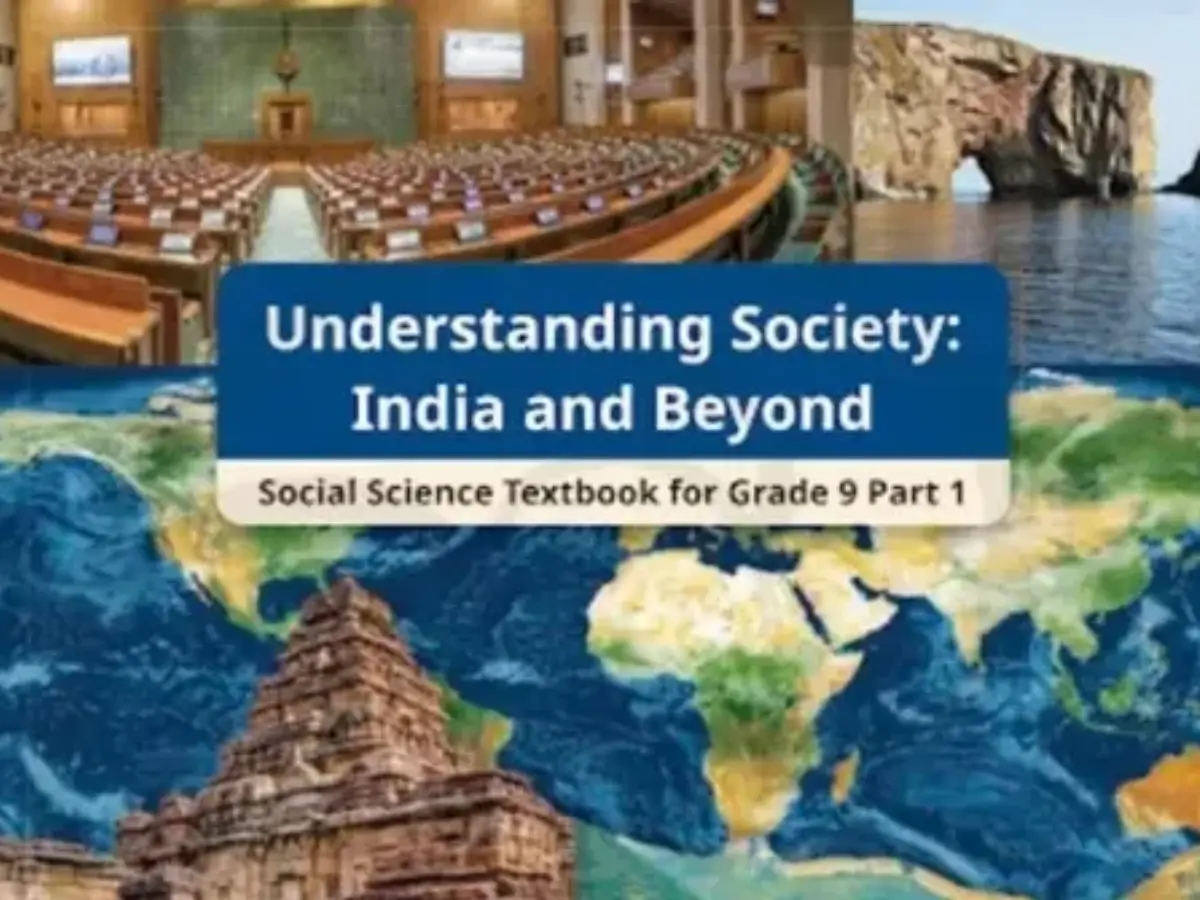
National Council of Educational Research and Training (NCERT) has released new Class 9 Social Science textbook, titled “Understanding Society: India and Beyond, Social Science Textbook for Grade 9, Part 2." Among other things, it contains chapters and sections on income tax, startup entrepreneurship, Viksit Bharat 2047 vision. NCERT is rolling out new textbooks under the National Education Policy (NEP) 2020 and the National Curriculum Framework for School Education (NCF-SE) 2023. It has so far released new textbooks for Classes 1 to 9.
The textbook introduces students to actual slab-wise income-tax calculations under the new tax regime. The chapter ‘Managing Your Personal Finances’, contains tax slabs and worked examples and explains the payment of taxes as a civic responsibility. It also tells students that paying taxes “honestly and on time” is an important responsibility of citizens and links tax revenues to national development. It uses Ayushman Bharat Pradhan Mantri Jan Arogya Yojana (Ayushman Bharat PM-JAY) as an example of financial protection for low-income households. The chapter places health insurance, taxation and personal financial management within a broader discussion of citizens’ economic responsibilities.
Also Read: NCERT releases new Class 9 Social Science textbook, details Mughal brutality against Sikhs, Jats
The chapter ‘From Ideas to Startups’, turns to entrepreneurship and cites the growth of Lijjat Papad, tracing it from seven Mumbai homemakers who pooled ₹80 in 1959 to a cooperative with 45,000 members and a reported turnover of ₹1,600 crore by 2023. It also profiles a Padma Bhushan hotelier Mohan Singh Oberoi, beginning with his job as a hotel desk clerk earning ₹50 a month and tracing his rise to the founder of one of India’s largest hotel chains. The chapter also brings the Chettiar community’s historical trading, banking and trust-based lending networks into the discussion of India’s local economy.
While mentioning Viksit Bharat 2047 vision and Atmanirbhar Bharat, a quote from Swami Vivekananda — “Arise, awake and stop not till the goal is reached” is used. It introduces a discussion of India’s 120-plus unicorns, with entrepreneurship presented in the context of the country’s development. The textbook identifies six contributions of business: creating employment and income, producing goods and services, paying taxes, promoting innovation, improving quality of life and undertaking corporate social responsibility.
)
)
)
)
)
)
)
)
)
)
)
)
)
)
)
)
)
)
)
)
)
)
)
)
)
)
)
)
)
)
)
)
)
)
&im=FitAndFill=(700,400))
)
)
)
)

