All recruitment in Navy to happen via Agnipath, says Vice Admiral Dinesh K Tripathi

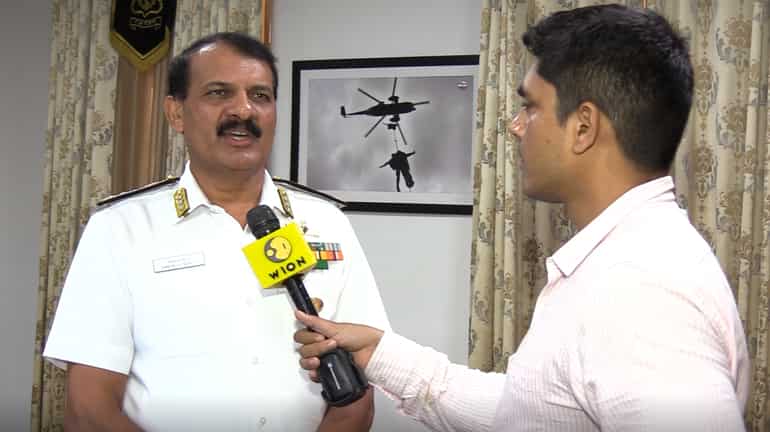
WION's Sidhant Sibal spoke to Vice Admiral Dinesh K Tripathi
Indian Navy's Chief of Personnel Vice Admiral Dinesh K Tripathi has said that all recruitment in Navy will be via Agnipath scheme. The scheme was announced on Tuesday by the Indian defence ministry and is a short- and long-term policy of recruitment in the Indian military's all 3 branches. Under this youngster will be recruited at the age of 17 and half for a period of 4 years, of which 25% will be absorbed.
Speaking to WION's correspondent Sidhant Sibal, Vice Admiral explained that "we are planning to enroll Women also as part" of the Agnipath Scheme in "all trades and verticals who will serve on ships at sea too." The notification of scheme will be announced by month end and the first rally for recruitment will begin in 90 days.
WION: How do you see the Agnipath Scheme helping the Navy?

Vice Admiral Dinesh K Tripathi: The Agnipath scheme is indeed a transformative step that would enablethe Indian Navy to become a much more youthful and technically adept war fighting force whilst ensuring a fine balance between youthful and experienced personnel in its ranks. What we intend doing is to facilitate induction or enrolment of ITI students, NCC cadets, and National Skill Qualifications Framework (NSQF) candidates to the extent feasible. This will ensure that the Agniveers are semi-trained who can easily assimilate the technology intensive needs of our Navy. Further, on induction, the Agniveers would be exposed to a tailor-made training curriculum which will enable them to transition quickly and effectively into the naval environment. Moreover, the Agniveers who would be joining the IN as Regulars after 4 years of initial service would be ready to man highly technologically intensive equipment and systems. As I see, the scheme will attract young talent from the society at a faster rate to effectively utilize their potential. As I said earlier, the permanent cadre would consist of well experienced personnel enrolled after four years, who would be provided niche operational and technical skills to serve in leadership and supervisory roles. We feel that Agnipath Scheme will result in a more tech savvy Navy. Whilst the seniors would provide “Hosh and Anubhav”, the Agniveers will provide the “Josh and Jazba”. I see a bright future for the scheme.
WION: How does Navy plan to implement it, do you plan to take women for recruitment. Also, if all recruitment will take place via this process?
&imwidth=180&imheight=135&format=webp&quality=medium)
Pakistan to head IMF, World Bank boards after 74 years amid persistent economic crisis
&imwidth=180&imheight=135&format=webp&quality=medium)
'We are not sitting in ivory towers, we are aware': SC issues notice to Rahul Gandhi, Akhilesh Yadav
&imwidth=180&imheight=135&format=webp&quality=medium)
Group's fibre-optic drones pose new challenge for Israel
&imwidth=180&imheight=135&format=webp&quality=medium)
IND-W vs ZIM-W, 1st T20I: Deepti Sharma, Niki Prasad shine as India beat Zimbabwe by four wickets
&imwidth=180&imheight=135&format=webp&quality=medium)
CJP's Tiranga march: People hit streets of Delhi again, reiterate call for Gyanesh Kumar's resignation
&imwidth=180&imheight=135&format=webp&quality=medium)
US midterms 2026: Ken Paxton may have Elon Musk to thank if he wins the Texas Senate race. Here's why
&imwidth=180&imheight=135&format=webp&quality=medium)
Trump invokes national interest to waive new Russia sanctions, tariffs; India gets relief from 100% tariff threat
&imwidth=180&imheight=135&format=webp&quality=medium)
Ankita Bhandari murder case: Parents meet CBI, seek impartial investigation
&imwidth=180&imheight=135&format=webp&quality=medium)
US budget deficit nears $2 trn as tariff refunds rise; debt crosses $40 trn
&imwidth=180&imheight=135&format=webp&quality=medium)
Gravitas | Iran threatens to hit key bridges in 7 countries if US resumes strikes
&imwidth=180&imheight=135&format=webp&quality=medium)
Ukraine drone strike disrupts 22 Russian airports, over 200 flights

Not Khan but Pal: Why did Imran Khan choose his mother's surname over his father's? Family tree explained
&imwidth=180&imheight=135&format=webp&quality=medium)
Did Trump just fire Katie Zacharia as his new press secretary? Here’s what he said
&imwidth=180&imheight=135&format=webp&quality=medium)
A secret code, a midnight escape and 300 deaths: The Russian officer who turned on Putin
&imwidth=180&imheight=135&format=webp&quality=medium)
Oregon school shooting: 16-year-old shooter identified, used shotgun bought by mother; Trump praises bystander who shot gunman as 'great hero'
&imwidth=180&imheight=135&format=webp&quality=medium)
After ODIs, T20Is and Tests, cricket set to introduce a new format: All you need to know
&imwidth=180&imheight=135&format=webp&quality=medium)
China tells Israel to stop West Bank settlements, calls Palestine issue ‘historic injustice’
&imwidth=180&imheight=135&format=webp&quality=medium)
‘My president, I mean my husband’: Trump's new press secretary Katie Zacharia's first briefing goes off the rails in 14 minutes
&imwidth=180&imheight=135&format=webp&quality=medium)
China responds to Trump's Press Secretary Katie Zacharia after toilet remark: 'Visit China more often'
&im=FitAndFill=(700,400)&imwidth=180&imheight=135&format=webp&quality=medium)
Who left the White House podium the fastest? Press secretaries with the shortest stints
&imwidth=180&imheight=135&format=webp&quality=medium)
Vijay Deverakonda and Rashmika Mandanna's Ranabaali X Review: Netizens call it history-rich but overstuffed
&imwidth=180&imheight=135&format=webp&quality=medium)
Israel examines Russia's Shahed-type drones sent by Ukraine to combat Iran | Gravitas
&imwidth=180&imheight=135&format=webp&quality=medium)
US midterms 2026: Alexandria Ocasio-Cortez donates $1 million to Abdul El-Sayed’s as Michigan race heats up
&imwidth=180&imheight=135&format=webp&quality=medium)
Here’s who is eyeing the White House press secretary role after Katie Zacharia’s exit
&imwidth=180&imheight=135&format=webp&quality=medium)
BCCI names India’s ODI squad for New Zealand tour, Gill and Iyer to share captaincy
&imwidth=180&imheight=135&format=webp&quality=medium)
Abhishek Sharma sets all-time record for most T20I sixes in a year
&imwidth=180&imheight=135&format=webp&quality=medium)
US midterms 2026: Dan Sullivan’s ‘gotcha’ attempt backfires against Mary Peltola in fiery Alaska Senate debate
&im=FitAndFill=(700,400)&imwidth=180&imheight=135&format=webp&quality=medium)
Inside Tesla's Roadster: 10 features of Elon Musk's 'flying car' that push the limits of electric vehicles | In Pics
&imwidth=180&imheight=135&format=webp&quality=medium)
India’s naval priorities: Ex-Navy Chief calls for third aircraft carrier, more warships and submarines
&imwidth=180&imheight=135&format=webp&quality=medium)
Starlink says 'ready to connect India with high-speed internet' amid Reliance row
&imwidth=180&imheight=135&format=webp&quality=medium)
Selma Blair’s team responds to flight incident, says actress ‘did not intend to harm anyone’
&imwidth=180&imheight=135&format=webp&quality=medium)
India's Gen Z rebellion: Can the 'Lehra Do Tiranga' movement reshape the political order? | The Verdict
&im=FitAndFill=(700,400)&imwidth=180&imheight=135&format=webp&quality=medium)
Salman Khan-Karisma Kapoor reunion at Koffee with Karan season 9 sparks nostalgia: A look at their most loved films
&imwidth=180&imheight=135&format=webp&quality=medium)
Delhi police places CJP's Abhijeet Dipke under preventive arrest over breach of peace, AISA Chief Neha Bora released
&im=FitAndFill=(700,400)&imwidth=180&imheight=135&format=webp&quality=medium)
New Friday OTT releases (October 16, 2026): DC, Sacrifice, Aasha- 6 new movies and TV shows coming on Netflix, Zee 5, Prime Video and more
&imwidth=180&imheight=135&format=webp&quality=medium)
Iran rejects Saudi allegations of backing Houthi attacks, renews mediation offer
Vice Admiral Dinesh K Tripathi: Firstly, we are largely ready to commence induction of Agniveers with the first batch reporting by end of this year at our basic training institution INS Chilka in Odissa. We are of course rationalizing our training curriculum and duration to ensure optional utilization of the Agniveers and ensuring that the combat efficiently of our units and the Navy is not affected. Our focus is also on harnessing technological tools such as simulators and emulators and newer training methods. I have great faith in Naval leaders at all levels, down to ships and establishments, who will facilitate smooth induction of Agniveers in our Navy. Yes, we are planning to enroll Women also as part of the Agnipath Scheme, in all trades and verticals who will serve on ships at sea too. This is indeed highly forward-looking initiative for which we are augmenting and restructuring our processes, procedures and infrastructure to induct women as Agniveers. And the answer to the last part of your question is yes, we will be undertaking all our recruitment through the Agnipath scheme only.
WION: Critics will say that Navy is technical. Many youngsters might not be able to grasp professional aspects in 4 years period. What is your view on this?
Vice Admiral Dinesh K Tripathi: It is a fact that our ships, submarine and aircraft are highly technologically intensive. Further the operating environment places extreme demands towards their regular and effective maintenance. We also need trained manpower for operating our weapons, systems, machinery, and equipment effectively. It is pertinent to highlight, however, that the technical skills required is graded and not all personnel onboard are required in graded and not all personnel onboard are required to possess the same level of technical skill sets. We, therefore, are fairly confident that the young men and women who would be enrolled as Agniveers for initial four years will be able to handle the basic technical or technological demands required. The fact that we are planning to encourage induction of ITI trained and National Skill Qualifications Framework (NSQF) candidates would obviously make them better prepared. The high-end technical knowledge will reside in the regular or permanent cadre, as also in the officers, who should be able to manage the demands adequately, whilst mentoring the younger Agniveers.