US-led coalition ends 12-year anti-ISIS operation in Iraq, troops leave Erbil

&imwidth=600&imheight=450&format=webp&quality=medium "US-led coalition ends 12-year anti-ISIS operation in Iraq, troops leave Erbil")
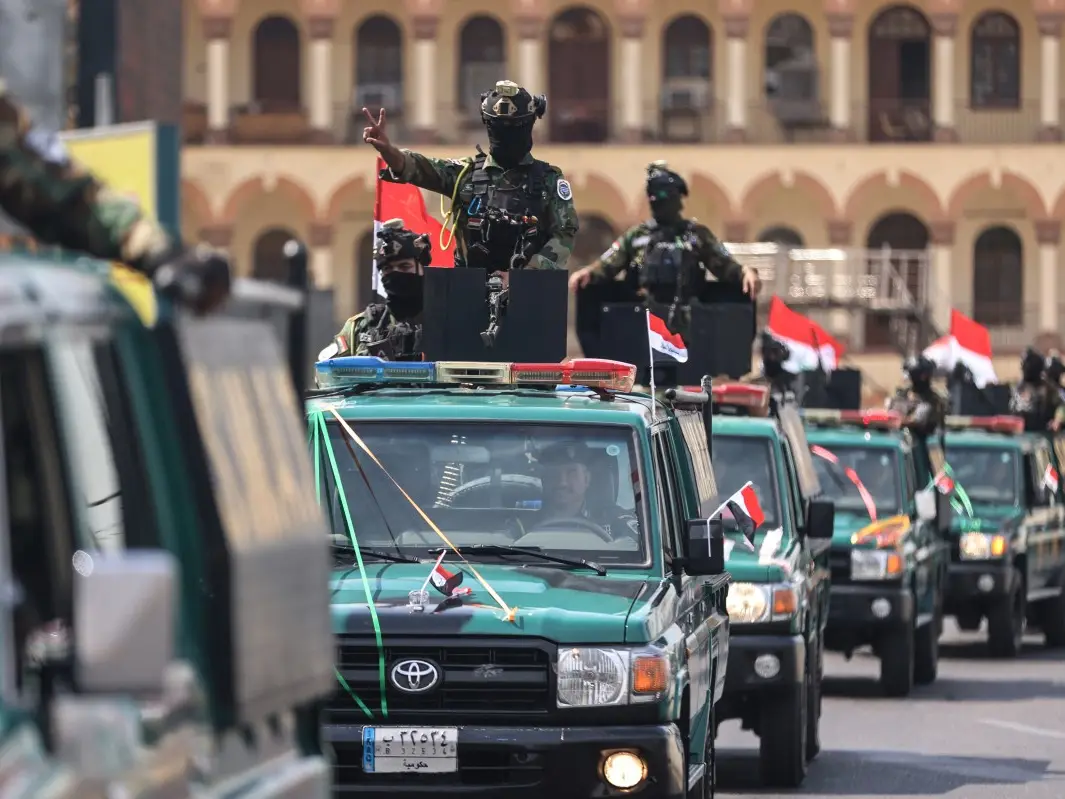
Members of the Iraqi security forces flash the V-sign for victory during a military parade marking the withdrawal of the US-led coalition from Iraq in Baghdad on September 30, 2026. Photograph: (AFP)
After more than a decade of fighting ISIS in Iraq, the US-led coalition has formally concluded its mission following the withdrawal of troops from Erbil.
The United States on Wednesday (Sept. 30) formally ended its military mission against jihadists in Iraq after coalition troops and equipment left Erbil Air Base in the Kurdistan region.
Pentagon chief spokesman Sean Parnell said the withdrawal marked the completion of Operation Inherent Resolve in Iraq, in line with the September 2024 US-Iraq joint statement and Washington's national interests.
"Today, the United States and our Coalition partners formally concluded Operation Inherent Resolve in Iraq, consistent with the September 2024 US-Iraq joint statement and US national interests," Parnell said in a statement.
"The orderly departure of Coalition forces and equipment from Erbil Air Base marks the successful conclusion of the military mission that defeated ISIS in Iraq," he said.
This marks the end of the US-led coalition's more than decade-long operation against the Islamic State, also known as IS, in Iraq and neighbouring Syria. The group had seized large parts of both countries and carried out massacres and atrocities.
Islamic State was defeated in Iraq in 2017 and in Syria in 2019. Coalition forces remained in the region after those defeats to target the group's remaining elements.
Trending Stories
)
)
)
)
)
)
)
)
)
)
)
)
)
)
)
)
)
)
)
)
)
)
)
)
)
)
)
)
)
)
)
)
)
)
&im=FitAndFill=(700,400))
)
)
)
)
Iraq marks end of US-led coalition mission
Baghdad and Washington agreed in 2024 to wind down the coalition's mission. Its troops then gradually withdrew from bases across Iraq, eventually restricting their presence to the autonomous Kurdistan region.
Iraqi Prime Minister Ali al-Zaidi described the conclusion of the mission as the beginning of a new phase for the country.
"A new phase has begun, defined by Iraq's sovereignty, the strength of its institutions, the readiness of its forces, unity of decision-making, and balanced partnerships with its friends," Zaidi said at a ceremony marking the conclusion of the coalition's mission.
From Saddam Hussein to the fight against ISIS
The United States and its allies invaded Iraq in 2003 after the 9/11 attacks in New York to remove Saddam Hussein. US forces occupied the country, helped establish a Shi'ite-led government and fought a prolonged counterinsurgency campaign.
American troops left Iraq at the end of 2011 but returned less than three years later after Islamic State captured large areas of the country. US forces then supported Iraqi troops in their fight against the group between 2014 and 2017.
Islamic State once controlled around a third of Iraq and killed thousands of people. Hundreds were also filmed being shot at a former base used by the US military.
The Iraq War came at a high cost for the United States. Around twice as many Americans died in "Operation Iraqi Freedom" as in the parallel war in Afghanistan, which ended with the US withdrawal in 2021.
Washington's military presence in Iraq also brought it into conflict with Tehran and Iran-backed groups. In 2020, the United States killed senior Iranian commander Qasem Soleimani in a strike at Baghdad Airport.