&imwidth=800&imheight=600&format=webp&quality=medium "Two faces of Muizzu: From ‘India out’ to red carpet for Modi. China play didn't work, Maldives tourism suffered | Reasons and timeline, listed")
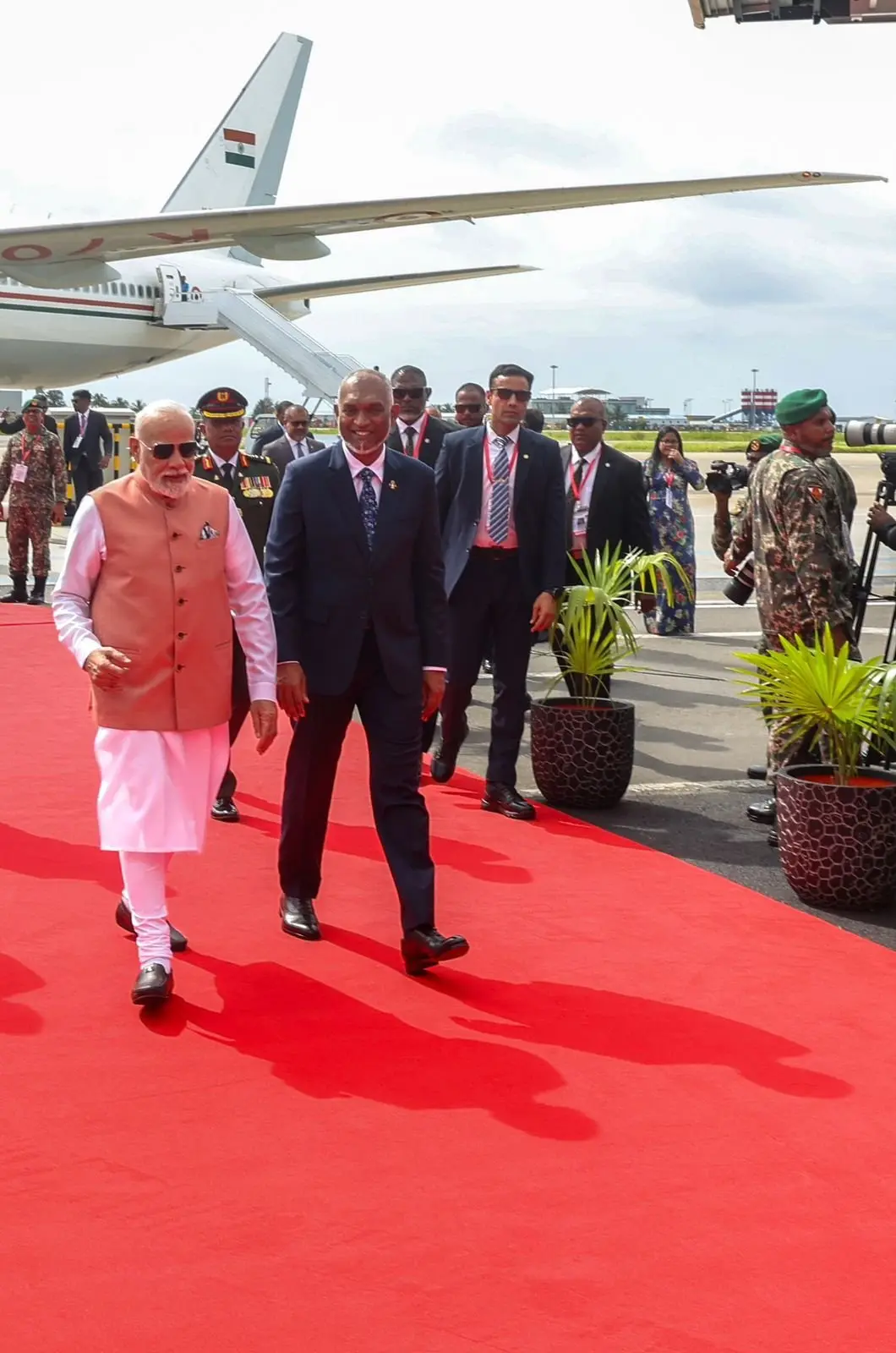
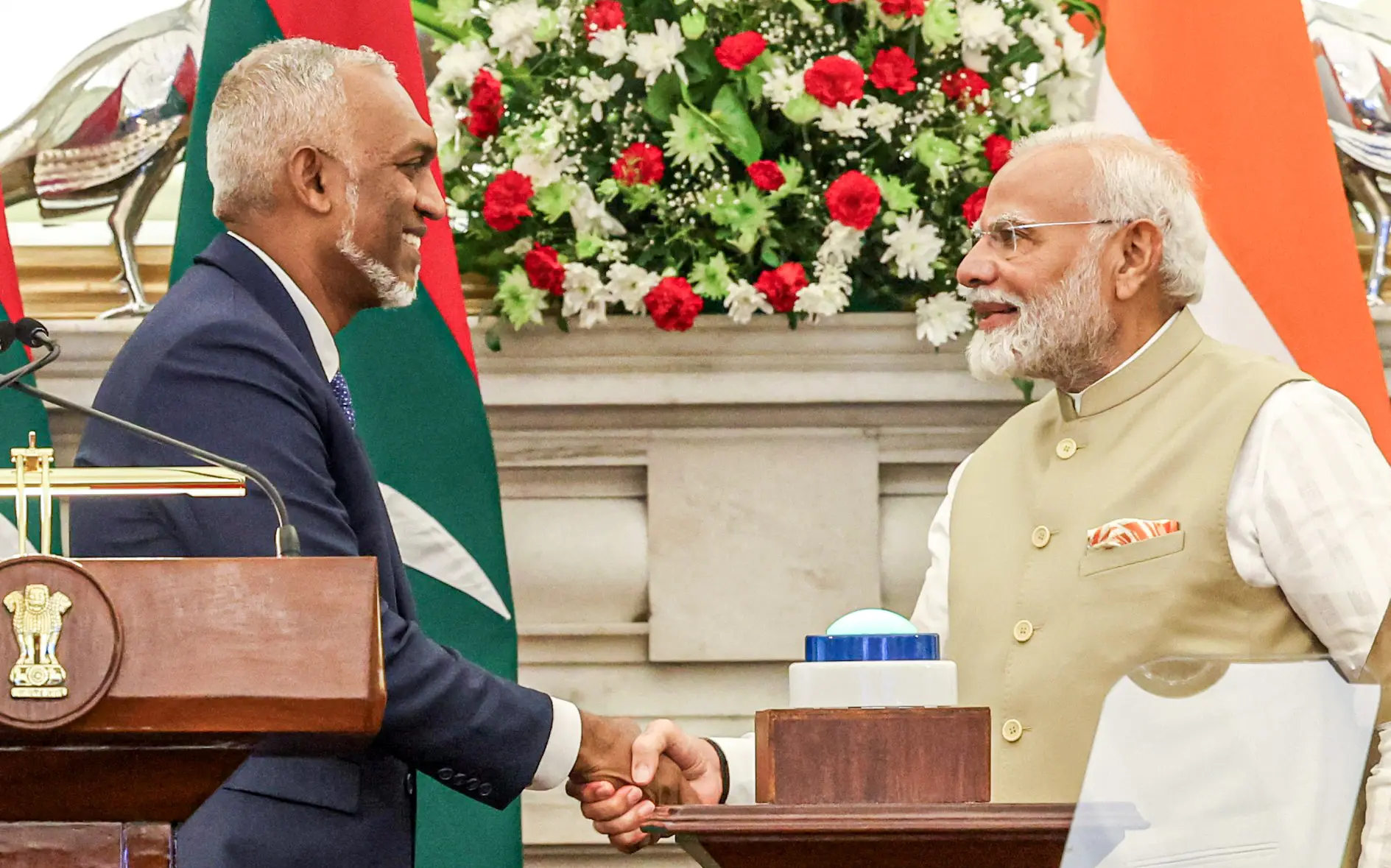
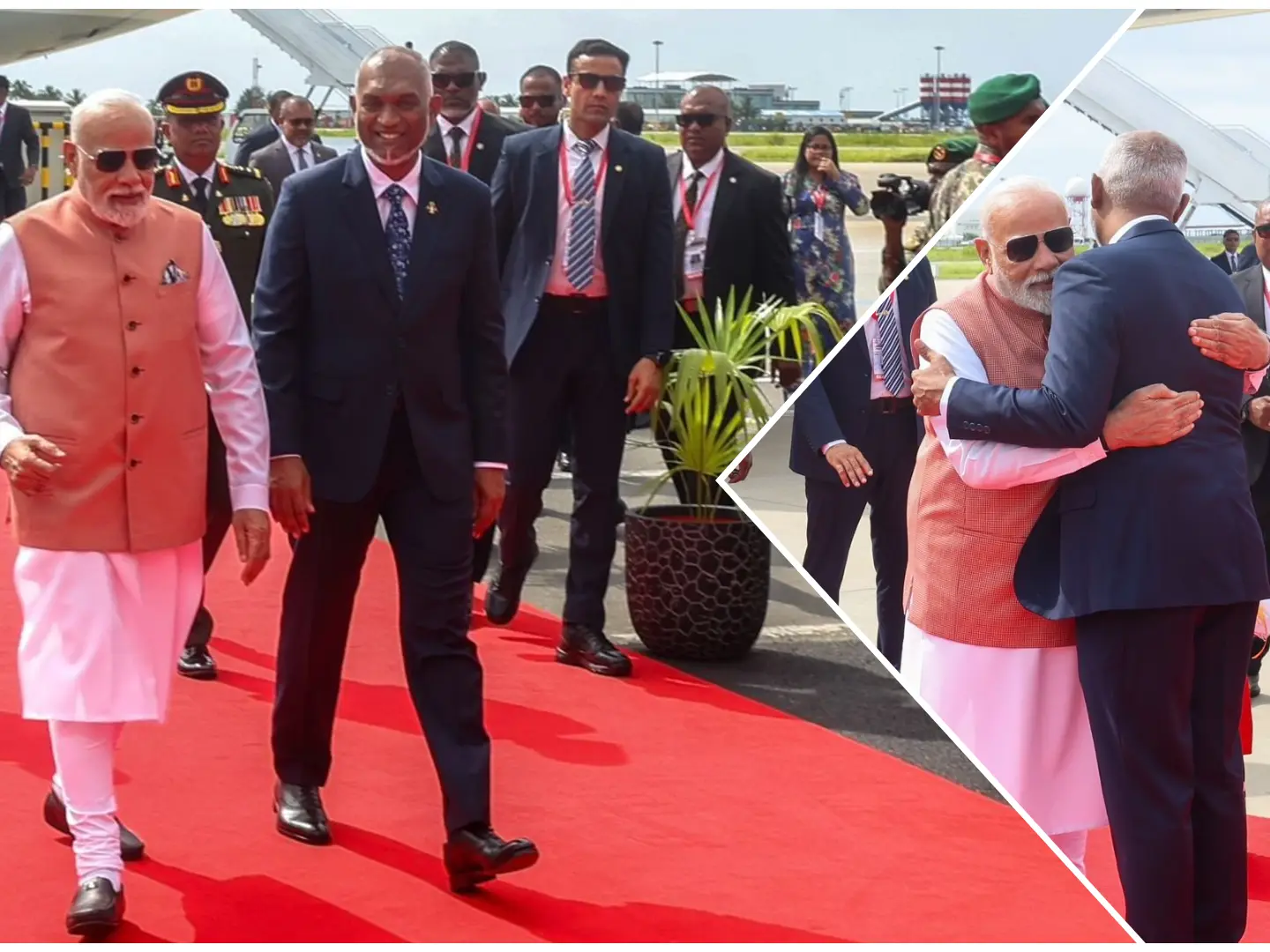
Narendra Modi in Maldives: Indian Prime Minister Narendra Modi's visit to Maldives on Friday (July 25) marks a pivotal moment in bilateral ties that nosedived after its government came to power on an ‘India Out’ plank. That anti-India movement was led by Mohamed Muizzu, the Maldives president, who laid the red carpet for the Indian leader in Male. What led to the two faces, or phases, of Muizzu, from anti-India candidate to India-loving president? The simplest answer: It's the economy, stupid. Here is a timeline of how Muizzu transformed, and the possible reasons for the Maldives loving India again.
Muizzu’s political rise started with the ‘India Out’ movement
Mohamed Muizzu saw his political fortunes rise by supporting the “India Out” campaign. At the core of this was the presence of Indian military personnel and alleged interference in the Maldives' internal affairs.
The anti-India campaign began sometime in 2020, amplified by Muizzu's allies in the PPM and PNC parties, and went on well into 2023. Muizzu, then the mayor of Maldives capital Male, supported the view that Indian military presence threatened the archipelago's sovereignty.

Early years of Muizzu presidency saw strong anti-India stance
After he won the presidency, Muizzu demanded in November 2023 that the 80 Indian military personnel leave the islands. This led to diplomatic strains.
But in December 2023, Muizzu and Modi met at the climate summit, COP28, in Dubai, where the leaders agreed to resolve issues through dialogue.
Muizzu's China visit and tourism fallout for Maldives over Lakshadweep row
In January 2024, Muizzu made a visit to China, which was a departure from tradition, wherein new Maldives presidents first visit India.
In the same month, Modi visited Lakshadweep, posting images on social media showing him snorkelling and walking along a beach in the Indian island. This was seen as a message by many Indians that, instead of going to the Maldives, they should go to Lakshadweep. Several hardline Maldivian politicians were incensed by this, and started slamming Modi online. This led to angry reactions from Indian netizens, and later, Indian tour operators and airlines joined the #BoycottMaldives campaign. Indian visitor numbers plunged, hitting the tourism-dependent economy hard. Muizzu, while suspending the officials, defended national sovereignty.
India removes military personnel from Maldives
By May 2024, India agreed to withdraw its troops and replace them with civilians. In June 2024, Muizzu was invited to Modi’s swearing-in ceremony for a third term as Indian PM. India's Foreign Minister S Jaishankar visited Malé in August, and reaffirmed India’s “Neighbourhood First” policy.
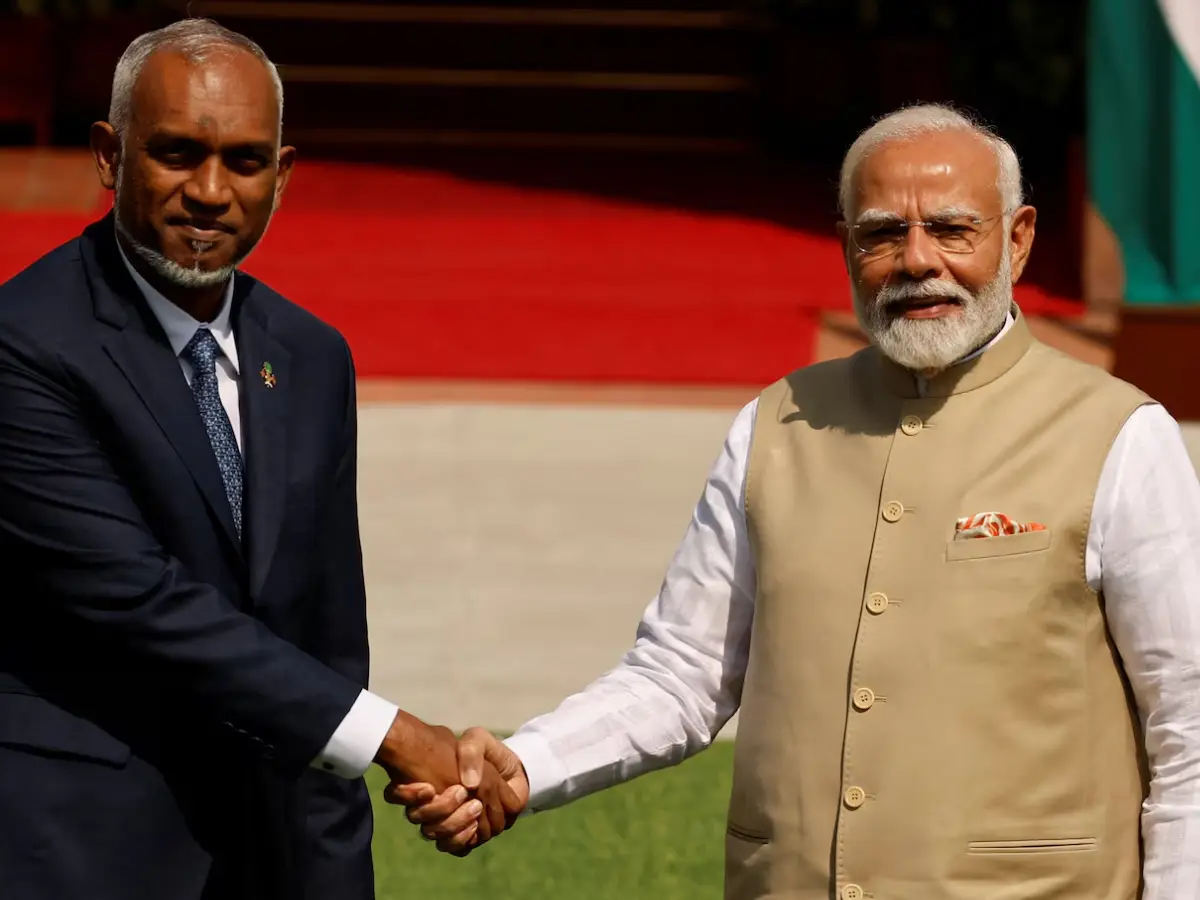
In October 2024, Muizzu visited India in his first official state visit, with the two countries agreeing on a Comprehensive Economic and Maritime Security Partnership. To help the economy of the Maldives, India extended a $400 million currency swap, $100mn in treasury bills, and development support. Muizzu invited Modi to the Maldives as the Guest of Honour for its 60th Independence Day.
During Modi's visit, the two countries would sign pacts on infrastructure, capacity-building, and a potential Free Trade Agreement.
Why was Muizzu forced to have a reset with India?
Trending Stories
)
‘Kill all in the name of...’: FBI arrests 21-year-old over alleged ISIS-inspired mass-casualty attack plot
)
Space mines, lasers & robotic arms: Lt Gen Pannu decodes US disclosure of weapons in space
)
Bitter Zelensky snubs Trump for playing politics with Ukraine war | Gravitas
)
US fires up to 70 interceptors against Iran attack on Jordan, putting supplies under pressure
)
India’s imports from Russia jump 57% in five months; China remains top import source
)
‘US military task force aiding Saudi Arabia forces with intel, planning support’: Official
)
OpenAI boss Sam Altman repeats AI 'slow down' call, says world 'right to be afraid'
)
Top military commanders from US, Israel, and 7 Arab nations held secret meeting on Iran War
)
Sydney Sweeney defends provocative ad choice, the internet is still not impressed
)
India to host IPL 2027 auction; WPL 2027 auction set for late October in Kochi
)
Shahzad Bhatti Network declared terrorist organisation under UAPA: Govt order
)
'Definitely feel bad for yourself': Kuldeep Yadav opens up on India Test snubs
)
US, China dominate global economy: Where does India rank among the world's biggest economies?
)
Ex-India all-rounder Yuvraj Singh wants India to avoid 'massive changes' before ODI World Cup 2027
)
Ed Sheeran’s US tour loses all support acts after Macklemore’s removal | Controversy explained
)
Ex-England footballer Raheem Sterling pleads guilty in reckless driving and crashing his Lamborghini
)
China's property crisis deepens as investment plunges nearly 20%
)
Messi set to play in farewell match on October 6 in Argentina vs Benin friendly
)
Who was Eliana Moreno? NBC LA aerial reporter killed in Chatsworth crash
)
Putin-linked Russian oligarch, Melania links: Why Trump skipped his son’s Bahamas wedding bash?
)
800 million years old - Scientists discover 'fingerprints' of supercontinent Gondwana in ancient rocks
)
Trump's name cannot return to Kennedy Center, US judge rules
)
Pakistan naval vessel returns to harbour with 'severe damage' after collision with Indian warship in Arabian Sea
)
Water equivalent to two Pacific Oceans could be stashed 2,900 km inside Earth
)
Ex-CIA officer caught with gold bars worth $40 million seeks plea deal | Gravitas
)
Pakistan: Imran Khan's sons Kasim & Sulaiman claim their father is 'tortured' in jail
)
Trump's Iran war faces fresh House rebuke; 7 Republicans join Democrats in push to end conflict ahead of midterms
)
US Treasury yields cross 5% as Scott Bessent warns of ‘global issues’ impacting bonds
&im=FitAndFill=(700,400))
New OTT releases this week (September 14-20, 2026): Lust Stories 3, Waiting Hai, Irumudi- 5 new titles coming on Netflix, Prime Video and more
)
Who is Kalyan Bainsla, accused in the Gurugram hit-and-run case involving woman biker?
)
Saudi Arabia discovers 110 million tonnes of Uranium-rich ore in Madinah region
)
Los Angeles helicopter crash: At least three dead, several injured; NTSB to investigate
)
India summons top Pakistan diplomat after Pak Navy ship collides with Indian warship at high seas
)
Saudi Arabia accuses Houthis of drone attack on Mecca, first-ever red alert in Islam's holiest site sparks panic
)
'Like a thug you are using agency to go after..': Kash Patel grilled by Senate Democrats over FBI firings, journalist investigations and hiring policy
)
Abhishek Sharma rises to No. 2 in T20Is; ENG’s Robinson 3rd after record Pakistan Tests
)
Canada to become EU’s first ‘associate member’? Von der Leyen proposes move amid US tensions
The main reason could be the tourism-dependent economy, which contributes nearly one-third of the Maldives’ GDP. Before the relationship soured, India was the top tourist source with over 200,000 visitors in 2023. The #BoycottMaldives campaign led to a 42 per cent drop in Indian tourist arrivals, costing the country up to $2 billion.
During his 2024 visit, Muizzu urged Indian tourists to return.
Maldives economic challenges
Maldives foreign exchange reserves dropped to $395 million by mid-2024, which was barely enough for 1.5 months of imports. Maldives owes $1.37 billion to China and $400.9 million to India, with $600 mn due in repayments in 2025 and $1 billion in 2026.
Amid the standoff with India, rating agency Moody’s downgraded the Maldives’ credit rating in 2024.
At this point, India's financial aid became critical for the Maldives.
Maldives' strategic and economic dependence on India
Maldives has traditionally depended on India for many of its food items, healthcare, and building materials.
The nation could not diversify its imports from distant nations like Turkey or Europe.
India, meanwhile, continued to be a reliable partner, with infrastructure ventures like the Greater Malé Connectivity Project.
China didn't prove to be a friend in need for the Maldives
In spite of Muizzu's outreach and choosing China as his first destination for state visit, Beijing did not provide emergency financial relief that the Maldives so badly needed.
As mentioned, the Maldives still has a Chinese debt of around $1.37 bn.
Amid all this, domestic sentiment changed to a pivot back to India and an opposition to over-reliance on China.
Desperate, or maverick? Why Muizzu shifted stance towards India
It could be argued that Muizzu's initial anti-India rhetoric was helpful only up to the point of getting elected. Once in office, he chose pragmatism over populism, prioritising the Maldives' economic survival and stability over political slogans.
By October 2024, Muizzu acknowledged India’s importance to the Maldives, pledging not to undermine its interests.
In short, President Muizzu’s metamorphosis from an “India Out” hardliner to a cooperative regional leader shows the limited value of populist foreign policy for a vulnerable economy like that of the Maldives.