Iran targets US Patriot missile defence systems in Kuwait, US army fuel storage in Bahrain; Khamenei funeral delayed as US strikes kill 14 Iranians

&imwidth=600&imheight=450&format=webp&quality=medium "Iran targets US Patriot missile defence systems in Kuwait, US army fuel storage in Bahrain; Khamenei funeral delayed as US strikes kill 14 Iranians")
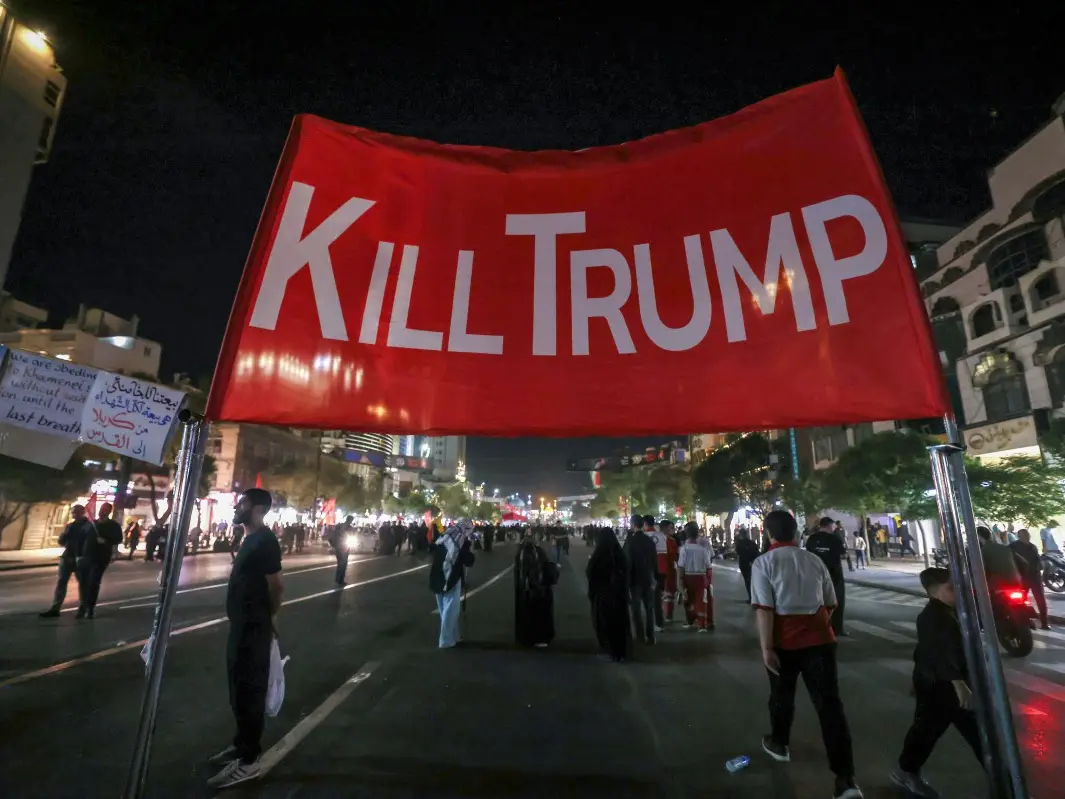
An anti-US banner at the funeral site of Iranian leader Ali Khamenei in Mashhad, northeast Iran Photograph: (AFP)
Fresh strikes and counter-attacks across the Gulf are reported as Iran-US tensions have escalated again. CENTCOM targeted Iranian sites, while Iran claimed attacks on US bases. Khamenei's funeral has been delayed amid renewed fighting.
Iran-US tensions are rising once again on Thursday (Jul 9), with the last 24 hours seeing attacks and counter-attacks as the Islamabad Memorandum of Understanding (MoU) appears to be unravelling. Iran claimed to have targeted US Patriot air defence systems in Kuwait, a satellite communications antenna in Qatar, and a US Army fuel storage facility in Bahrain using drones and missiles. The funeral ceremonies for late Supreme Leader Ayatollah Ali Khamenei, culminating in his planned burial in Mashhad on Thursday, have been delayed by the renewed fighting. The latest escalation comes after US President Donald Trump declared the truce "over", while Iranian officials accused Washington of violating the MoU.
US launches fresh strikes against Iran, as 14 killed
US Central Command (CENTCOM) conducted a second wave of overnight strikes between late Wednesday and early Thursday near the Strait of Hormuz in response to earlier Iranian attacks on commercial shipping. Explosions were reported in Sirik, Bushehr, Konarak, Chabahar and Bandar Abbas, with around 90 additional Iranian military and transport-related targets reportedly struck, according to the Associated Press. Iran's Health Ministry said 14 people were killed and 78 wounded in US strikes across multiple provinces over the past two days. US officials said the strikes were intended to deter further attacks on international shipping.
Bahrain thwarts Iranian attacks on US military sites
Bahrain's Defence Force reported thwarting Iranian missile and drone attacks on Thursday. Although some reports indicated damage to a residential building near Bahrain International Airport, no fatalities were reported. Air defence sirens sounded as Gulf states intercepted incoming projectiles. Iran also claimed attacks on US military facilities in Kuwait and Qatar.
Trending Stories
)
)
)
)
)
)
)
)
)
)
)
)
)
)
)
)
)
)
)
)
)
)
)
)
)
)
)
)
)
)
)
)
)
)
)
&im=FitAndFill=(700,400))
)
Khamenei funeral delayed
The burial of slain Supreme Leader Ayatollah Ali Khamenei has been delayed amid the renewed hostilities. His coffin had been travelling through Najaf and Karbala in Iraq as part of a multi-day funeral procession before its planned burial at the Imam Reza shrine in Mashhad in north-eastern Iran. Funeral processions have drawn massive crowds across Iran and Iraq amid strong anti-US sentiment. Khamenei's burial had already been postponed from March because of the war, with the final burial originally scheduled for July 9.
A dangerous escalation
The renewed exchanges follow Iranian attacks on at least three commercial vessels in the Strait of Hormuz. US President Donald Trump said the ceasefire was "over" while attending the NATO summit in Ankara, Turkey. Iranian Parliament Speaker Mohammad Bagher Ghalibaf accused Washington of violating the MoU and warned of further action, while Iranian Foreign Minister Abbas Araghchi said prospects for a lasting agreement would diminish if US military operations continued.
Also read: Who really benefitted from the Iran war?
Gulf states, including Bahrain, Kuwait and Qatar, condemned the attacks on their territory and called for restraint. The new tensions are once again putting at risk global shipping through the Strait of Hormuz, oil markets and regional stability. Oil prices have risen sharply, shipping insurance costs are increasing and stock market volatility has continued amid fears of a broader regional conflict, according to international media reports.
(Disclaimer: WION takes utmost care to accurately and responsibly report ongoing conflicts in West Asia involving Israel, Iran, the US, Gulf nations and non-state actors like Hezbollah, Hamas, Houthis, Islamic State, and others. Claims and counterclaims, disinformation and misinformation are being made online and offline. Given this context, WION cannot independently verify the authenticity of all statements, social media posts, photos and videos.)

