Baltic Sea in 'dire' state due to human activities and global warming: Report

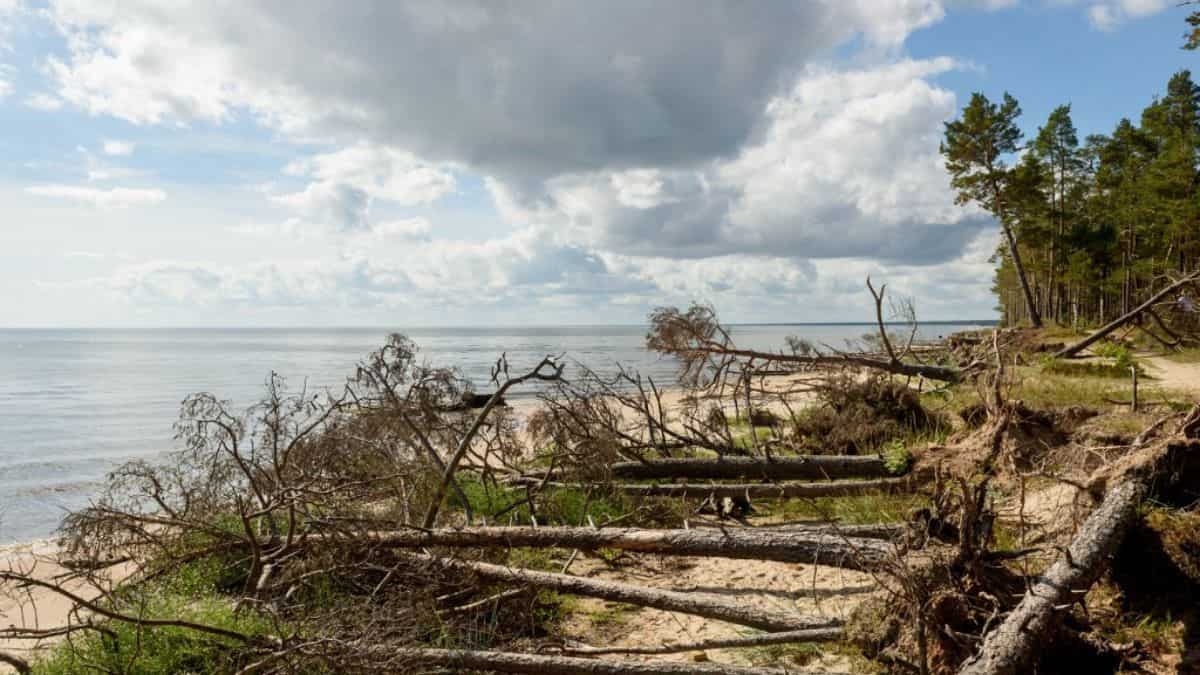
Baltic Sea
Baltic Sea, the largest expanse of brackish water in the world, as per German media reports, is on the verge of collapse.
The sea's ecosystem, as per reports, is reeling under the detrimental impact of environmental pollution and overfishing.
Dire situation

A recent report by the Baltic Marine Environment Protection Commission (HELCOM) about the state of the Baltic Sea paints a dire situation, reports German media.
The HELCOM study indicates that, despite conservation efforts by ecologists and experts alikeover the last few years, there has been no improvement in the state of the Baltic Sea. In fact, the condition in certain areas has deteriorated, according to the report.
Also read |'Gods of chaos': Jupiter protects us, but similar gas giants whack other Earth-like planets
)
India ‘deeply concerned’ as Houthi strikes hit Saudi civilian & energy sites
)
Three labourers killed as DU student loses control of his car, rams into them on Dwarka Expressway
)
Pentagon revives mandatory testosterone testing for male troops aged 30 and above
)
FACT CHECK: Why did PM Modi ask Xi ‘is it okay’ at BRICS Summit? New video reveals...
)
India seeks to build a full semiconductor supply chain
)
North Korea's last nuclear test in 2017 set off 1,399 earthquakes over 8 years, each stronger than previous
&im=FitAndFill=(700,400))
From Abhishek Sharma to Sahil Chauhan, 5 batters with fastest T20I hundreds
)
Indian activist-lawyer Prashant Bhushan's post brings focus on ‘conflict of interest’ appointments of ex-govt officials at Reliance, Adani groups
)
US And Denmark reach Greenland deal, Trump announces expanded military presence
)
Former India player Diana Edulji wants Smriti Mandhana to replace Harman as skipper at the earliest
)
China may have gained access to US's classified F-35 jets; parts meant for repairs diverted to Hong Kong, sparking Pentagon inquiry
&im=FitAndFill=(700,400))
Meet top 5 batters in the latest ICC T20I Rankings
)
Godfather of AI Geoffrey Hinton gives US lawmakers a one-year warning on AI
)
US F-16 fighter jet crashes in Michigan during training mission, pilot ejects safely
)
Shivakumar attends 79th Kalyana Karnataka Utsav in Kalaburagi
)
Trump signs Russia sanctions law: India faces fresh 100% tariff threat over Russian oil
)
Why Ranveer Singh’s Dhurandhar missed India’s Oscar entry; FFI jury member reveals what happened
)
Hong Kong extends newborn cash support scheme by three years
)
‘Will go to any extent’: Pakistan vows to defend Saudi Arabia amid Houthi attacks
)
'He will always be ahead': India coach Gambhir says Sooryavanshi won't walk into team ahead of Samson
)
The Verdict | When precision fails: US commits war crime in Minab school strike, UN finds
)
Trump signs Russia sanctions bill into law, targets Moscow’s energy sector
&im=FitAndFill=(700,400))
New Friday OTT releases (September 18, 2026): Lust Stories 3, You+Me, Best of the Best- 8 new titles coming on Netflix, Prime Video and more
&im=FitAndFill=(700,400))
Which country has the most F-35s outside America?
)
Africa is splitting, and a lot sooner than estimated, giving way to a new ocean
)
'Gangsta' crab shoves knife blade at man and his dog in Florida - Watch
)
Trump bans CNN, MS NOW and Politico from White House over ‘FAKE NEWS’
)
Trump 2.0: Dark days ahead for America’s ‘imperial presidency’
)
Laura Wolvaardt sets new world record for most WT20I runs in a year
)
Trump's Greenland dream comes true? POTUS announces 'Infinite Life' deal with Denmark, claims permanent US control
)
Drone strikes cooling tower at Russia's Kursk Nuclear Plant, IAEA confirms
)
Who is Khalilur Rahman? All you need to know about 81st UN General Assembly President
&im=FitAndFill=(700,400))
Meet top 5 bowlers in latest ICC T20I rankings
)
Cristiano Ronaldo returns to Portugal squad for Nations League under new coach
&im=FitAndFill=(700,400))
Meet top 5 Indian batters with fastest T20I centuries
)
Ukraine plans record $109 bn defence spending, nearly two thirds of budget amid Russia war
"The health of the Baltic Sea ecosystem is under threat from the increasing effects of climate change and biodiversity degradation, catalysed by pollution, demands on land use, resource extraction and other pressures," says the report.
What are the primary challenges to the Baltic Sea?
As per the report, the Baltic Sea is primarily affected by human-induced activities like eutrophication — the over-enrichment of water, harmful substances and pollutants, oxygen depletion, and habitat destruction.
These human activities, as per the report, are "enhanced" by climate change.
"Climate change effects are already evident in the Baltic Sea, and global warming is expected to lead to further hydrological and ecological changes in the near future."
Quoting the report, German news outlet Bild reports, "Specific species, such as water birds, are facing drastic hardship, particularly along the German coast of the Baltic Sea. The condition is especially serious in the Bay of Kiel, Mecklenburg Bay, and Arkona Basin, where Rugia Island is located. The local porpoise population is also in jeopardy."
This degradation not only affects marine and animallife but also impacts humans. "The degradation of the marine ecosystem also reduces its (Baltic Sea) ability to produce goods and services for the benefit of society, with effects on our well-being," says the report.
The way forward
The report states that continued efforts to improve the environmental status of the Baltic Sea's biodiversity are of key importance.
It speculates that successfully limiting the amount of pressure human activities put on the environment should "show signs of improvement and support a sustainable marine region."
"Ultimately, the recovery of the Baltic Sea biodiversity is entirely dependent on how well we can manage our activities to ensure that they are truly sustainable, both in the near future and in the long term," it concludes.

