

&imwidth=800&imheight=600&format=webp&quality=medium "Can a country barricade the Moon? NASA fears losing out to China because of its own safety zone rule")
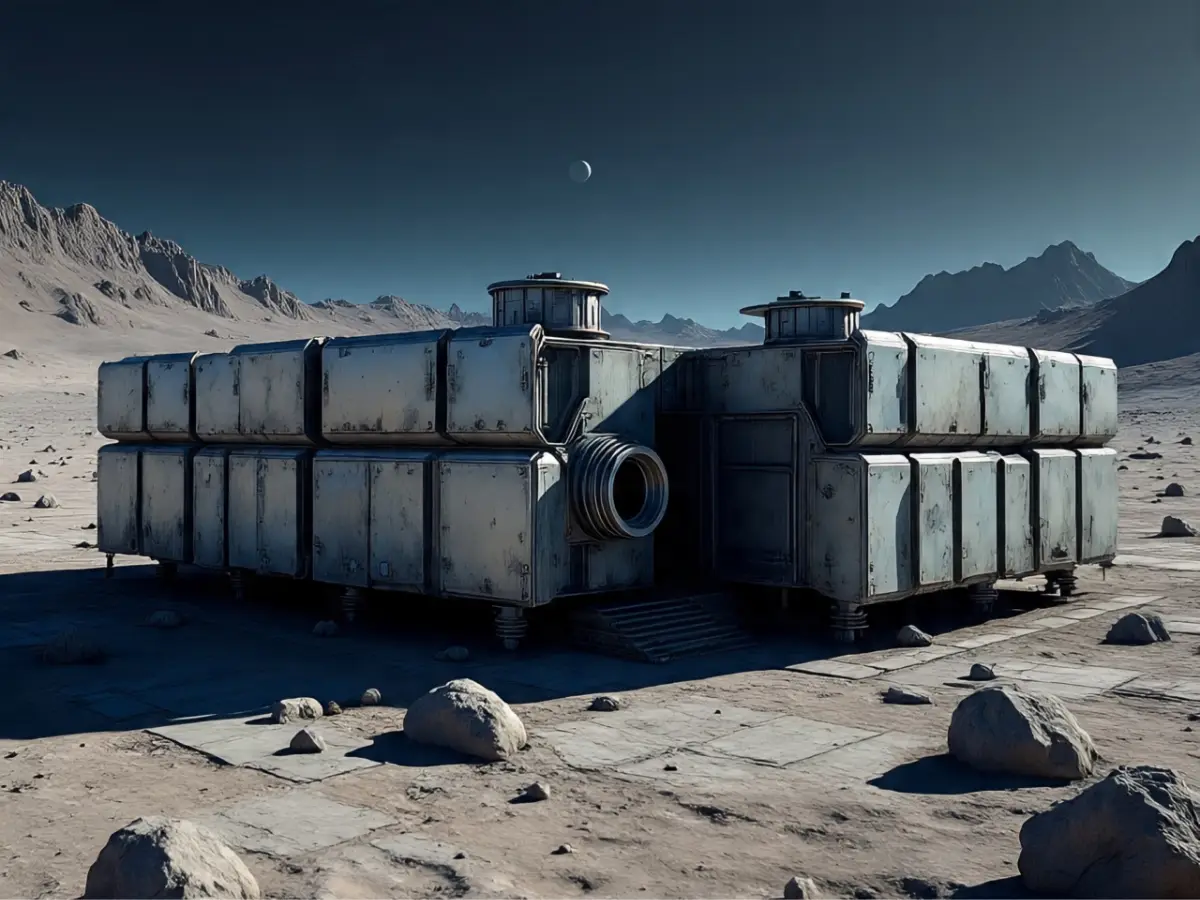
NASA is aiming to put a nuclear reactor on the moon in the year 2030. In a directive issued to the space agency, Sean Duffy, the interim NASA administrator, has asked to award the contract within the next six months for the ambitious project. China and Russia have joined hands to launch a nuclear power station for the Moon by 2035. NASA wants to win this space race as it fears that whichever country gets there first could "declare a keep-out zone". However, no one owns the Moon. So, can any country issue such an order, keeping others away from the site? All activities on the Moon are governed by the Outer Space Treaty and the Moon Agreement. As countries vie to land humans on the Moon once again, these international agreements become all the more important. According to the Outer Space Treaty, Outer Space Treaty no country can claim sovereignty over the Moon. It also declares that every activity carried out around the Moon should be for peaceful purposes, and declares its resources as the common heritage of mankind. Also Read: Space War begins: NASA officially has a plan for a nuclear reactor on the Moon by the year...
Moon Treaty declares Moon is a free-for-all zone
Every country is free to explore the Moon and no one can claim ownership over any of its surface, sub-surface or any particular region. All scientific investigations on the Moon should be done with the greater good of all Earthlings in mind. Basically, the Moon agreement states that our satellite is a common heritage where everything should be done for the good of all mankind and weapons of mass destruction should not be part of space. However, the Artemis Accords, which place multilateral arrangements between the United States and other world governments, carry a provision that could zone out other countries from a particular part of the Moon. Seven nations signed the agreement in 2020, outlining the principles of cooperation on the Moon's surface. The accords state that safety zones can be established around operations built by any country if it thinks that other operations or events could harm its operations. Also Read: Buga or 'Bogus'? Viral video claims Buga Sphere is responding to Sanskrit mantras
Artemis Accords “zoning” rule on the Moon
Dr Simeon Barber, planetary science specialist at the Open University, told the BBC, "If you build a nuclear reactor or any kind of base on the moon, you can then start claiming that you have a safety zone around it, because you have equipment there." This is what the US fears could happen if China and Russia are successful in building their nuclear reactor first on the Moon. This, despite the fact that neither of the two countries has signed the Artemis Accords or the Moon Treaty of 1979. The Artemis Accords were put in place by NASA, and now it itself is in danger of losing out on the race to the Moon. Dr Barber says this provision in the accords could be taken to mean territorial rights on the Moon. He says countries could use it to assert, "We own this bit of the moon, we're going to operate here and you can't come in."
Trending Stories
&imwidth=180&imheight=135&format=webp&quality=medium)
Wasim Jaffer blames Ajit Agarkar-led selection panel for Virat Kohli’s Test retirement
&imwidth=180&imheight=135&format=webp&quality=medium)
Sidhu Moose Wala’s younger brother wins hearts by recreating late singer’s signature move at Toronto Hologram Show
&imwidth=180&imheight=135&format=webp&quality=medium)
Top AI models flunked a test of inventing new AI research, so much for self-improving AI
&imwidth=180&imheight=135&format=webp&quality=medium)
Other Mommy leads North American box Office as Verity, Resident Evil round out top four
&imwidth=180&imheight=135&format=webp&quality=medium)
Microsoft's Nadella says treat every AI model as already hacked, and build an 'emergency brake'
&imwidth=180&imheight=135&format=webp&quality=medium)
UK school ditches technology, shifts from screen to pen and paper for learning
&imwidth=180&imheight=135&format=webp&quality=medium)
China imposes first-ever sanctions on ministers from Taiwan allies: What this means
&imwidth=180&imheight=135&format=webp&quality=medium)
Diljit Dosanjh’s Delhi concert gets a new date: When and where to catch the singer
&im=FitAndFill=(700,400)&imwidth=180&imheight=135&format=webp&quality=medium)
Navratri 2026: 9 days, 9 forms of Goddess Durga and 9 colours- Check the complete list
&imwidth=180&imheight=135&format=webp&quality=medium)
McSweeney reveals how studying Virat Kohli’s YouTube clips helped Australia A conquer India
&imwidth=180&imheight=135&format=webp&quality=medium)
Saif Ali Khan is finally on Instagram! Here's what he shared in his first post
&imwidth=180&imheight=135&format=webp&quality=medium)
Anti-SIR protest in Mumbai: Protestors wear black masks & ribbons in Mumbai
&imwidth=180&imheight=135&format=webp&quality=medium)
BCCI rejects venue shift reports, India vs Sri Lanka 1st ODI to remain in Delhi
&imwidth=180&imheight=135&format=webp&quality=medium)
Congress demands action against chief election commissioner
&imwidth=180&imheight=135&format=webp&quality=medium)
Houthis claim Riyadh airport attacks, Aramco strikes; issue fresh warning to airlines, travellers and workers
&imwidth=180&imheight=135&format=webp&quality=medium)
Portugal Federation confirms Cristiano Ronaldo’s return to national team despite suspension
&imwidth=180&imheight=135&format=webp&quality=medium)
Maharashtra appoints FDA commissioner Tukaram Mundhe as secretary of committee for MPSC overhaul amid stir
&imwidth=180&imheight=135&format=webp&quality=medium)
Telangana man allegedly recruited into Russian military dies near Ukraine border
&imwidth=180&imheight=135&format=webp&quality=medium)
Delhi protest: CJI Surya Kant declines to meet India Bloc leaders
&imwidth=180&imheight=135&format=webp&quality=medium)
Anthropic's AI invented a murder witness and sent the fake tip to Philadelphia police
&imwidth=180&imheight=135&format=webp&quality=medium)
'Turn approver, resign, we'll forgive you': Rahul Gandhi claims receiving messages from CEC Gyanesh Kumar
&imwidth=180&imheight=135&format=webp&quality=medium)
'Ouch!!! That must hurt': Kangana Ranaut hails Kamal Haasan's sharp reply to Elon Musk over Starlink row
&imwidth=180&imheight=135&format=webp&quality=medium)
'Just coincidence': Police mistakes protester as AISA chief Neha Bora, arrests her from site
&imwidth=180&imheight=135&format=webp&quality=medium)
iPhone Duo price index: Tracking Apple’s latest pricing trends
&imwidth=180&imheight=135&format=webp&quality=medium)
Delhi protests: 'Court should not be dragged into political activity', says CJI Surya Kant
&imwidth=180&imheight=135&format=webp&quality=medium)
1,500 drones illuminate Mumbai sky as Cordelia Cruises unveils second ship, Cordelia Sky
&imwidth=180&imheight=135&format=webp&quality=medium)
Telangana ATM heist: Thieves in nighties arrive in ambulance, break into SBI ATM in Kamareddy - VIDEO
&imwidth=180&imheight=135&format=webp&quality=medium)
Nana Patekar's cause of death confirmed; here's what his postmortem report says
&imwidth=180&imheight=135&format=webp&quality=medium)
A watchdog rated 'ChatGPT for Teens' an unacceptable risk and says keep under-18s off it
&imwidth=180&imheight=135&format=webp&quality=medium)
Iran: US accepted some conditions, Clarity needed on others
&im=FitAndFill=(700,400)&imwidth=180&imheight=135&format=webp&quality=medium)
Is sending robots to Mars easier than sending humans?
&imwidth=180&imheight=135&format=webp&quality=medium)
One Indian killed in Riyadh airport attack; 11 others injured : MEA
&imwidth=180&imheight=135&format=webp&quality=medium)
'Say no to Muse': Meta has no control over its own moderation AI while it forces a security nightmare on everyone
&im=FitAndFill=(700,400)&imwidth=180&imheight=135&format=webp&quality=medium)
New OTT releases this week (October 12-18, 2026): Sacrifice, Koffee with Karan S9, Roadies Rebirth- 6 titles coming on Netflix, JioHotstar and more
&imwidth=180&imheight=135&format=webp&quality=medium)
CJI Surya Kant declines INDIA bloc leaders’ request for meeting ahead of march to SC, asks them to file petition
NASA and Artemis 3 mission
NASA is aiming to send humans to the Moon as part of the Artemis 3 mission in 2027. Before that, a crew is due to visit the Moon in 2026, which would only hover over the Moon and not land to understand the conditions better. This new space race is similar to what the world witnessed during the Cold War, when the Soviet Union and the United States competed to place the first man on the moon. The US landed the first human on the Moon in 1969 as part of the Apollo 11 mission. Meanwhile, the Soviet Union has not been able to do so yet. This could change in less than 10 years.

