WHAT! Earth has been sharing its orbit with a cosmic body for 60 years. We have only now seen it

&imwidth=600&imheight=450&format=webp&quality=medium "WHAT! Earth has been sharing its orbit with a cosmic body for 60 years. We have only now seen it")
Earth has seven quasi-moons.
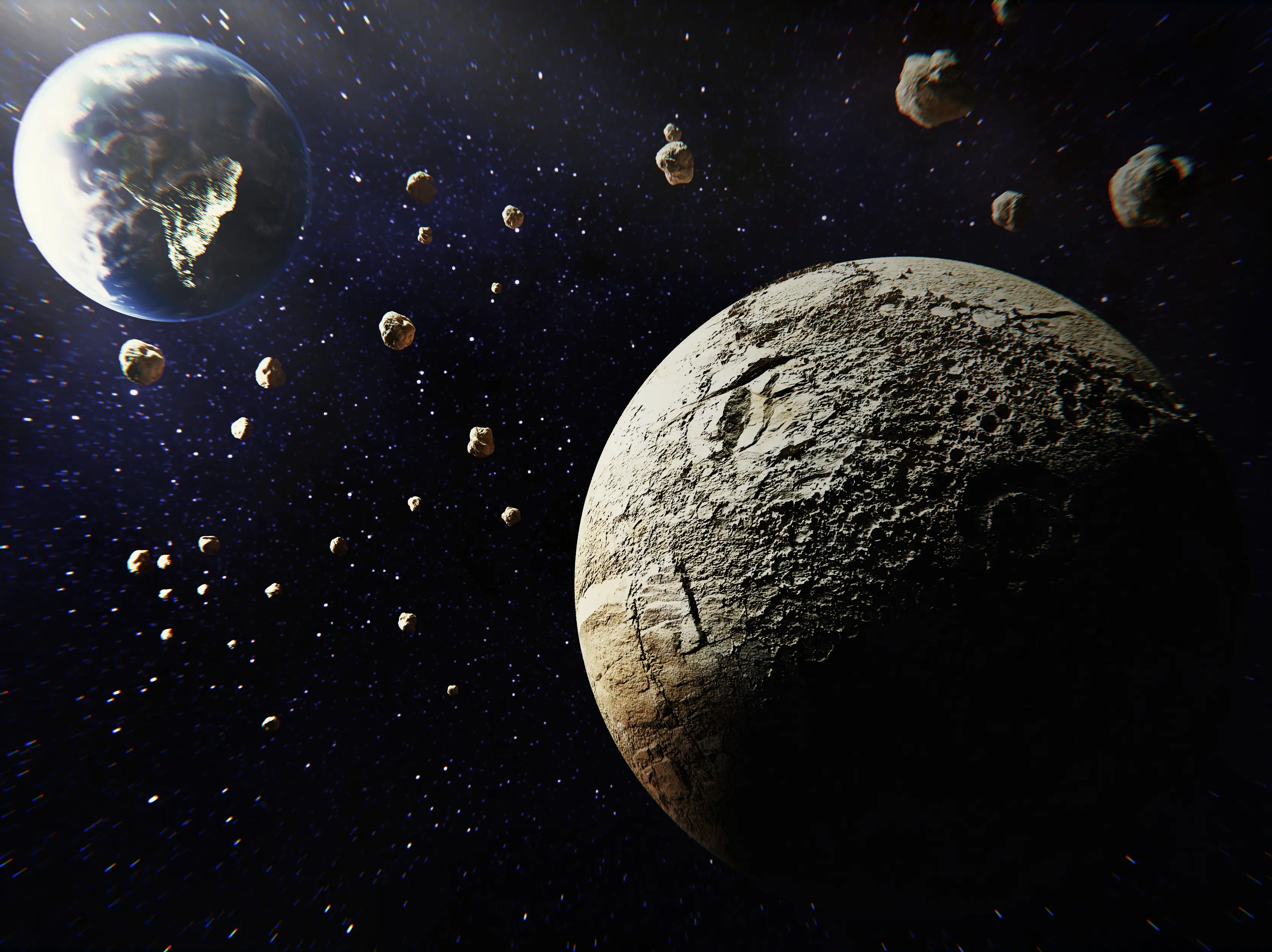
Earth has seven quasi-moons, and one of them has been with us for over 60 years, yet scientists have only now found it. Quasi-moon is an asteroid that moves in the same orbit as Earth and is influenced by our planet's gravity. Yet, it is not a mini-moon.
Earth has a new quasi-moon that has been right there all along, but somehow scientists failed to see it earlier. Named 2025 PN7, it has been near our planet for decades, moving in a stable orbit. It will remain there for several more to come. The finding was published in Research Notes of the American Astronomical Society. The quasi-moon was discovered on August 2 by the Pan-STARRS observatory in Hawaii. After astronomers spotted 2025 PN7, they scanned through past data from the telescope to see whether it had been observed earlier. To their surprise, they found images of the quasi-moon dating back to 2014. They noted that it has been moving alongside Earth in a stable orbit for over 60 years. It is not going anywhere for 60 more years, when it will ultimately escape and drift away. Also Read: Was 'mini-moon' asteroid once part of our Moon? NASA will try to find out when it returns
Notably, Earth has around seven such quasi-moons. Quasi-moons are nothing but asteroids that are on similar orbits to our planet. However, they aren't caught by Earth's gravitational force and are only influenced by it. This is why they do not fully qualify to be called a moon. They share Earth's orbit around the Sun and do not actually orbit the planet. Scientists have stated that 2025-PN7 is around 62 feet wide, and between 4.5 million kilometres and 59.8 million kilometres away from Earth. It belongs to an elite group of near-Earth asteroids. The Pan-STARRS observatory located the quasi-moon in the constellation Piscis Austrinus. Also Read: When will Earth get its next mini-moon? A 1981 and 2022 visitor returns in...
What is a quasi-moon of Earth?
One of the most famous quasi-moons is Kamoʻoalewa, officially known as 2016 HO3. It was detected on April 27, 2016, and has an elongated shape instead of a sphere. It measures between 131 and 328 feet across, and a Chinese mission will soon study the quasi-moon. The Tianwen-2 mission was launched in May this year and has been designed to collect samples from Kamoʻoalewa. It will bring them back to Earth in 2027. The aim of the mission is to find clues that could offer more insights into the origin of the solar system.
Are quasi-moons and mini-moons the same?
No, quasi-moons and mini-moons are not the same. As mentioned above, quasi-moons orbit in the same path as Earth, sharing its space and keeping pace with it. They are asteroids influenced by Earth's gravity but not caught by it. Meanwhile, mini-moons are asteroids that get caught in Earth's gravitational force. They are also temporary and drift away within weeks to a few years. Quasi-moons, on the other hand, accompany the planet for a longer time. We had a mini-moon last year when asteroid 2024 PT5 visited and stayed from Sep 29 to Nov 25.
)
)
)
)
)
)
)
)
)
)
)
)
)
)
)
)
)
)
)
)
)
)
)
)
)
)
)
)
)
)
)
)
)
)
&im=FitAndFill=(700,400))
)
)
)
)

