Will marine life disappear in the oceans as they continue to become too acidic? Scientists say...

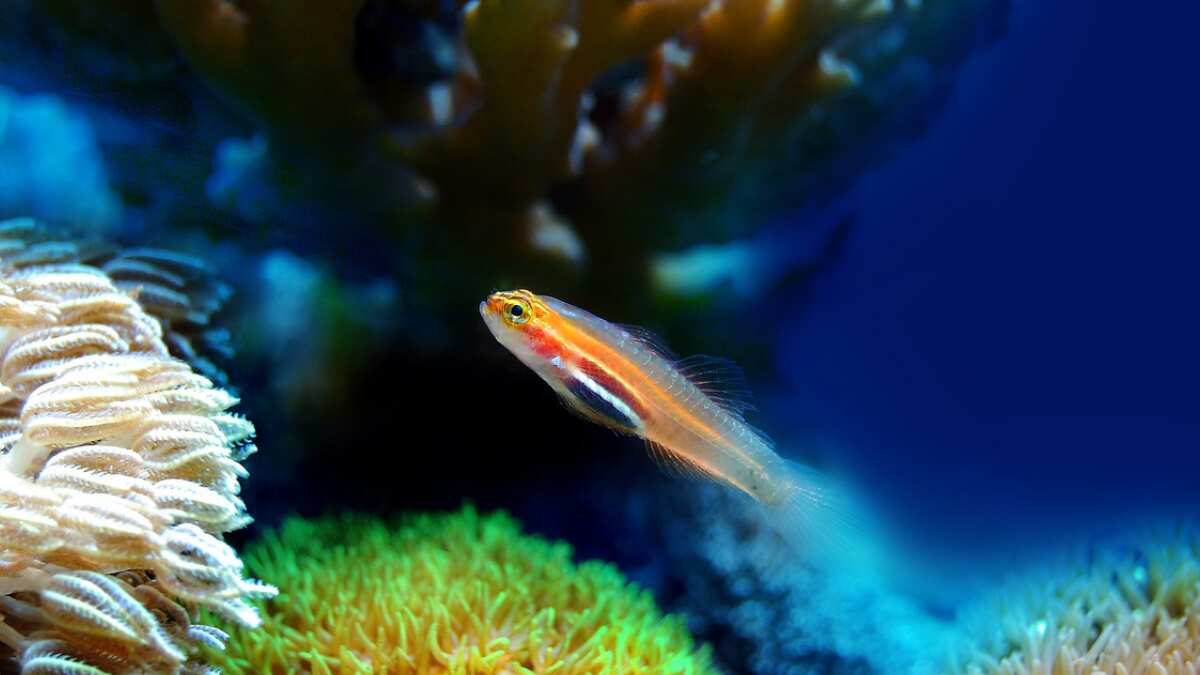
Representational image of marine life.
The scientists in a report have emphasised that the oceans in the world are turning too acidic and are not able to sustain marine life or even stabilise the climate.
The report, which has been prepared by the Potsdam Institute for Climate Impact Research (PIK), has mentioned nine factors which are important for regulating the ability of the planet to sustain life.
In recent years, human activities have pushed the safe limit in six of these areas.

Ocean acidification can soon lead to the breaching of the seventh factor, as per the PIK's firstPlanetary Health Check.
The safe limits of the factors which have been breached include climate change; rise in pollutants, which includes plastics and chemical fertilisers used in agriculture; the loss of natural species, natural habitat and freshwater.
Also Read:Are deep seas on Earth hiding alien life amid 'dark oxygen'? Study hints so
)
US Treasury rallies global financial institutions for Op Economic Outcast to isolate Iran
)
Trump praises India’s Opium crackdown, hails anti-drug efforts
)
Saudi Vs Houthis: Yemeni military rebels clash with Houthis
)
Veteran actor Anant Nag honoured with Indian cinema’s highest award
)
Pakistan boycotts chess match against Israel at Olympiad
)
Lionel Messi for 2026 Ballon d’Or over Mbappe and Yamal, says Diego Simeone
)
Protests erupt over migrant housing plan in Piddington
)
Formula One reveals the 2027 race calendar; Monaco to host sprint race for the first time
)
Bigg Boss 20: Mahhi Vij reveals she lost Yuva role to Kareena Kapoor; 'didn’t work out in my favour'
)
No Pandya as Auqib Nabi earns maiden ODI call-up; Mayank returns for WI T20Is| check full squads
)
Former India player Diana Edulji wants Smriti Mandhana to replace Harman as skipper at the earliest
)
US House votes 417-3 to pass Ratepayer Protection Act targeting AI data center electricity costs
)
Pakistan: Imran Khan's sons Kasim & Sulaiman claim their father is 'tortured' in jail
&im=FitAndFill=(700,400))
New OTT releases this week (September 14-20, 2026): Lust Stories 3, Waiting Hai, Irumudi- 5 new titles coming on Netflix, Prime Video and more
)
Taiwan seeks deeper India ties as direct flights restart soon and chip projects advance
)
Trump gets new power to hit India, China with up to 100% tariffs as US Senate clears Russia sanctions bill
)
Former OpenAI researcher warns of growing risks from Artificial Intelligence
)
Want to get married within a year? Why 18 lakh people rush to Jaipur for ‘sacred henna’
)
Fed raises rates for first time in 3 years, Kevin Warsh defies Trump as inflation mounts
)
Chiefs tight end Travis Kelce named one of the victims in $35 million ponzi scheme
)
The Early Spring season 2 is happening, but fans have one request - 'don't change the actors'
)
All Indian goods to get duty-free access to New Zealand
)
Sydney Sweeney defends provocative ad choice, the internet is still not impressed
)
Shahzad Bhatti Network declared terrorist organisation under UAPA: Govt order
)
Europe wants a common playbook for security threats, seeks security beyond NATO
)
Trump calls Canada-EU associate membership plan ‘laughable’ and threatens 'very serious tariffs'
)
‘Imagine 50 AI fighters cornering one manned jet’: India’s mobbing doctrine eyes a new era of air warm
)
AUS vs SA: Steve Smith still gets 'little flashbacks' from sandpaper gate
)
India breaks silence on US Russia sanctions bill, 100% tariff threat: ‘Committed to energy security’ for 1.4 billion
)
Abhishek Sharma rises to No. 2 in T20Is; ENG’s Robinson 3rd after record Pakistan Tests
)
Daayra movie review: Kareena Kapoor, Prithviraj Sukumaran shine in Meghna Gulzar’s cop-versus-cop crime thriller
)
Katrina Kaif’s postpartum weight is not the problem; your gaze is
)
Hong Kong unveils 11 new measures to boost birth rates, offers higher cash bonuses and housing perks
)
US trade tariff: 100% tariff targets Russian buyers amid trade tensions
)
Pak batter Rizwan's petition against being questioned by cyber crime agency rejected by court
)
Saudi vs Houthis: Riyadh claims to have shot Houthi drone targeting Mecca
)
Prime Minister Narendra Modi's birthday: Italian PM Meloni sends birthday wishes
&im=FitAndFill=(700,400))
Suriya and Jyothika say ‘I do’ again after 20 years! See their dreamy wedding pics
)
Pakistan naval vessel returns to harbour with 'severe damage' after collision with Indian warship in Arabian Sea
Now, there is a high chance of a sustainable level of ocean acidification exceeding which led to ever-increasing emissions of carbon dioxide (CO2) created from burning fossil fuels like oil, coal and gas.
"As CO2emissions increase, more of it dissolves in sea water… making the oceans more acidic," said Boris Sakschewski, one of the lead authors, while speaking toreporters.
"Even with rapid emission cuts, some level of continued acidification may be unavoidable due to the CO2already emitted and the time it takes for the ocean system to respond. Therefore, breaching the ocean acidification boundary appears inevitable within the coming years," he added.
How acidic water is harming marine life?
The corals, shellfish and the phytoplankton - which feed on several marine species - get damaged by acidic water.
Hence, it also disrupts the food supplies of billions of people and limits the capacity of the ocean to absorb more CO2which eventually limits global warming.
Among the nine boundaries stated in the report, the one that is not close to exceeding is the protectiveozonelayer of the planet.
This shield has been damaged by man-made chemicals which led to acid rain, however, it has begun to recover.
According to PIK, these nine planetary danger levels were mentioned to alert people against tipping past points of Earth's natural systems.
"These tipping points… if crossed, would lead to irreversible and catastrophic outcomes for billions of people and many future generations on Earth," the report said.
Sakschewski said that the nine planetary boundaries are "interconnected" so a breach of a crucial limit can destabilise the entire life system of Earth.
(With inputs from agencies)