World Guru on a sticky wicket: Why India needs to go that extra mile to reap Ayodhya ambitions

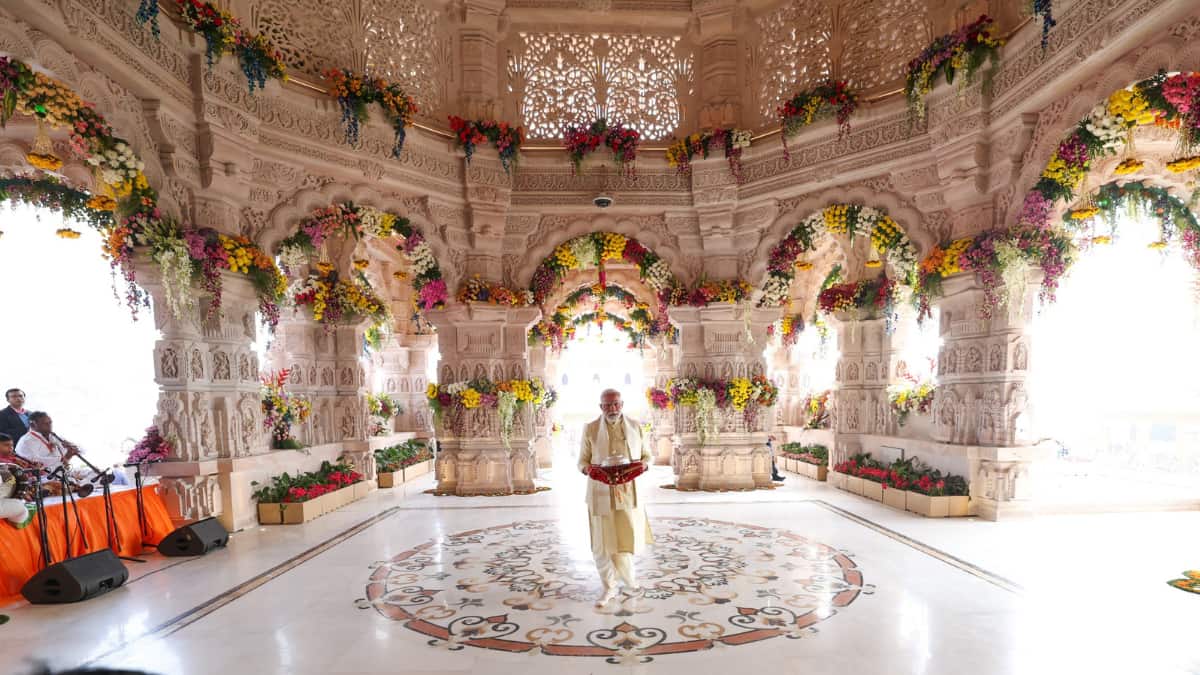
Indian Prime Minister Narendra Modi worships inside Ram Mandir in Ayodhya.
In a world separated by geography, culture, civilizational histories and economic conditions but yet connected by modern technologies that make words fly across the planet in nanoseconds, it is difficult to decipher the inner import of speeches made by demagogic leaders.
Where does narrow nationalism end and all-encompassing globalism begin? What in such speeches is meant for domestic audiences and sentiment and what represents the real position on issues that matter in the here and now?
Such questions come to mind a day after Indian Prime Minister Narendra Modi led consecration rituals at a shiny new temple to the revered Hindu god-king Ramaat Ayodhya, his birthplace loaded with legends that stretch back into antiquity. High on sentiment, philosophy, and noble intent, Modi's speech oozed inspiration and assurances but left questions open on the future of an emerging India in a moment of difficult geopolitical choices.

Modi spoke at the site now housing a magnificent temple where only 31 years ago, Hindu activists had controversially and illegally demolished a centuries-old mosque dome at the then-disputed spot believed by Hindus to be the birthplace of Rama. His reference to Rama as a symbol of national consciousness and global righteousness accompanied by conciliatory words of peace and social harmony was in stark contrast to the 1992 demolition when he was a lower-end activist in a group seeking the restoration of Ayodhya's glory by challenging Muslim community leaders on the dispute.
The statesmanly Ayodhya speech, buttressed by a matching oration from Mohan Bhagwat, chief of the Rashtriya Swayamsevak Sangh (RSS), the ideological parent of Modi's ruling Bharatiya Janata Party (BJP), left no doubt about India's global ambitions. Bhagwat referred to India as a potential Vishwaguru (Global guru) if its citizens stayed together with a sense of discipline.
Coming in the backdrop of a Russia-Ukraine conflict in Europe and an Israel-Hamas war in Palestine, besides a global climate change challenge, that does indeed raise questions on what India can, should and will do.
)
‘Kill all in the name of...’: FBI arrests 21-year-old over alleged ISIS-inspired mass-casualty attack plot
)
Space mines, lasers & robotic arms: Lt Gen Pannu decodes US disclosure of weapons in space
)
Bitter Zelensky snubs Trump for playing politics with Ukraine war | Gravitas
)
US fires up to 70 interceptors against Iran attack on Jordan, putting supplies under pressure
)
‘US military task force aiding Saudi Arabia forces with intel, planning support’: Official
)
OpenAI boss Sam Altman repeats AI 'slow down' call, says world 'right to be afraid'
)
Top military commanders from US, Israel, and 7 Arab nations held secret meeting on Iran War
)
Sydney Sweeney defends provocative ad choice, the internet is still not impressed
)
India to host IPL 2027 auction; WPL 2027 auction set for late October in Kochi
)
Shahzad Bhatti Network declared terrorist organisation under UAPA: Govt order
)
'Definitely feel bad for yourself': Kuldeep Yadav opens up on India Test snubs
)
US, China dominate global economy: Where does India rank among the world's biggest economies?
)
Ex-India all-rounder Yuvraj Singh wants India to avoid 'massive changes' before ODI World Cup 2027
)
Ed Sheeran’s US tour loses all support acts after Macklemore’s removal | Controversy explained
)
Ex-England footballer Raheem Sterling pleads guilty in reckless driving and crashing his Lamborghini
)
China's property crisis deepens as investment plunges nearly 20%
)
Alex Saab, ally of Venezuela's Maduro, pleads guilty in US corruption case
)
Messi set to play in farewell match on October 6 in Argentina vs Benin friendly
)
Who was Eliana Moreno? NBC LA aerial reporter killed in Chatsworth crash
)
Putin-linked Russian oligarch, Melania links: Why Trump skipped his son’s Bahamas wedding bash?
)
800 million years old - Scientists discover 'fingerprints' of supercontinent Gondwana in ancient rocks
)
Trump's name cannot return to Kennedy Center, US judge rules
)
Pakistan naval vessel returns to harbour with 'severe damage' after collision with Indian warship in Arabian Sea
)
Water equivalent to two Pacific Oceans could be stashed 2,900 km inside Earth
)
Ex-CIA officer caught with gold bars worth $40 million seeks plea deal | Gravitas
)
Pakistan: Imran Khan's sons Kasim & Sulaiman claim their father is 'tortured' in jail
)
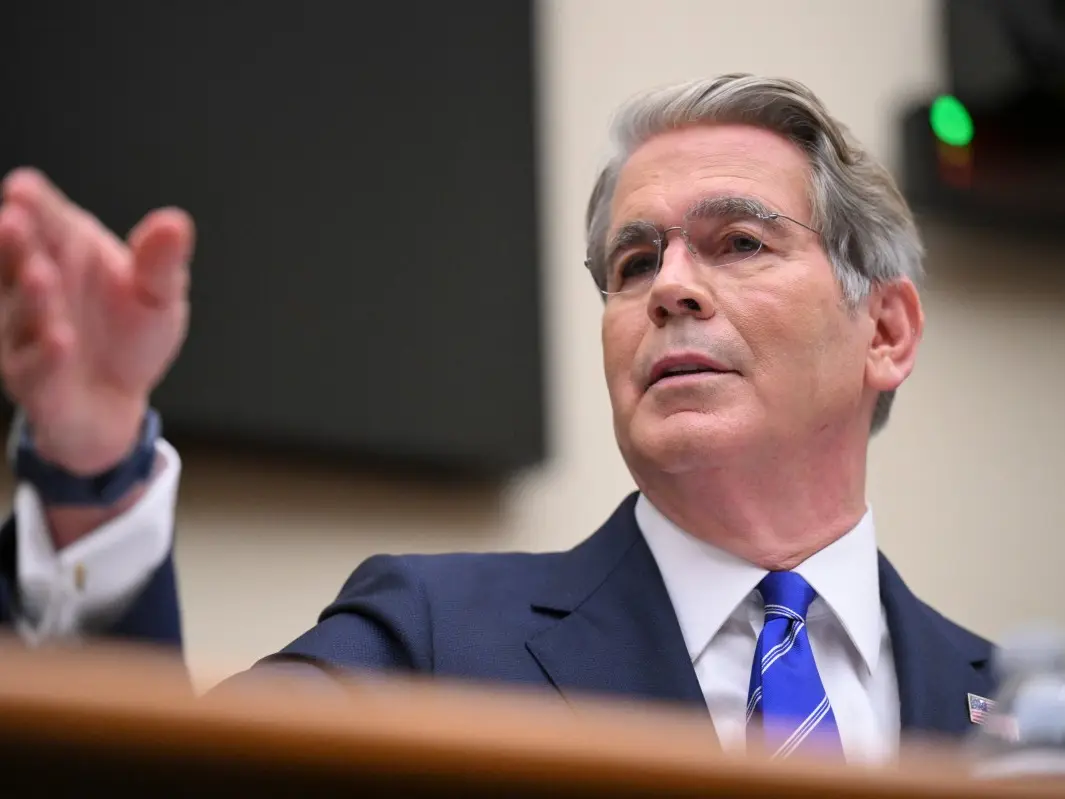
Trump's Iran war faces fresh House rebuke; 7 Republicans join Democrats in push to end conflict ahead of midterms
)
US Treasury yields cross 5% as Scott Bessent warns of ‘global issues’ impacting bonds
&im=FitAndFill=(700,400))
New OTT releases this week (September 14-20, 2026): Lust Stories 3, Waiting Hai, Irumudi- 5 new titles coming on Netflix, Prime Video and more
)
Who is Kalyan Bainsla, accused in the Gurugram hit-and-run case involving woman biker?
)
Saudi Arabia discovers 110 million tonnes of Uranium-rich ore in Madinah region
)
Los Angeles helicopter crash: At least three dead, several injured; NTSB to investigate
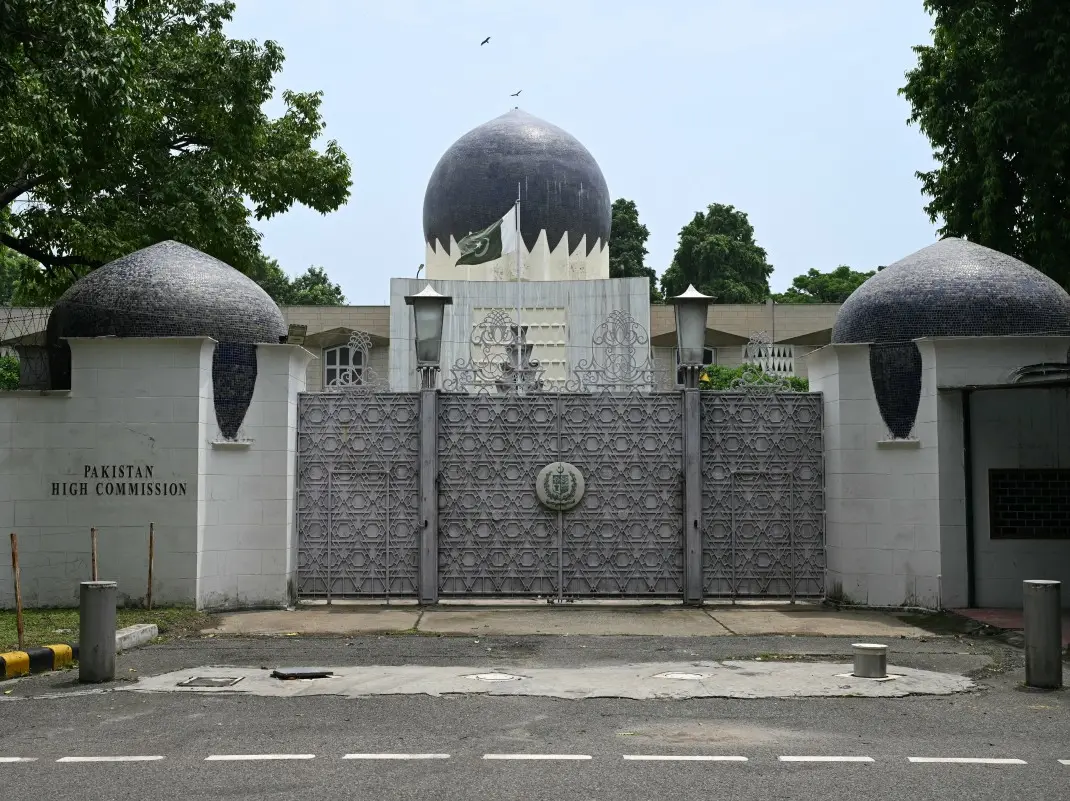)
India summons top Pakistan diplomat after Pak Navy ship collides with Indian warship at high seas
)
Saudi Arabia accuses Houthis of drone attack on Mecca, first-ever red alert in Islam's holiest site sparks panic
)
'Like a thug you are using agency to go after..': Kash Patel grilled by Senate Democrats over FBI firings, journalist investigations and hiring policy
)
Abhishek Sharma rises to No. 2 in T20Is; ENG’s Robinson 3rd after record Pakistan Tests
)
Canada to become EU’s first ‘associate member’? Von der Leyen proposes move amid US tensions
First up, India is still a wannabe on the high table of global diplomacy. Though it steered the presidency of the Group of 20 assembly of elite nations' ably last year under Modi, it is still an aspirant for apermanent seat in the United Nations Security Council. Hours after Modi's speech, electric car maker Tesla's motormouth chief Elon Musk tweeted that it was "absurd" that India did not have such a seat despite being the world's most populous country. His own intent may be to get better terms for Tesla's expected/wanted entry into India's 1.5-billion people market, but the question of India's status has been hanging in the planet's air for some time now.
For India to be Vishwaguru, the world has to accept its status as such. With China not too friendly, and India's relations with the West recently rattled by diplomatic run-ins with Canada and the US on issues related to Indian separatistson their soils, there is a Catch-22 for Modi's ambitions to make India a global guide. He did try hard during the G-20 presidency and before that with efforts to ship India-made COVID-19 vaccines to countries across the world. But, as of now, India is barely asserting its sovereignty on the global stage.
The question, therefore, after the Ayodhya ceremony is: Can India convert some of the globalist high-moral ground into principled positions that will earn it respect? Does that mean aligning with one or the other in conflicts? Can that somehow earn India the position of a trustworthy interlocutor in the diplomatic scheme of things? In the absence of any bold decision on that front, we have to infer that eloquent speeches are meant for domestic consumption in an election year.
Modi has travelled across the globe several times in his 10-year tenure and seems poised to win a third term in power. By and large, his diplomacy has been built around India's emergence as the world's fastest-growing major economy which has been a matter of fact for about a decade now. He has to go that extra mile to take things to the next level. What would that be?
In foreign policy, it is a truism that every country is guided by its interests more than friendships or deeply felt moral principles. If that is true, where do Indian interests stand vis-a-vis its Vishwaguru ambitions rooted in a globalist morality? India has had a similar posturing since the times of its first Prime Minister Jawaharlal Nehru, but realpolitik both at home and abroad has often steered the course of action.
Modi is known to be a decisive leader, but that is largely on domestic matters. In foreign policy, India has seen more continuity than change in the past decade. Even on Palestine, Modi and his lot have been batting for a two-state solution in Palestine despite domestic tensions over Islamic expansionism and a warmth with Israel that is all too apparent. But, by buying cheaper oil from Russia in the wake of the Ukraine war and maintaining reasonably healthy relations with Iran, it cannot be seen as a Western ally either, despite strong ties based on trade, technology, and democratic values. It doesn't help that a border dispute and trade tensions with China are a perpetual matter of concern for India, especially given Beijing's close ties with Pakistan, India's estranged neighbour.
For India to emerge stronger, the Modi government's studied sovereignty is both an asset and a drag. Just as voters love welfare handouts, world powers love friends in need. Speeches go only so far.
(Disclaimer: The views of the writer do not represent the views of WION or ZMCL. Nor does WION or ZMCL endorse the views of the writer.)
