Will Modi impose a National Emergency in 2027? Rahul Gandhi claims 'system PM once controlled is collapsing' | WION Decodes

&imwidth=600&imheight=450&format=webp&quality=medium "Will Modi impose a National Emergency in 2027? Rahul Gandhi claims 'system PM once controlled is collapsing' | WION Decodes")
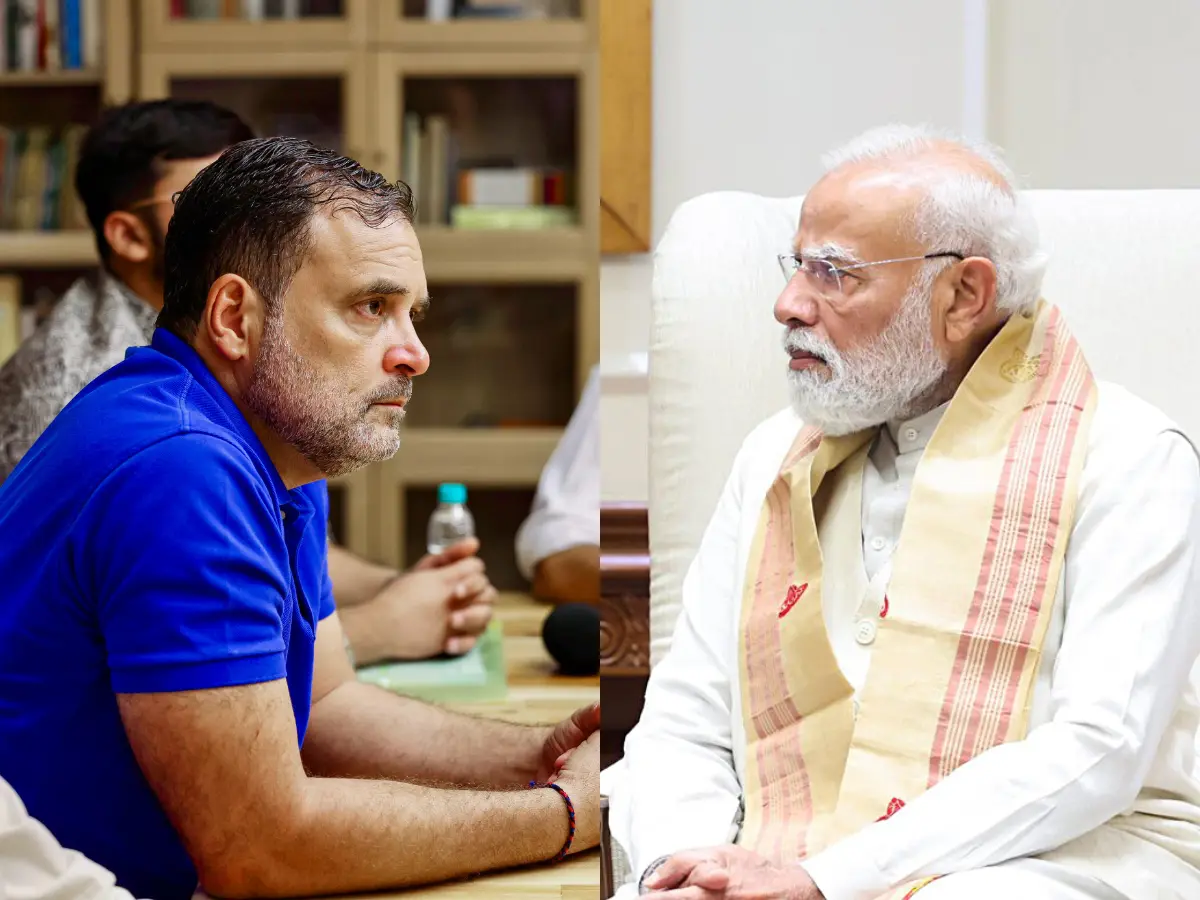
Lok Sabha Leader of Opposition (LoP) Rahul Gandhi, Indian PM Narendra Modi Photograph: (Combination created using images from ANI)
Rahul Gandhi has claimed that Prime Minister Narendra Modi could impose an Emergency-like situation within a year. Scroll down to understand what an Emergency actually is, how it can be imposed, and whether such a scenario is constitutionally possible.
Lok Sabha Leader of Opposition (LoP) Rahul Gandhi on Wednesday (Jun 3) alleged that Prime Minister Narendra Modi might impose a national emergency in India in 2027. The Congress leader, while addressing tribal leaders at an event organised by the Adivasi Congress, issued an ominous warning to Indians, claiming that a "terrible economic tsunami" was approaching. He said that "no one can stop" it after the ruling BJP removed "India's shock absorbers" against the volatilities of the international economy.
Modi to impose emergency in 2027?
Rahul Gandhi aka RaGa claimed that the system "once controlled" by Modi was "collapsing" and that as public pressure increases, it will become risky for the ruling government. “Within India, there is an institutional revolt taking place inside the system. You think that the Election Commission is fully controlled…Messages from the Chief Election Commissioner are reaching me...The heads of the intelligence system, members of the senior judiciary, all of them are revolting. They are giving us information,” he said.
Also read | Malviya Nagar hotel fire: Dead couple found locked in final embrace, waiting for rescue that never came
Gandhi further claimed that the entire system was shaking from within and suggested that by next year, the Modi government "may try to suppress public pressure and impose something like an Emergency. That is possible".
“He (Modi) has to feel uneasy because he knows that the system he once controlled is collapsing, and that very system is feeding information to me. This is the dynamic that is unfolding. And mark my words – in my estimation, within a year, Modi will no longer be Prime Minister," said Gandhi.
Trending Stories
)
)
)
&im=FitAndFill=(700,400))
)
)
)
)
)
)
)
)
)
)
)
)
)
)
)
&im=FitAndFill=(700,400))
)
)
)
)
)
)
)
)
)
)
&im=FitAndFill=(700,400))
)
)
)
&im=FitAndFill=(700,400))
Is it possible? How is an Emergency imposed in India? WION Decodes.
What is an Emergency under the Constitution?
The word "Emergency" carries a special significance in Indian politics. For many Indians, it immediately brings back memories of June 25, 1975, when then Prime Minister Indira Gandhi imposed a nationwide Emergency that lasted 21 months and remains one of the most controversial chapters in the country's democratic history.
The Constitution of India gives the Union government special powers to deal with extraordinary situations that threaten the nation.
These powers are contained in Part XVIII of the Constitution (Articles 352 to 360), which provides for three kinds of emergencies:
1. National Emergency (Article 352)
This can be declared when India's security is threatened by:
- War
- External aggression
- Armed rebellion
Before 1978, the term "internal disturbance" was used instead of "armed rebellion," making it easier for governments to invoke Emergency powers.
2. President's Rule (Article 356)
This is imposed when a state government cannot function according to constitutional provisions. It is often called a “State Emergency.”
3. Financial Emergency (Article 360)
This can be declared if India's financial stability or credit is threatened.
Interestingly, India has never imposed a Financial Emergency.
How is a National Emergency imposed?
The process begins with the Union Cabinet recommending the proclamation to the President. The President can then proclaim an Emergency. However, the declaration must be approved by both Houses of Parliament within one month.
Once approved, it remains in force for six months and can be extended repeatedly with parliamentary approval.
During a National Emergency:
- The Centre gains sweeping powers over states.
- Certain Fundamental Rights can be restricted.
- Parliament can legislate on subjects in the State List.
- The federal balance shifts significantly towards the Union government.
When was National Emergency imposed in India?
India has witnessed three National Emergencies: 1962, 1971 and 1975.

