Right or controversial? Kerala proposes period leaves for schoolgirls and there's a debate over it

&imwidth=600&imheight=450&format=webp&quality=medium "Right or controversial? Kerala proposes period leaves for schoolgirls and there's a debate over it")
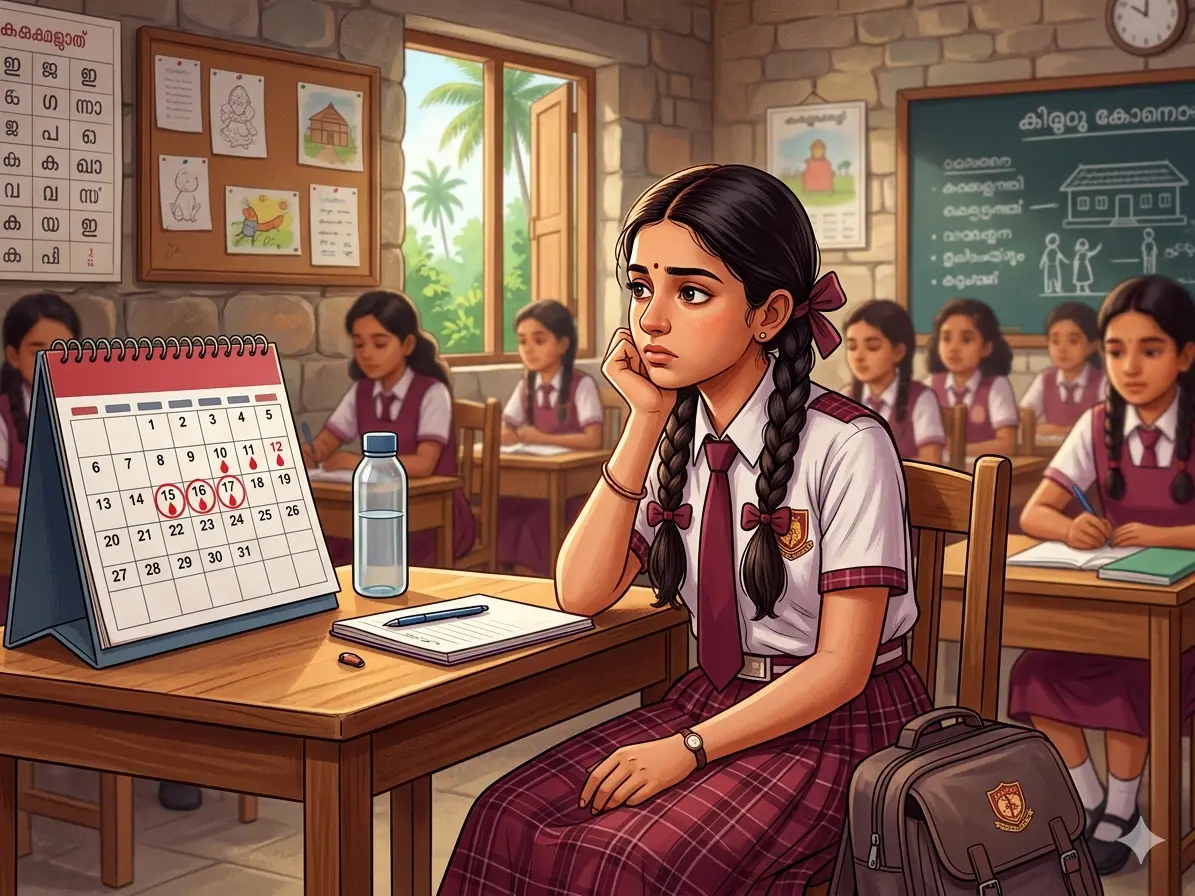
Image for representation only Photograph: (AI Generated)
Kerala’s proposed period leave for schoolgirls sparks a debate on whether true equality means treating everyone the same or accommodating biological realities to support students facing severe menstrual pain.
Somewhere in India, a schoolgirl wakes up with severe menstrual cramps. Her exam is scheduled for the day. She can barely get out of bed. Should she be expected to attend school anyway? Kerala's proposal to grant period leave to schoolgirls has triggered exactly this debate. For perhaps the first time, a state government has forced the Indian society to confront a question that many families, schools and policymakers have long avoided - should menstrual pain be treated like any other health issue?
The answer appears obvious at first. After all, periods are not a choice.
For some girls, menstruation means mild discomfort. For others, it means nausea, headaches, exhaustion and cramps severe enough to make sitting through a classroom lesson feel impossible.
Research suggests this is not a small problem.
A study published in the National Library of Medicine found that around 40 per cent of schoolgirls surveyed in Delhi had missed classes during menstruation. Another study conducted across schools in Maharashtra, Tamil Nadu and Chhattisgarh found that nearly half of menstruating girls struggled to concentrate in class during their periods.
Trending Stories
)
)
)
)
)
)
)
)
)
)
)
)
)
)
)
)
)
)
)
)
)
)
)
)
)
)
)
)
)
)
)
)
)
)
)
)
)
These numbers tell a story. Not all students are looking for a day off. But of students trying to learn while battling pain. And yet, the debate does not end there.
Because every policy comes with a question. If girls are given menstrual leave, does it empower them? Or does it risk sending a message that girls need special treatment to keep up?
What’s the concern?
Some argue that period leave could unintentionally reinforce stereotypes that women and girls are less capable than their male counterparts. Others worry that students taking menstrual leave could face judgment from classmates or teachers. Hence, ironically, a policy designed to reduce discomfort could create a new stigma. Then there is a more uncomfortable question. Why has the debate become centred around leave in the first place?
For many experts, the bigger issue is not whether a girl can stay home for a day. It is whether schools are equipped to support her when she comes to school. Are toilets clean? Are sanitary products available? Do teachers understand menstrual health? Can students seek help without embarrassment?
Perhaps the discussion about leave is really exposing something deeper - the education system still struggles to accommodate a biological reality experienced by half the population in the country.
Should equality mean treating everyone exactly the same?
According to UNFPA's analysis of NFHS-5 data, India is home to around 116 million adolescent girls. That means millions of students navigate exams, attendance records and classroom expectations while dealing with menstruation every month. The question facing India is, therefore, much bigger than Kerala's proposal. Should equality mean treating everyone exactly the same? Or does true equality sometimes require recognising that different students face different challenges?
There may not be a perfect answer.

