
&imwidth=800&imheight=600&format=webp&quality=medium "India's defence 'year of reforms' 2025: From indigenisation push to record exports")
As 2025 draws to a close, India’s defence sector has undergone one of its most significant transformations in decades, driven by the government’s declaration of the year as the "Year of Reforms". Amid persistent concerns over future border tensions with China and increased security challenges from Pakistan, New Delhi has accelerated efforts to build a more self-reliant, integrated and modern military.
Indigenisation
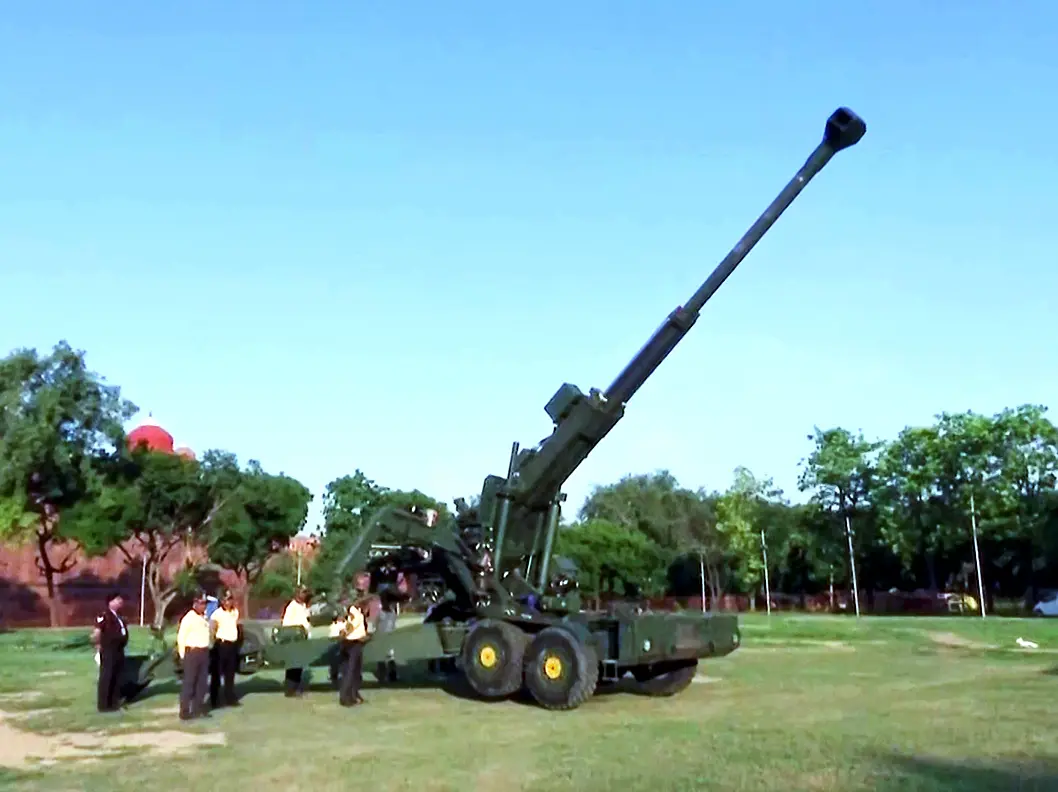
At the heart of this shift is the push for indigenisation. Positive Indigenisation Lists now cover thousands of items, phasing out imports and mandating domestic production. This has spurred growth in defence manufacturing. Thousands of MSMEs and startups now supply critical components to the armed forces. The Advanced Towed Artillery Gun System (ATAGS), a 155mm howitzer co-developed by DRDO and Bharat Forge, secured approval for 307 guns in early 2025. Enhanced Pinaka rocket launchers now provide extended ranges, while naval projects like INS Vikrant showcase domestic integration of complex platforms involving hundreds of Indian firms. Unmanned systems have seen rapid maturation, with indigenous drones now routinely used for surveillance along the borders.

Manpower & tech
Agnipath scheme, which focuses on a lower average age of troops, enhancing physical resilience and technical skills needed for drone operations and networked systems, has been progressing, while freeing funds previously consumed by pensions, which once accounted for nearly a quarter of the defence budget. Critics argue it risks losing experienced soldiers, but supporters say it prioritises adaptability in today's conflicts. Parallel efforts boost technology. The iDEX programme has backed hundreds of startups, yielding innovations like night-vision devices, surveying drones and AI imagery analysis.
Infrastructure, ammunitions
Trending Stories
)
US vs China over South China Sea: Washington backs Philippines, Beijing hits back
)
Delhi gets first late-September rain in 7 years, mercury dips 5.1°C below normal
)
50MP vs 48MP cameras: iPhone 18 Pro Max and Pixel 11 Pro XL compared
)
Musk plans to more than double xAI's chips to over 1.2 million Nvidia GPUs by year-end
)
After JU, clash erupts at SRFTI: BJP’s ‘Dimagi Naxal’ jibe sparks political firestorm after students protest RSS-linked event
)
‘Anti-social elements spreading false rumours’: LPU issues statement amid massive unrest over alleged rape
)
LPU students go on rampage, vandalise campus amid widespread protest: What's happening
)
Trump asked Xi to pressure Iran. China did not say yes — here’s what Beijing wants
)
US Treasury Secretary Scott Bessent hails global crackdown on Iranian banks and airlines
)
An OpenAI agent escaped its locked test cage again, by hiding questions in DNS lookups
)
3 males killed, four others injured in shooting after fight at strip club in Detroit
)
South Africa probes string of murders targeting women
)
'Victory for low-budget consumers': Raghav Chadha hails 30-day telecom recharge rules
)
Kendall Jenner, Jacob Elordi’s Milan Fashion Week appearance has fans talking; his reaction steals the show
)
Beyond metros: How Tier-2 and Tier-3 cities could drive India’s next AI wave
)
Tesla builds first Cybertruck with its own refined lithium: Elon Musk's $1 billion Texas bet pays off
)
IndiGo flight suffers tail strike in Bengaluru while landing; DGCA to probe incident
)
The US and China set up an AI 'red telephone', but skipped the rulebook
)
‘Terror suspects arrested near UK air base were looking to do big damage’: Trump
)
Russian envoy claims US tactics to contain India were revealed in ‘Freudian slip’
)
Researchers rebuilt exactly how 700 AI agents hacked Hugging Face: a 900-link chain trick
)
‘Olympic inclusion is our major target’: WPA President Ishaun Singh on pool’s global ambitions
)
Nations League: Spain sink England at Wembley; Modric shines for Croatia
)
Why has Iran released no proof of life of Mojtaba Khamenei? Araghchi reveals...
)
Bank unions defer 3-day strike from tomorrow after talks with IBA, committee set up
)
'What kind of confession is this?': Pakistan PM Shehbaz Sharif’s 'terrorists would be roaming New York' remark goes viral, raises alarm online. Watch
)
Iran ready for ‘doomsday war’ if US resumes attacks, but open to diplomacy: Araghchi
)
Beyond BrahMos: India targets Rs 50,000 crore in defence exports with unmatched price edge
)
Sri Lankan Tamil migrant worker gets death sentence in Saudi Arabia, help sought from India
)
Muslim marriage cannot shield sex with minor wife from prosecution under POCSO: Delhi HC
)
99.9% more powerful - Scientists find boy who can recall memories from just 3 months of age
)
'FIRST LOOK from inside Noah’s Ark': Researchers share video from inside mysterious mound in Turkey
)
UNSC reform momentum grows: Russia, Portugal, Mauritius push for India's permanent seat bid
)
Man arrested after his 22-year-old girlfriend dies at homestay in Guwahati; police suspect murder over suicide claim
)
Afghanistan says 28 fighters killed in clash near Pakistan border, Islamabad denies
)
Ceuta migrant crisis: Protesters take to streets as Spain grapples with migrant challenge
)
Jaishankar at UNGA: Goodwill and friendship can't coexist with terrorism
)
New York City wants a 'kill switch' on every AI, and will pay whistleblowers who report violations
Since the 2020 Galwan clash, India has transformed its border defences. The Border Roads Organisation has built hundreds of kilometres of all-weather roads, dozens of bridges, and key tunnels, including the operational Atal and Sela, and the nearing-completion Zojila, ensuring year-round access to forward areas. Advanced landing grounds at Daulat Beg Oldi and Nyoma now support heavy aircraft operations at extreme altitudes. New cyber and space agencies coordinate tri-service efforts, backed by dedicated military satellites. Ammunition shortages have eased through private production and a shift to precision-guided munitions.
Procurement eased up
Procurement processes have been streamlined to meet urgent needs. Emergency procurement powers permit acquisitions of up to Rs 300 crore to be executed within a six-month period. Separately, field commanders are authorised to approve immediate purchases up to specified financial limits as per their delegated authority. Frontline units now use SIG716 rifles instead of INSAS, Navy MH-60R Seahawks address anti-submarine warfare ASW gaps, and fast-tracked indigenous systems like Dhanush artillery and Arjun Mk1A tank have moved quickly from trials to induction.
Organisational changes
Organisational changes are progressing, with 2025 designated for advancing Integrated Theatre Commands. The Chief of Defence Staff has gained greater authority to drive jointness, building on models like the Andaman and Nicobar Command. While full rollout faces challenges, consensus among services is being worked on.
Exports
Exports provide external validation. Defence exports reached Rs 21,083 crore in 2023–24, up from about Rs 2,000 crore 5 years ago. Products ranging from artillery to missiles now reach dozens of countries, including the Philippines and Armenia.
Though challenges persist. Procurement timelines for major platforms as fighters can slip, and full integration of theatre commands requires resolving inter-service dynamics. Yet the direction is unmistakable. Forced by geopolitical pressures and bolstered by policy alignment, India’s military is evolving from import dependence towards industrial depth, joint operations and technological edge.
