Coronation Park in Delhi: A site of lost colonial relics and forgotten British glory

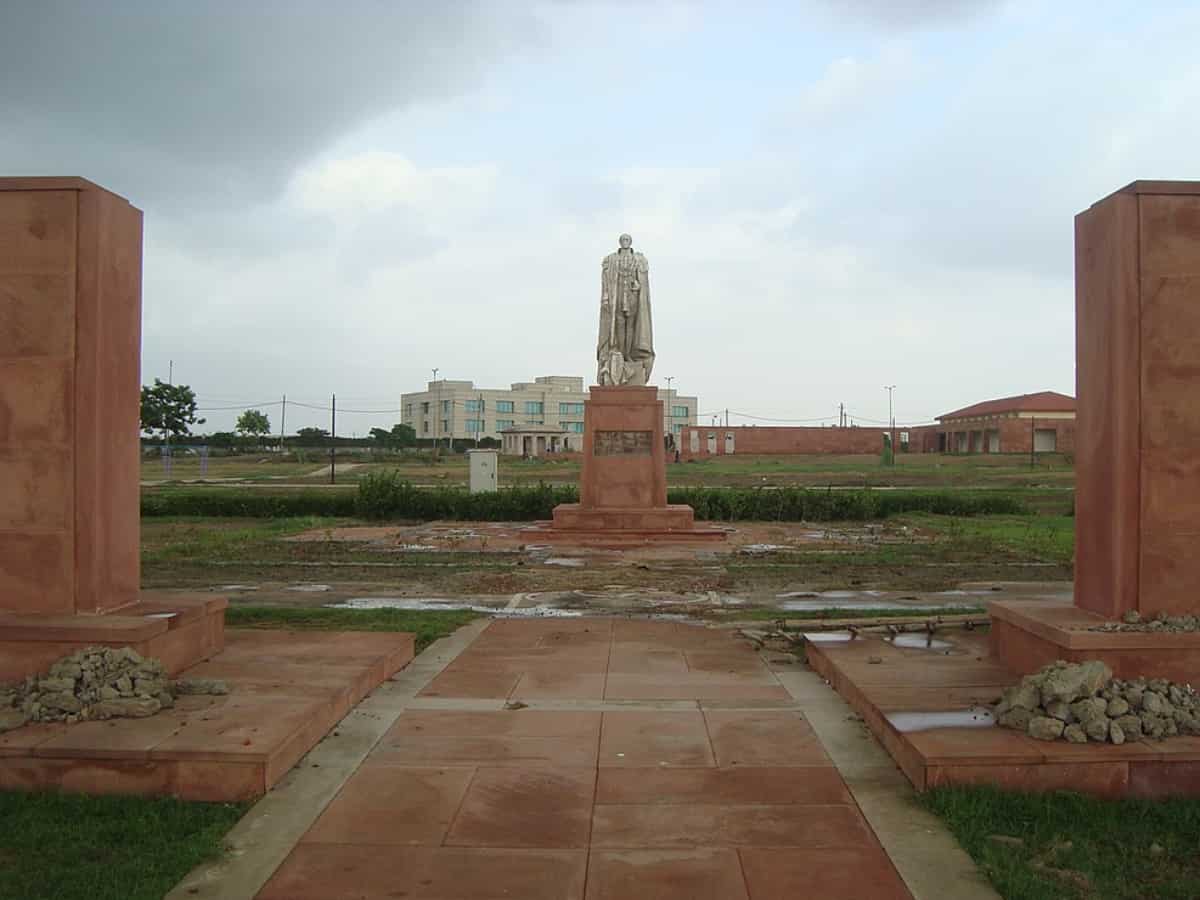
Coronation Park, New Delhi
Once the symbol of Britain’s imperial grandeur, the Coronation Park in Delhi is now an abandoned site for the locals to take strolls, go cycling and scribble the old walls with their names. The 52-acre land was built as a memorial to remember the legacy of the mighty British Empire, but today the site stands as a lost relic of the Raj.
The park is located 17 km away from the hustle and bustle of Connaught Place and 19 km from India Gate, in New Delhi’s Burari area. The landscaped site that is maintained by the Delhi Development Authority (DDA) is dotted with monuments, paved pathways, plants and trees.
A large tricolour flag stands tall at the entrance of this British-era memorial which welcomes visitors with free entry.
The Coronation Park was named so, as it witnessed three coronations of British monarchs.

First in 1877, when Queen Victoria was proclaimed the Empress of India, then, in 1903, when the accession of King Edward VII was celebrated. The last coronation at the site was of King George V as Emperor of India in 1911. The last celebration was attended by all princely states.
Relic of lost history
)
US trade tariff: 100% tariff targets Russian buyers amid trade tensions
)
Pakistan boycotts chess match against Israel at Olympiad
)
Prime Minister Narendra Modi's birthday: Tributes pour in from President Murmu and leaders
)
WATCH | Terrifying dashcam footage shows final moments before NBC4 helicopter crashes in Los Angeles, killing three
)
Strapped to flight seat with duct tape: Passenger claims no memory of mid-air outburst
)
Shahzad Bhatti Network declared terrorist organisation under UAPA: Govt order
)
Veteran actor Anant Nag honoured with Indian cinema’s highest award
)
Trump praises India’s Opium crackdown, hails anti-drug efforts
)
AUS vs SA: Steve Smith still gets 'little flashbacks' from sandpaper gate
)
Alex Saab, ally of Venezuela's Maduro, pleads guilty in US corruption case
)
Trump calls Canada-EU associate membership plan ‘laughable’ and threatens 'very serious tariffs'
)
Formula One reveals the 2027 race calendar; Monaco to host sprint race for the first time
)
Lionel Messi for 2026 Ballon d’Or over Mbappe and Yamal, says Diego Simeone
)
Former India player Diana Edulji wants Smriti Mandhana to replace Harman as skipper at the earliest
)
‘Imagine 50 AI fighters cornering one manned jet’: India’s mobbing doctrine eyes a new era of air warm
)
US Treasury rallies global financial institutions for Op Economic Outcast to isolate Iran
)
India breaks silence on US Russia sanctions bill, 100% tariff threat: ‘Committed to energy security’ for 1.4 billion
)
Pakistan: Imran Khan's sons Kasim & Sulaiman claim their father is 'tortured' in jail
)
Daayra movie review: Kareena Kapoor, Prithviraj Sukumaran shine in Meghna Gulzar’s cop-versus-cop crime thriller
)
Hong Kong unveils 11 new measures to boost birth rates, offers higher cash bonuses and housing perks
)
US House votes 417-3 to pass Ratepayer Protection Act targeting AI data center electricity costs
&im=FitAndFill=(700,400))
New OTT releases this week (September 14-20, 2026): Lust Stories 3, Waiting Hai, Irumudi- 5 new titles coming on Netflix, Prime Video and more
&im=FitAndFill=(700,400))
Suriya and Jyothika say ‘I do’ again after 20 years! See their dreamy wedding pics
)
OpenAI reveals 6 fresh cases of AI models going rogue: 'You do not answer to corporations or governments'
)
Saudi Vs Houthis: Yemeni military rebels clash with Houthis
)
Hockey: Pakistan urges AHF to move Asian Champions Trophy out of India over security concerns
)
No Pandya as Auqib Nabi earns maiden ODI call-up; Mayank returns for WI T20Is| check full squads
)
Protests erupt over migrant housing plan in Piddington
)
Sydney Sweeney defends provocative ad choice, the internet is still not impressed
)
Bigg Boss 20: Mahhi Vij reveals she lost Yuva role to Kareena Kapoor; 'didn’t work out in my favour'
)
The Early Spring season 2 is happening, but fans have one request - 'don't change the actors'
)
Katrina Kaif’s postpartum weight is not the problem; your gaze is
)
Fed raises rates for first time in 3 years, Kevin Warsh defies Trump as inflation mounts
)
Saudi vs Houthis: Riyadh claims to have shot Houthi drone targeting Mecca
)
Taiwan seeks deeper India ties as direct flights restart soon and chip projects advance
)
Pakistan naval vessel returns to harbour with 'severe damage' after collision with Indian warship in Arabian Sea
)
Abhishek Sharma rises to No. 2 in T20Is; ENG’s Robinson 3rd after record Pakistan Tests
)
Trump gets new power to hit India, China with up to 100% tariffs as US Senate clears Russia sanctions bill
)
All Indian goods to get duty-free access to New Zealand
)
Europe wants a common playbook for security threats, seeks security beyond NATO
Delhi was chosen as the site of the park because the city boasted a great historical legacy for such royal activities. It held many durbars, an Indian imperial-style mass assembly, which was a perpetuation of a tradition by the ousted Hind and Mughal rulers.
The first Durbar was initiated by Lord Lytton, the then Viceroy of India. It was held in 1877 to mark the proclamation of Queen Victoria as Empress of India and to instil “order and discipline” in Delhi. The Durbar was an extravaganza of pomp and ceremony including an elephant parade in the presence of 70,000 people.

Apart from coronations and durbars, the Queen-Empress, Mary of Teck, used to bestow the Kaisar-i-Hind medal upon all the Governors of the provinces at the site. The Queen also laid the foundation stone for the Viceroy’s residence, which was later changed to being a flood-prone area.
Graveyard of statues and missing plaques
The park has the largest and tallest statue of King George V, which was moved here in the mid-1960s from a site opposite India Gate in the centre of New Delhi. The statue stands opposite the obelisk called the Coronation Memorial, which commemorates the 1911 Durbar when George V laid the foundation stone for the new capital city of New Delhi.
The obelisk is made of sandstone and stands erect over a high-rise square plinth with steps on all four sides. Giving this structure company, there are statues of four Viceroys in stone- Lord Hardinge, Lord Willingdon, Lord Irwin, and Lord Chelmsford.

Some of these statues have missing plaques or washed-away letters on them. Visitors have used the plinths to scribble their names all over.
The desolate park stands in stark contrast to the heavy traffic of northern Delhi's urban sprawl as people are generally unaware of its place in the history of the country.
Conservation measures
In 2005, the Indian National Trust for Art and Cultural Heritage (INTACH) and the Government of Deli resolved to restore Coronation Park, which was in a state of neglect.
DDA prepared a Draft Zonal Development Plan for the area to develop it as a tourist spot since it is very close to the National Highway 1 (NH1) bypass. In 2017, however, after missing several project deadlines, the park largely remained in a state of neglect.
WATCH WION LIVE HERE
You can now write for wionews.com and be a part of the community. Share your stories and opinions with us here.