'You saw the consequence in Nepal', says Indian Supreme Court on petition seeking online regulation

&imwidth=600&imheight=450&format=webp&quality=medium "'You saw the consequence in Nepal', says Indian Supreme Court on petition seeking online regulation")
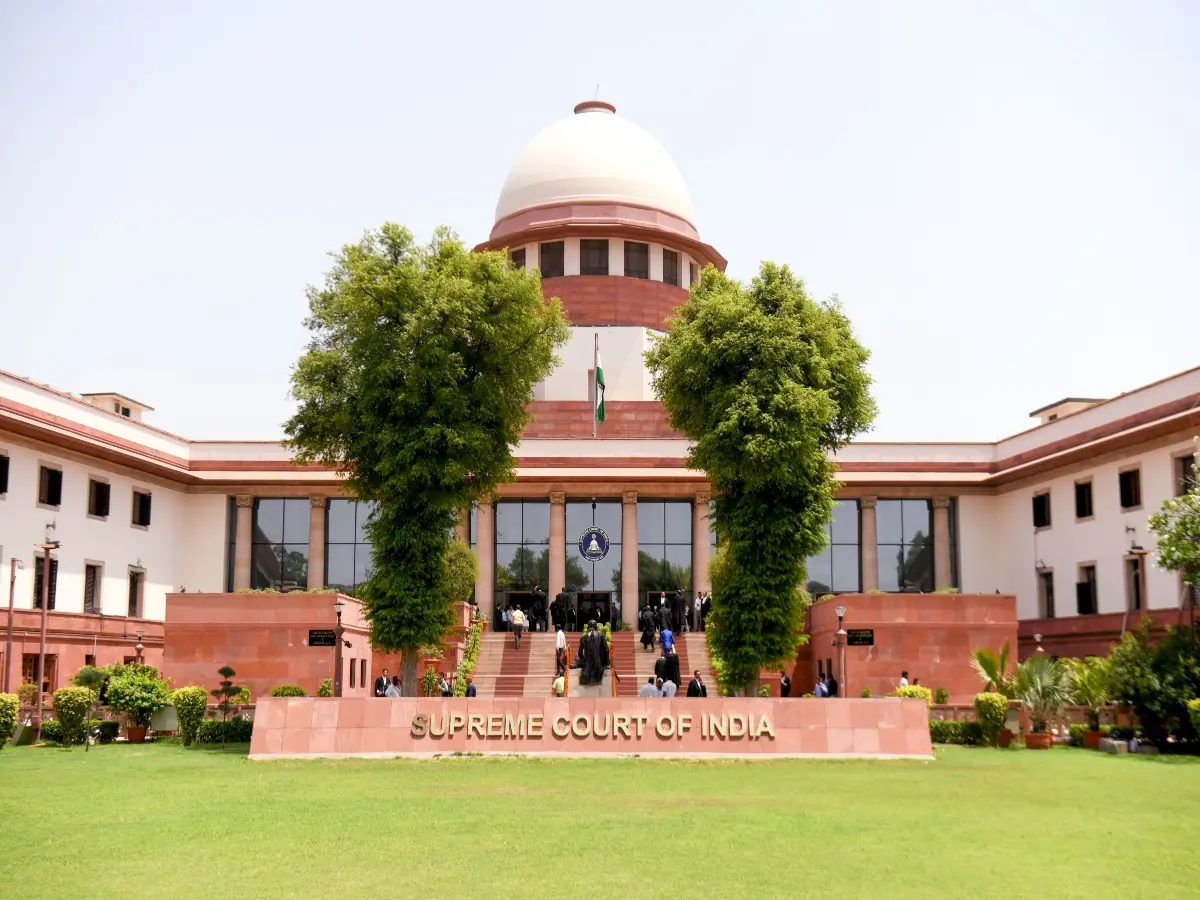
Supreme Court of India Photograph: (ANI)
The petition that sought a policy to curb access to pornography stated that watching such content online adversely affects individuals and society, especially the young ones.
Regulation of online content has been a demand of some sections of the society in India for a long time. Petitions in this regard have often appeared before judges in the lower and higher courts. But the Supreme Court on Monday, November 3, while hearing a petition seeking online regulation, including a ban on pornographic material, drew attention to the Nepal GenZ protests of September that led to massive protests in the country that toppled the government due to curbs on social media.
A bench of Chief Justice BR Gavai and Justice K Vinod Chandran while hearing the petition said, "You know there was an attempt to ban social media in Nepal and you saw what was the consequence".
The petition that sought a policy to curb access to pornography stated that watching such content online adversely affects individuals and society, especially those in the ages of 13 and 18.
What was the Nepal GenZ protest
Nepal witnessed a youth-led protest over digital censorship that soon spiralled into a full-blown political crisis. Prime Minister KP Sharma Oli stepped down. Several ministers were assaulted, chased, and their homes were set afire by angry protesters. Rajyalaxmi Chitrakar, wife of former PM Jhalanath Khanal, died after her home was torched. Protesters also stormed and set fire to key government buildings, including Parliament, the PM’s residence, and the President’s house.
While the trigger was a sweeping government move on September 4, when 26 social media platforms, including Facebook, Instagram, YouTube, Whatsapp and X were blocked, protesters, mostly youngsters, also came to the streets over rising corruption, a lack of accountability and inequality from the top echelons of the nation. The protets were termed by many as the ‘Gen Z Protest’ or even the ‘Gen Z Revolution’.
)
)
)
)
)
)
)
)
)
)
)
)
)
)
)
&im=FitAndFill=(700,400))
)
)
)
)
)
)
)
)
)
&im=FitAndFill=(700,400))
)
)
)
)
)
)
)
)
)
)
)
