Legendary Urdu poet Bashir Badr passes away at 91 at Bhopal residence

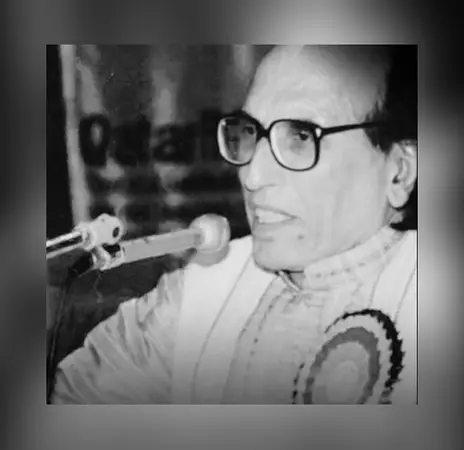
Legendary Urdu poet Bashir Badr passes away at 91 at Bhopal residence Photograph: (Credit: X/@Rekhta)
Legendary Urdu poet and Padma Shri awardee Dr. Bashir Badr has passed away at 91 at his Bhopal residence. Read about his rich literary legacy, iconic ghazals, and tributes pouring in from the nation.
Acclaimed Urdu poet, scholar, and Padma Shri awardee Dr Bashir Badr passed away at 91 on Thursday (May 28) at his residence in Bhopal. According to news agency ANI, his son Taiyeb, the veteran literary icon breathed his last following a prolonged illness compounded by age-related concerns in recent years. He is survived by his wife, Raahat, and his children.
Born on February 15, 1935, in Ayodhya, Uttar Pradesh, Badr was widely regarded as one of the most prominent and influential voices of the modern ghazal. An alumnus of Aligarh Muslim University (AMU), where he completed his PhD and later served as a lecturer, Badr dedicated over seven decades to literature.
Also read: Remembering Manto: Was he an obscene writer?
Badr revolutionised contemporary Urdu poetry by replacing complex traditional vocabulary with accessible, everyday language. His couplets became deeply embedded in Indian pop culture and political discourse, frequently cited by leaders inside the Parliament. Among his most legendary lines is, "Ujale apni yaadon ke hamare saath rehne do, na jaane kis gali mein zindagi ki shaam ho jaye" which translates to “Leave the brightness of your memories with me, who knows in which street life's evening will fall.”
His famous 1972 couplet, "Dushmani jam kar karo lekin ye gunjaish rahe, jab kabhi hum dost ho jayein to sharminda na hon," written around the time of the Shimla Agreement, remains a definitive commentary on diplomacy and conflict resolution.
Tragedy struck Badr during the 1987 Meerut communal riots, when his house was burned down, destroying much of his unpublished work. He subsequently relocated to Bhopal.
Trending Stories
&im=FitAndFill=(700,400))
)
)
)
)
)
)
)
)
)
)
)
)
)
)
&im=FitAndFill=(700,400))
)
)
)
)
)
)
)
)
)
)
)
)
)
&im=FitAndFill=(700,400))
Badr authored more than seven poetry collections. For his immense literary contributions, he was honored with the Sahitya Akademi Award in 1999 for his collection Aas, and received the civilian honor of Padma Shri the same year.

