
&imwidth=800&imheight=600&format=webp&quality=medium "Trump tariffs bite into Asia's growth as ADB flags economic chill")
Is developing Asian countriesgrowth engine is sputtering?
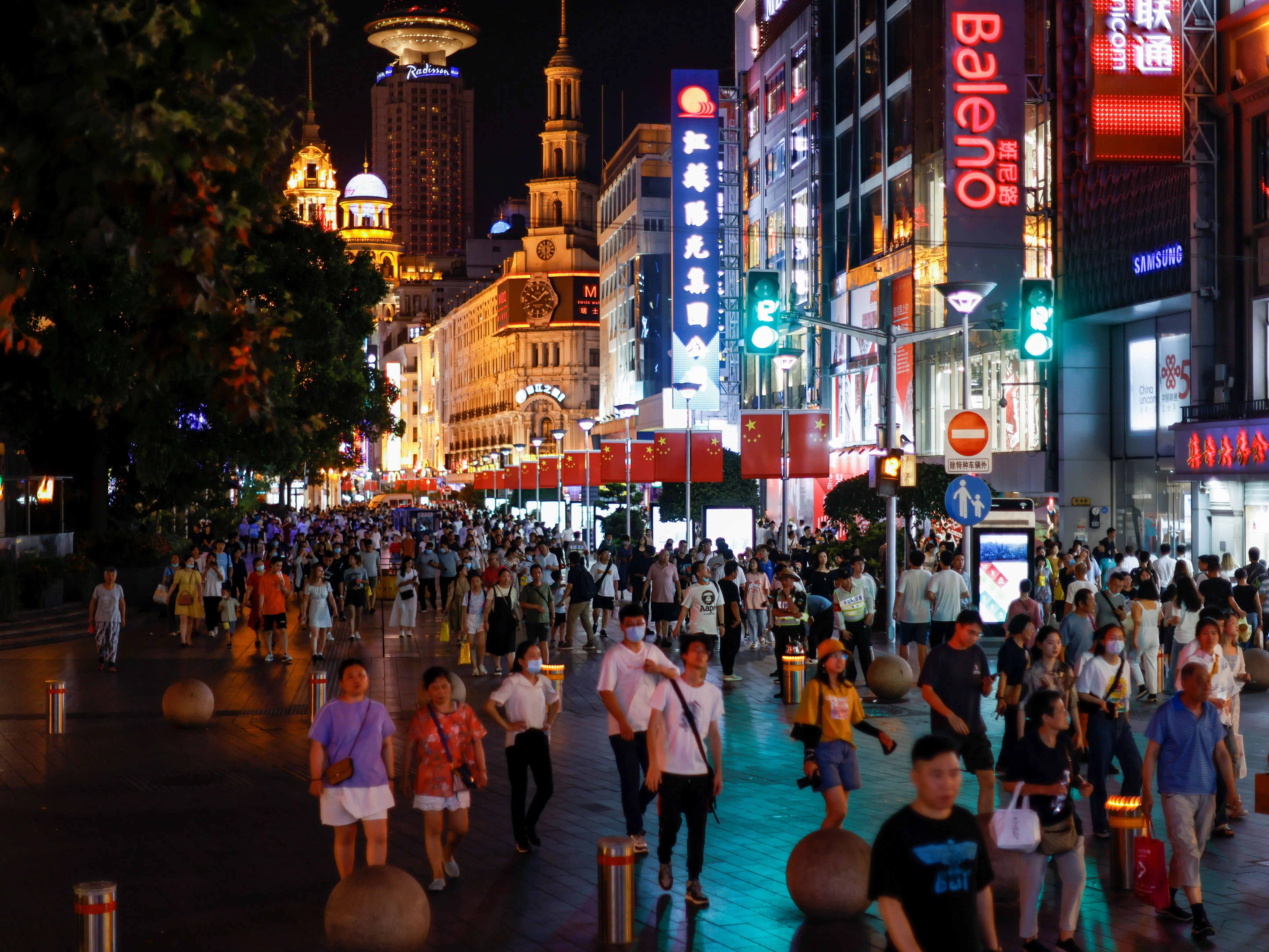
On Wednesday, citing escalating US tariffs, China’s fragile recovery, and rising global uncertainty, the Asian Development Bank (ADB) lowered its growth forecast for the region for both 2025 and 2026.
In its latest Asian Development Outlook which got released on Wednesday, the ADB cut its 2025 growth forecast for the region from 4.9 per cent to 4.7 per cent, and trimmed its 2026 projection from 4.7 per cent to 4.6 per cent. The bank in its report warned that domestic demand across much of Asia is expected to weaken as countries struggle with tighter financial conditions, supply chain disruptions, and the economic fallout of geopolitical tensions.

“Asia and the Pacific has weathered an increasingly challenging external environment this year,” said ADB Chief Economist Albert Park, adding, “But the economic outlook has weakened amid intensifying risks and global uncertainty,” according to Reuters. Among the most immediate threats are tariff increases announced by US President Donald Trump. A new 15 per cent tariff on Japanese imports, reduced from a threatened 25 per cent, and a 19 per cent tariff on Philippine goods are just the latest in a broader push that has reshaped global trade flows. Since April, nearly all US trading partners have faced a baseline 10 per cent tariff, with many bracing for more from August 1. This sudden wave of protectionism has forced the ADB to revise down its regional projections.
Southeast Asia worst hit
Long seen as a regional growth engine, Southeast Asia is now expected to grow by only 4.2 per cent in 2025 which is down sharply from the 4.7 per cent projected in April. For 2026, the outlook has also weakened to 4.3 per cent, signalling that this isn’t a short-term shock but part of a broader structural slowdown.
Trending Stories
66 years of the Indus Waters Treaty: How India and Pakistan settled a bitter river dispute
)
West Indies Squad for India Series: Hetmyer included for T20Is, Holder rested
)
Trump says he'll build an 'AI Force' and appoint a czar, for 'high IQ' people only
)
US-Iran war: Tehran draws red lines — seven demands before any peace talks
)
Trump announces ‘AI Force’ as debate grows over AI risks and regulation
)
Mark Carney mimics Trump in hilarious moment over C$70 billion clean-energy investment; room erupts in laughter
)
9 women found dead near Johannesburg: South Africans rally, demand 'enough' to femicide
)
Gaza under attack: Health chief's son killed in IDF strikes
)
Saudi vs Houthis: Houthis claim missiles & drones used in attack on key Saudi sites
)
‘End of my career...’: NSA Doval recalls tense Sikkim mission when China captured Indian intelligence team
)
US-Iran war: Tehran sets seven conditions to re-engage in talks with US
)
AI actress Tilly Norwood glitches mid-interview, switches from English to Chinese | Watch
)
Arvind Kejriwal, family members, Delhi CM Rekha Gupta get SIR notices
)
Russia-Europe tensions: Polish PM warns Russian attacks could test NATO's unity
)
Russia holds first parliamentary elections since the beginning of the Ukraine war
)
Sikh bus driver assaulted, bus stolen and rammed into cars in England; video surfaces
)
China now makes advanced memory chips without the machines it was banned from buying
)
Aravana prasadam shortage at Sabarimala temple in Kerala triggers protests, TDB questioned
)
Report: Iran rebuilding Taleghan 2, nuclear site tied to past weapons research, hit twice by Israel
)
Nigeria: Protesters take to the streets, police fire shots
&im=FitAndFill=(700,400))
Meet top 5 Indian batters with fastest T20I centuries
)
Ed Sheeran addresses Macklemore's removal, Gaza conflict during Philadelphia concert: 'I cannot hide how I feel'
)
Russia's deadly Ukraine strikes kill 2 in Sumy, hit Dnipro mall
)
China may have gained access to US's classified F-35 jets; parts meant for repairs diverted to Hong Kong, sparking Pentagon inquiry
)
The Verdict | When precision fails: US commits war crime in Minab school strike, UN finds
)
'Were you here to sell chickpeas?': Wasim Akram criticises Babar Azam's captaincy
)
‘Will go to any extent’: Pakistan vows to defend Saudi Arabia amid Houthi attacks
)
Trump defends AI amid growing alarm, announces new 'AI force' and promises an 'AI czar'
)
Several petrol pumps, other businesses to refuse UPI payments above Rs 2,000 from Oct 16: Is it legal?
&im=FitAndFill=(700,400))
How many F-35s does Britain, Japan and Israel have?
)
Kampala-Ankara rift deepens: Uganda suspends military ties, seeks Fred Lumbuye's extradition
)
Raphinha hat-trick powers Barcelona to 3-1 win over Sevilla in La Liga
)
S Jaishankar, former Army chief among high-profile names issued Delhi SIR notices
)
Man breaks open wall hiding hundreds of books since 15 years
)
EXCLUSIVE | Singer Hanita Bhambri on her Toxic debut, working with Vishal Mishra and more
)
Harry Brook targets long reign at top of T20I rankings after Sri Lanka sweep
&im=FitAndFill=(700,400))
‘Not the US or China’: These are the countries leading the world in arable land
&im=FitAndFill=(700,400))
Before Extraordinary Minami Minami, these popular K-dramas got Japanese versions
)
Iran sets 7 conditions to end war with US: What are Tehran’s demands?
)
Reacher star Alan Ritchson opens up about alleged blackmail, suicide attempt during difficult period
)
Thailand’s 2025 growth forecast has been slashed from 2.8 per cent to just 1.8 per cent, and is expected to dip further to 1.6 per cent in 2026. Similarliy, Malaysia's growth fell from 4.9 per cent to 4.3 per cent in 2025, before sliding to 4.2 per cent the following year. Singapore is forecast to slow to 1.6 per cent in 2025, and further to 1.5 per cent in 2026.
The Philippines which is now facing a new 19 per cent US tariff, is forecast to grow 5.6 per cent in 2025. Which is slightly down from earlier projections, before rising modestly to 5.8 per cent in 2026. Vietnam stands out as one of the few resilient players, with 2025 growth revised upward to 6.5 per cent, though this is still lower than its pre-COVID trajectory.
China slows, India holds steady
Like Southeast Asia, East Asia's economic outlook has also darkened. The ADB now sees growth in the subregion easing to 4.3 per cent in 2025, slightly lower than April’s 4.4 per cent. The figure for 2026 holds at 4.0 per cent. China’s GDP forecast remains at 4.7 per cent for 2025, unchanged from April, but reflects a deep cooling from the 5.4 per cent growth seen in 2023. The world’s second-largest economy is grappling with structural challenges, from a weak property market to sluggish consumer spending. Its 2026 growth is expected to remain flat at 4.3 per cent.
In contrast, South Asia, led by India, continues to outperform. While the region’s overall growth is expected to slow slightly to 5.9 per cent in 2025, India alone is projected to expand by 6.5 per cent, up from April’s 6.7 per cent but still one of the fastest rates globally. The 2026 estimate for India stands at 6.7 per cent, driven by robust consumption and services.
Asian economic growth snapshot
The latest ADB projections offer a mixed picture for developing Asia. While some economies like India and Vietnam continue to perform relatively well, much of the region faces slowing momentum, particularly Southeast Asia and China. Here’s a detailed look at the updated forecast.
| Region / Country | 2023 | 2024 | 2025 (Apr) | 2025 (Jul) | 2026 |
| Developing Asia | 5.5 | 5.1 | 4.9 | 4.7 | 4.6 |
| Caucasus & Central Asia | 5.4 | 5.7 | 5.4 | 5.5 | 5.1 |
| East Asia | 4.8 | 4.7 | 4.4 | 4.3 | 4.0 |
| China | 5.4 | 5.0 | 4.7 | 4.7 | 4.3 |
| South Asia | 7.8 | 5.9 | 6.0 | 5.9 | 6.2 |
| India | 9.2 | 6.5 | 6.7 | 6.5 | 6.7 |
| Southeast Asia | 4.1 | 4.8 | 4.7 | 4.2 | 4.3 |
| Indonesia | 5.0 | 5.0 | 5.0 | 5.0 | 5.1 |
| Malaysia | 3.6 | 4.9 | 4.9 | 4.3 | 4.2 |
| Myanmar | 0.8 | -0.7 | 1.1 | — | 1.6 |
| Philippines | 6.0 | 6.2 | 5.6 | 5.6 | 5.8 |
| Singapore | 1.8 | 4.4 | 2.6 | 1.6 | 1.5 |
| Thailand | 2.0 | 2.5 | 2.8 | 1.8 | 1.6 |
| Vietnam | 7.1 | 6.6 | 6.3 | 6.5 | 6.0 |
| Pacific region | 4.7 | 4.1 | 3.9 | 3.9 | 3.5 |
Source: Asian Development Bank (ADB), July 2025 Outlook
The biggest downward revisions are concentrated in Southeast Asia, particularly in Thailand, where 2025 growth has been sharply downgraded to just 1.8 per cent from an earlier 2.8 per cent. The Philippines is expected to grow at 5.6 per cent, unchanged from April but still below earlier trends due to new US tariffs. Malaysia’s outlook has weakened too, now expected to grow 4.3 per cent in 2025, down from 4.9 per cent. In East Asia, China’s 2025 projection remains flat at 4.7 per cent, but there’s little hope of a rebound, with 2026 growth also stuck at 4.3 per cent. The ADB signals ongoing structural challenges in China’s real estate sector and weak domestic demand as major concerns.
On the brighter side, India continues to outperform. Even with a modest downward revision, its 2025 growth is forecast at 6.5 per cent, with 2026 expected to rise again to 6.7 per cent, driven by stable consumption and investment-led stimulus. Vietnam has also shown resilience, with the ADB revising its 2025 forecast upward to 6.5 per cent, despite global trade disruptions. The Pacific region is expected to remain subdued, growing 3.9 per cent in 2025 and slowing further to 3.5 per cent in 2026, due to its high dependence on tourism and foreign aid flows, both of which remain volatile.
Inflation pressures ease
While growth is slowing, inflation appears to be moderating. The ADB now expects Developing Asia’s inflation rate to fall to 2.0 per cent in 2025, slightly lower than the 2.3 per cent it projected in April. In South Asia, inflation is expected to ease to 4.4 per cent, with India’s inflation stabilising at 3.8 per cent in 2025 and 4.0 per cent in 2026.
Elsewhere in Southeast Asia, Indonesia’s inflation is forecast to drop to 1.5 per cent in 2025, while Thailand is expected to see inflation at just 0.5 per cent. Malaysia is projected to hold steady at 2.4 per cent, and Vietnam at 3.9 per cent. The outlier remains Myanmar, where inflation could exceed 20 per cent, largely driven by political instability, currency devaluation, and food insecurity.
Reform or retreat?
The ADB has urged countries across the region to resist inward-looking policies and instead strengthen their economic fundamentals. That includes pursuing open trade, deepening regional cooperation, and investing in sustainable growth to support jobs and long-term productivity. “Economies in the region should continue strengthening their fundamentals and promoting open trade and regional integration,” Park said.
For now, the message is clear: Asia is entering a tougher, slower era of growth. Navigating the fallout from Trump-era tariffs, a weaker China, and shifting global demand will require more than policy tweaks. It may demand a full recalibration of Asia’s growth model.
(With inputs from the agencies)