&imwidth=800&imheight=600&format=webp&quality=medium "US Congressman Adam Smith says strong support for India at the US Congress, hopes for trade deal soon")
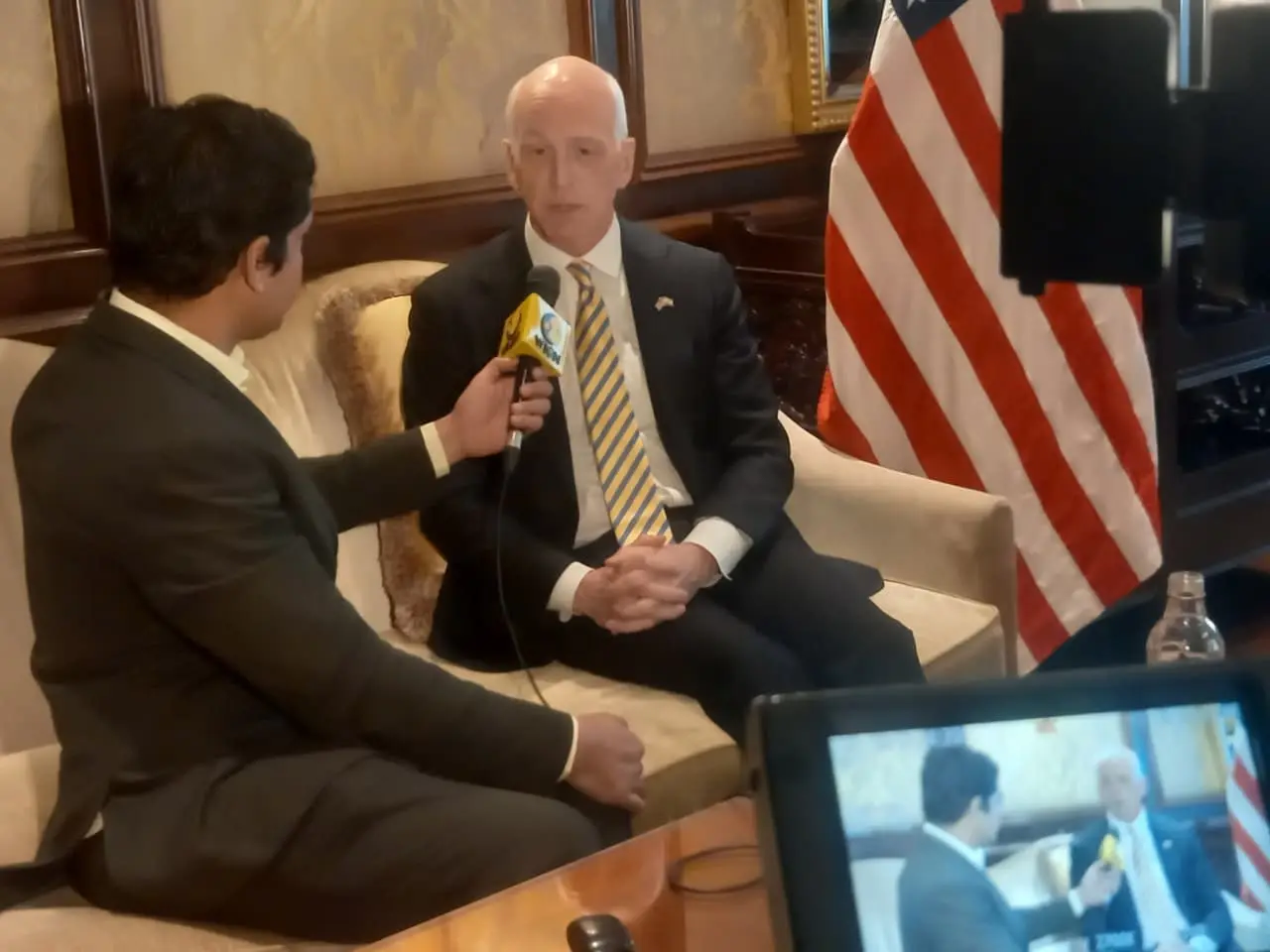
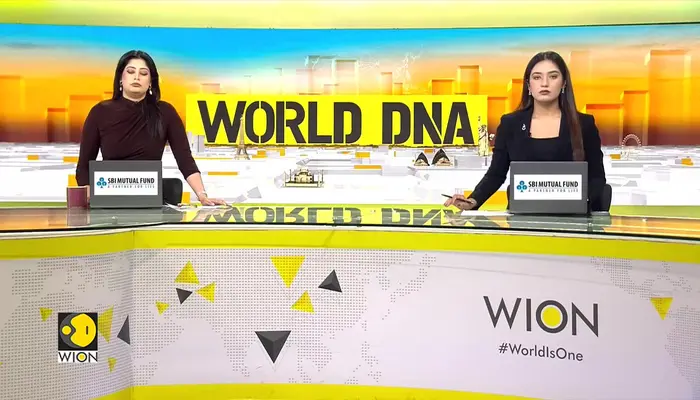
US Congressman Adam Smith, a senior Democrat from Washington’s 9th district, and Ranking Member of the House Armed Services Committee, has pointed to strong support for India at the US Congress and expressed hope for a bilateral India US trade deal following India's newly announced Free Trade Agreement with the European Union.
“There’s incredibly strong support, a bipartisan House and Senate,” Smith said, while speaking to WION's Sidhant Sibal. “People recognise how important a partner India is, and want to build and enhance that relationship.”
The lawmaker, who is a long-time member of the Congressional Caucus on India and Indian-Americans, and a 28-year veteran of Congress, described current relations as “a little tense right now” due to President Donald Trump’s rhetoric and tariffs aimed at reshoring US manufacturing. “I find it troubling that the President has said some of the things he said, and how it has made the relationship more divisive than it should be,” he explained.

He highlighted India’s EU FTA as adding “greater incentive and urgency” to concluding a US-India trade agreement. Full interview:
How has your visit to Delhi been?
Well, it's been very well received. We've met with the foreign minister. We met with a number of Indian businesses. Our focus is on the defence industry. We're part of the Armed Services Committee in the United States House. So we want to enhance and build the defence relationship between India and the US, and crucially, between defence companies, to help increase the manufacture of defence products.
Trending Stories
)
AI kill switch explained: Why shutting down a dangerous AI may not be as simple as pressing a button
)
Putin's United Russia party wins 355 seats in Duma election; 4 other parties cross threshold to enter parliament
)
US ships in Indian Ocean ‘will be attacked’ if war resumes, warns Iran
)
Delhi Air pollution: Strict crackdown on waste burning
)
SNL UK takes aim at Ed Sheeran with AI Princess Diana sketch
)
‘0% chance’: Nvidia CEO Jensen Huang dismisses AI extinction fears by 2030
)
Samay Raina-Mukesh Chhabra controversy explained: What happened over girlfriend joke on India's Got Latent?
&im=FitAndFill=(700,400))
What TSMC's 2nm technology means for Apple
)
Trump says he'll build an 'AI Force' and appoint a czar, for 'high IQ' people only
)
'Were you here to sell chickpeas?': Wasim Akram criticises Babar Azam's captaincy
)
Apple reportedly building AI server with M8 Ultra chips, may use Nvidia technology
)
TIFF 2026: Theja Rio’s Angh wins Platform Prize, puts Nagaland story on global stage
)
Glitch in the matrix caught on camera: Woman vanishes after talking to reporter
)
Samsung raises Galaxy S26 prices by Rs 20,000: Here’s what each model now costs
)
Fleming's aspirations as England Test coach include WTC, top ranking and Ashes
)
J&K Assembly Session begins amid chaos: BJP, ruling alliance clash as statehood demand dominates
)
Trump-Xi summit: US Treasury Secretary holds meeting with Chinese Vice Premier
)
Bessent meets China’s He Lifeng to prepare for Trump-Xi summit
)
S Jaishankar, former Army chief among high-profile names issued Delhi SIR notices
)
CDU suffers historic defeat in eastern Germany as AfD surges, Merz vows to stay on
)
Iran sets 7 conditions to end war with US: What are Tehran’s demands?
)
Arvind Kejriwal, family members, Delhi CM Rekha Gupta get SIR notices
)
AI actress Tilly Norwood glitches mid-interview, switches from English to Chinese | Watch
)
Saudi vs Houthis: Houthis claim missiles & drones used in attack on key Saudi sites
)
Punjab man consumes poison outside DC office; Congress, BJP target AAP government
)
Saudi Arabia exits China-led mBridge digital currency platform amid Saudi-Houthi conflict
)
'Lot of things to learn from experienced players': Jayasuriya backs Rohit, Virat for 2027 ODI World Cup
)
Chancellor Friedrich Merz vows to stay on as exit polls signal major poll setback
)
Taylor Swift has a 'proud wife' moment as Travis Kelce scores first touchdown of season: 'That’s my husband!'
)
Several petrol pumps, other businesses to refuse UPI payments above Rs 2,000 from Oct 16: Is it legal?
)
Mahabharat actor Saurav Gurjar arrested in Hyderabad, sent to 14-day judicial custody in sexual exploitation case
&im=FitAndFill=(700,400))
New OTT releases this week (September 21-27, 2026): Shaque: Trust No One, Hunkkaar, Don’t Be Shy- 5 new titles coming to Netflix, Prime Video and more
)
WATCH | Mysterious lights over Tehran caught on video. Drone, aircraft or something else?
)
Noel Tata challenges Chandrasekaran’s reappointment as Tata Sons chairman. What happened at the board meeting
&im=FitAndFill=(700,400))
Kareena Kapoor birthday special: Inside her net worth, best movies, luxurious lifestyle and love story with Saif Ali Khan
)
Pilot recreates Mona Lisa in sky over Oklahoma and Arkansas in four-hour flight: VIDEO
)
Delhi: Flagged voters remain on the draft roll but face hearings
)
China now makes advanced memory chips without the machines it was banned from buying
)
Jailer 2: Vidya Balan joins Rajinikanth's upcoming film as Kantha | Watch
)
Microsoft executive called AI training the ‘largest theft of labour in human history’
)
40-foot waves crash into cruise ship in dangerous stretch near Antarctica. Watch
)
Italy moves to ban face veils in schools as Meloni pushes new integration measures
So far, how do you see the trajectory between India and the US in terms of defense and what's the way forward when it comes to defence cooperation, collaboration, perhaps co-production?
I think it's been very positive. We started 10-15 years ago. For a long time, there was not much of a relationship at all, but there was a really concerted effort across multiple administrations in both countries to build on that, to try to get us to the point where we are sharing more defence production and working closer together. The two largest democracies in the world, we have a natural relationship and partnership. Very large Indian American community in the US, my district in particular. So we want to grow that relationship, increase trade and increase our ability to produce defence products. I think we're headed in the right direction. I will say we have a long way to go. I think the potential is limitless.
When it comes to India, US relationship, what's your view like? Because here in Delhi, there is a lot of increased scepticism, and we have seen that's primarily because of the comments by the US president, Donald Trump. So, how do you, as a congressman characterize the relationship?
Yeah, I mean, to be honest, I'm a Democrat from the opposite party. I don't support the President's language. I don't support the tariffs. I understand why he did it. He's focused on trying to bring manufacturing back to the US. I don't agree that that's going to work. I think some of the language that has been used has been unnecessarily divisive with India.
Like, I know that the President thinks that India is an incredibly important partner. He wants a strong relationship. So whatever the rhetoric, some of the actions, other things, want to move in a different direction. But no, I don't think that's helped. Don't think that's helpful. I think that generates, you know, more tension between our two countries. That's part of the reason we're here, is we want to have other members of Congress, other people come out. It's good that we now have an ambassador here. We've had several meetings with Ambassador Gor. I think he's going to significantly improve the relationship. But, yeah, it's a little tense right now. I want to see it get better.
But what's the view at the hill, at the Congress, when it comes to India, US relationship?
There's incredibly strong support, a bipartisan House and Senate. People recognise how important a partner India is, and want to build and enhance that relationship. I'm a member of the India Caucus. I mean, we see the potential for the relationship and our shared interests in the region, concerned about the role that China is playing. How do we make sure that we have an adequate deterrence to that and work together? So there's very strong bipartisan support for the US-India relationship in Congress.
But do you think that the Congress will be able to give a sense to the President when it comes to the India-US relationship? Perhaps the last few months, the last year, has been the worst in terms of the relationship when it comes to the last 20 years, because it looks like the gains of 20 years have been reversed in many ways.
Yeah, I don't think the gains have been reversed. I think that's an overstatement. I mean, there are too many relationships that have been built to be reversed by just a few words from our president and those actions. So I think there's a greater strength there. Look, I'm gonna be honest with you, I find it troubling that the President has said some of the things he said, and how it has made the relationship more divisive than it should be, and I think we need to work to rebuild that. I think there is more strength underlying that than just a few actions by this president can change.
You're hopeful the tariffs will be removed, because there are hints coming from the top Trump officials, including by the president himself, who recently, last week in Davos, said that there will be a trade deal.
Yeah, well, we're building towards that trade deal. And I know India has just announced their trade deal with the EU that gives greater incentive and urgency to us getting that deal done. And I know there's a desire to do that, and I'm hopeful that we can reduce the tariffs as a result of that. And you know, domestically, we also there's a lawsuit working its way through the Supreme Court. The Supreme Court could remove the tariffs as being illegal , as the president didn't have the power to impose them without Congress. So there are a lot of things that can happen here in the near term that would reduce those tariffs. I and a lot of other members of Congress and I are working all of those avenues to try and bring those tariffs down.
On your meeting with the Indian External Affairs Minister. How was the meeting?
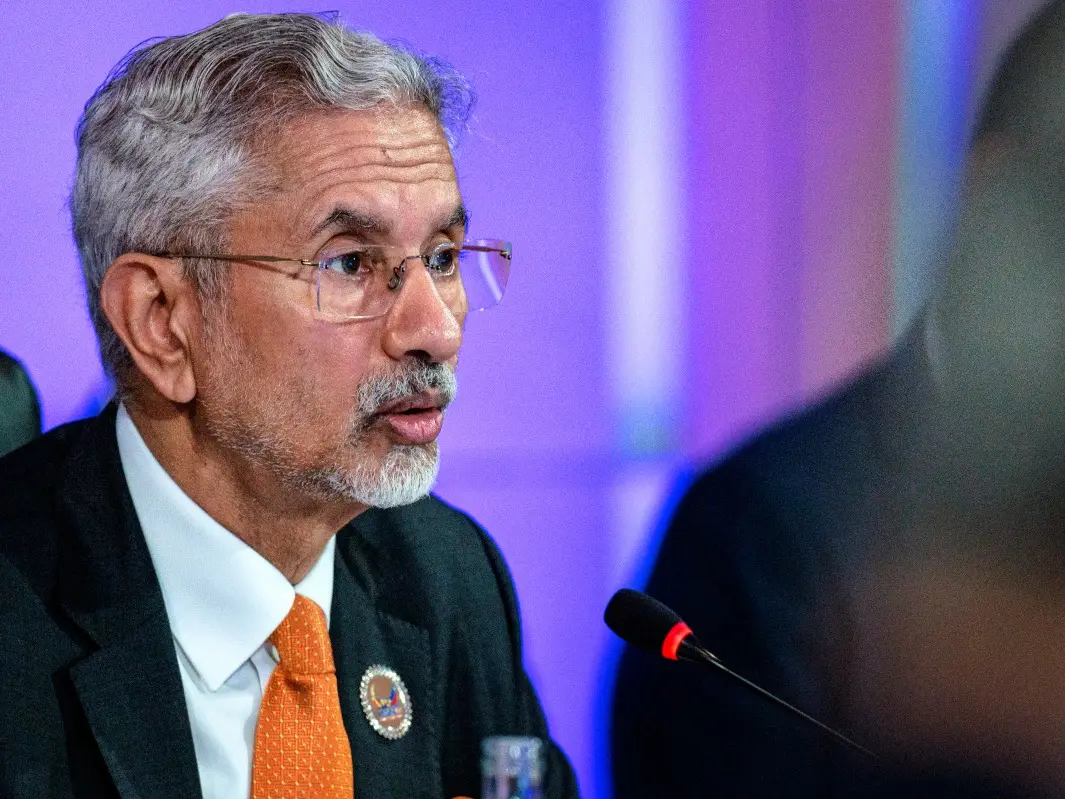
Well, it's very impressive. Your External Affairs Minister is such a seasoned, experienced diplomat, certainly in US India relations, but across the world, we had good conversations with him about some of his interactions with President Putin and Russia. Now, I think he recognizes everything that we talked about here, and at the end of the day, something that our president, the minister, PM Modi, we all want a strong relationship between India and the US, and that's what we're going to going to work towards, as I mentioned, and as you mentioned, there's been a couple hiccups in that. You're a democracy, so you could appreciate this. We have a lot of different voices in our government, and they all have a right to be heard. But there is strong, strong support for India, across the board, in our country and in our government.
Over the last one year, we have seen a tilt by the Trump administration towards Pakistan, which has created a lot of bad will, I would say here in Delhi, given the fact that Pakistan supports cross-border terrorism into India. Is it here to stay, or is it just a fleeting thing which is happening in Washington?
I think that's a slight misinterpretation by India. I don't think President Trump has tilted towards Pakistan. We have individual relationships with every country in the world. We have an individual relationship with India. We have an individual relationship with Pakistan. I hope, and I can understand why India would view it that way. But I don't really see it as a tilt towards Pakistan. We're trying to manage that relationship as we're trying to build on this relationship. So I don't think India needs to worry about the US abandoning India for Pakistan. That's not where I see this administration headed, even as much as I disagree with the tariffs that they put on Pakistan and everybody else as well. I do understand India got more because of the Russian oil issue, but no, I wouldn't interpret it as a tilt towards Pakistan.